Army Combat Fitness Test (ACFT) Training in Colorado Springs: A Complete Preparation Guide for Soldiers
If you are an active duty soldier, reservist, or National Guard member stationed at Fort Carson or the Air Force Academy, you already know the stakes. The Army Combat Fitness Test is not a formality: it is a direct measure of your operational readiness, and your score can affect your career, your unit, and your ability to serve. Whether you are preparing for your first ACFT, working to improve a score that did not reflect your best effort, or returning from a period of limited training, having a structured and intentional preparation plan makes a measurable difference.
Army Combat Fitness Test training in Colorado Springs presents a unique challenge that many soldiers underestimate: altitude. At roughly 6,000 feet above sea level, aerobic performance is genuinely harder here than at most other duty stations. Your cardiovascular system works differently, recovery takes longer, and the two-mile run feels like a different event entirely. Preparation that accounts for these local realities is not optional: it is essential.
This guide covers everything you need to understand about the ACFT: what each of the six events actually tests, how scoring works, where most soldiers lose points, and how a structured private training program in Colorado Springs can help you walk into test day prepared, confident, and ready to perform. Let's break it down completely.
What the ACFT Actually Measures: and Why It Matters
The Army Combat Fitness Test replaced the Army Physical Fitness Test (APFT) because the older test, push-ups, sit-ups, and a two-mile run, no longer reflected the physical demands of modern combat. The ACFT was designed to measure the full spectrum of physical readiness required in the field: raw strength, explosive power, muscular endurance, anaerobic conditioning, and aerobic capacity.
The six events were selected because each one corresponds to actual physical tasks soldiers perform in operational environments. Deadlifting reflects the ability to lift a casualty or heavy equipment. The sprint-drag-carry simulates moving under fire while carrying a weapon and dragging a fellow soldier. The standing power throw measures explosive athleticism. These are not arbitrary exercises: they represent real-world demands placed on soldiers every day.
This is also why Army Combat Fitness Test training in Colorado Springs requires more than just showing up to unit PT and hoping for the best. The ACFT demands that soldiers develop strength, power, and endurance simultaneously, and those physical qualities require intentional, structured programming to develop at the same time without sacrificing one for another.
Understanding the purpose behind each event also helps you train smarter. When you know why you are doing a Romanian deadlift variation or a sled drag, the exercise becomes more meaningful, and you are more likely to perform it with the focus and effort it deserves.
The Six ACFT Events: What Each One Demands From Your Body
1. Three-Repetition Maximum Deadlift (MDL)
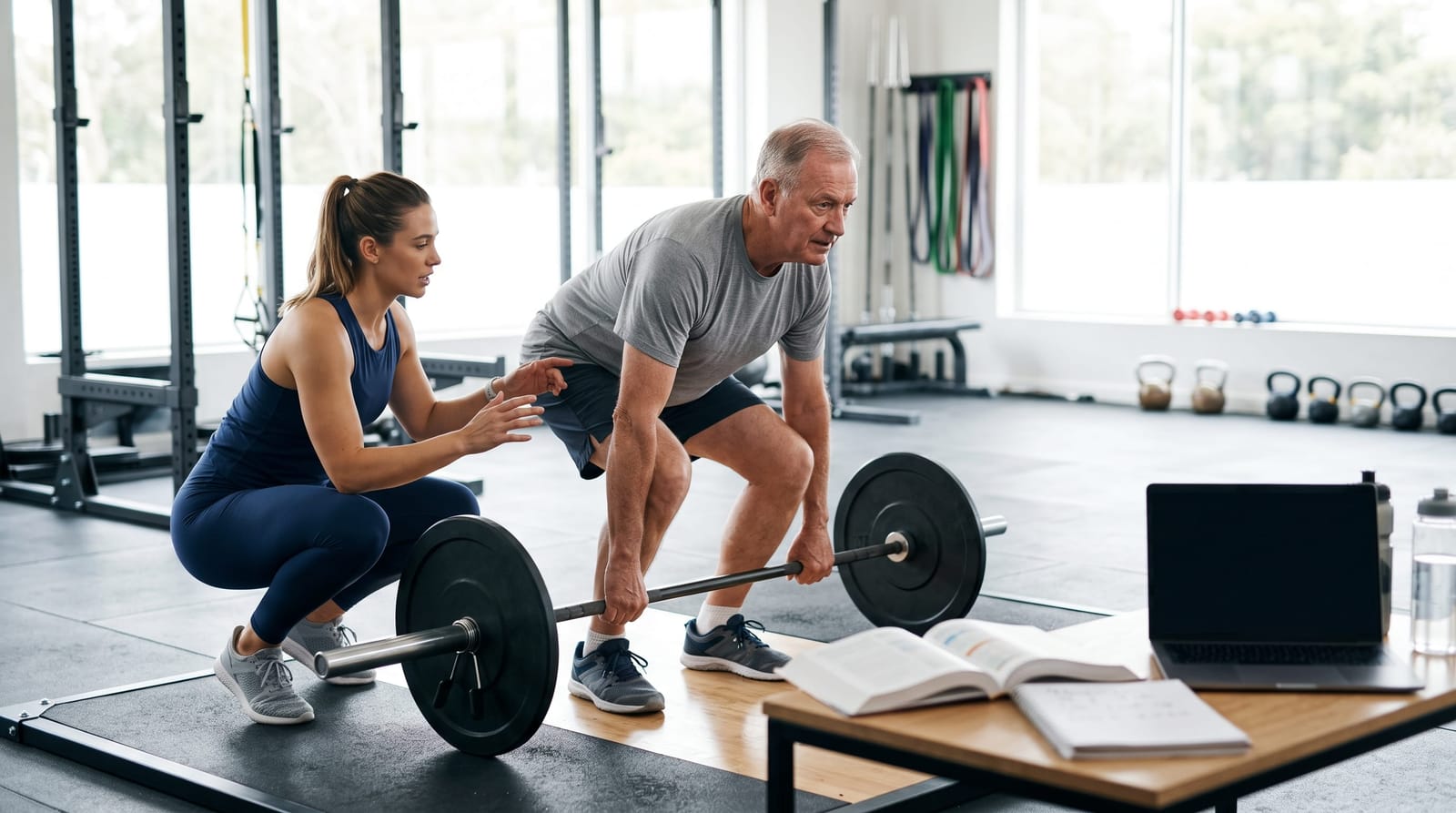
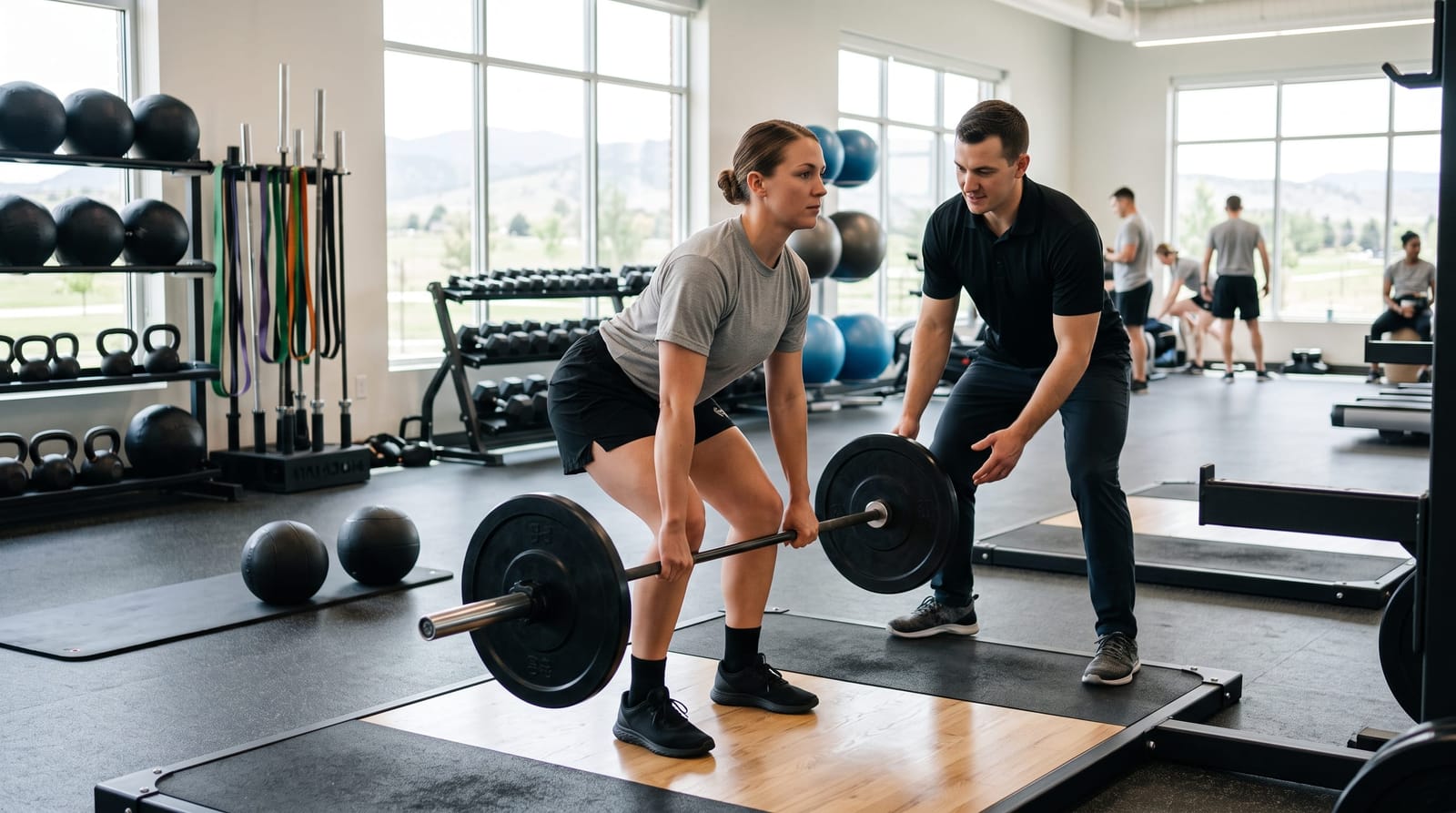
The maximum deadlift is a trap bar deadlift performed for three repetitions at the heaviest weight the soldier can complete safely. It tests lower body strength, posterior chain development, and the ability to generate force through a full hip hinge movement. Weights range from 140 to 340 pounds depending on the scoring bracket. Many soldiers, particularly those whose training backgrounds have been primarily aerobic, find this event challenging because deadlift strength requires consistent resistance training over time, not just weeks of preparation.
2. Standing Power Throw (SPT)
Using a ten-pound medicine ball, soldiers throw backward and overhead as far as possible. The SPT measures explosive power: specifically the ability to generate force rapidly through the hips, core, and upper body. It is a test of athleticism that surprises many soldiers because it is not a movement commonly trained in standard unit PT. Distances scored range from roughly 4.5 meters to 12.5 meters depending on age and gender brackets.
3. Hand-Release Push-Up (HRP)
Unlike the standard push-up, the hand-release push-up requires the soldier to fully lower to the ground, release their hands from the floor, then push back up to full extension. This eliminates the elastic rebound and demands true muscular strength at the bottom of each repetition. It tests upper body pressing endurance and requires shoulder stability throughout a two-minute testing window.
4. Sprint-Drag-Carry (SDC)
This is widely considered the most taxing event on the ACFT. Soldiers complete five 50-meter shuttle runs: each with a different movement: a sprint, a sled drag (90 pounds), a lateral shuffle, a two-kettlebell carry (40 pounds each), and a final sprint. The total distance is 250 meters completed as fast as possible. The SDC simultaneously challenges speed, anaerobic conditioning, grip strength, and muscular endurance. Without specific conditioning work, this event tends to produce the biggest performance gaps.
5. Leg Tuck or Plank (LTK/PLK)
Soldiers either perform alternating leg tucks (hanging from a pull-up bar and bringing the knees to the elbows) or hold a forearm plank for time. The plank alternative has a maximum score of 3 minutes and 40 seconds. Both options test core strength and stability: the foundation that supports performance in every other event and in operational field tasks.
6. Two-Mile Run (2MR)
The two-mile run remains the ACFT's aerobic endurance event and is completed last, after five physically demanding events. Timing ranges from roughly 21 minutes (minimum passing) to under 13:30 for maximum scores depending on age and gender. Running this event fatigued, as soldiers always will be during the actual test, is a specific skill that needs to be trained deliberately, not just by running fresh during regular workouts.
ACFT Scoring Standards: What You Need to Know
The ACFT uses an age and gender-based scoring system with a maximum score of 600 points (100 per event). The minimum passing score is 60 points per event for a total of 360 points, though specific requirements may vary by Military Occupational Specialty (MOS). Soldiers should always confirm current scoring standards with their unit leadership or official Army resources, as standards are subject to periodic updates.
A few important realities about the scoring system are worth understanding as you plan your preparation:
- All six events must be passed individually. A high score in five events cannot compensate for failing one. Every event counts.
- The scoring tiers create meaningful targets. The gap between a passing score and a competitive score is significant in several events, particularly the deadlift and sprint-drag-carry. If you are preparing for promotion boards or Ranger/Special Forces assessments, average passing scores are not sufficient.
- Age brackets adjust expectations appropriately. Soldiers in older age brackets have adjusted minimum standards, but the test still reflects genuine physical readiness, not just age-adjusted compliance.
- Altitude in Colorado Springs affects aerobic scores specifically. The two-mile run is particularly affected by elevation. Soldiers who trained at lower elevations and have recently been stationed here may need additional time to acclimatize before achieving their best aerobic performance.
Understanding where you currently fall in the scoring tables, and identifying which two or three events represent your largest point gaps, is the most efficient starting point for targeted ACFT preparation.
The Most Common ACFT Failure Points: and What Causes Them
After working with military clients at the local level, certain patterns emerge consistently in where soldiers lose points on the ACFT. Knowing these in advance helps you prioritize your training time more strategically.
Deadlift Technique Deficits
The three-rep max deadlift is frequently undertrained because many soldiers are not accustomed to heavy barbell or trap bar work in their regular PT routine. Even soldiers who are otherwise fit may lack the posterior chain strength and hip hinge mechanics needed to perform well. More importantly, poor technique under heavy load increases the risk of strain, particularly in the lower back, which is why learning proper form before adding load is essential, not optional.
Sprint-Drag-Carry Conditioning
The SDC is a five-event shuttle that pushes soldiers into near-maximal effort for 60 to 90 seconds or more. Without training that specifically builds anaerobic capacity, interval work, sled training, loaded carries, soldiers often pace themselves too conservatively and leave significant time on the table, or go too hard and fall apart midway through.
Running While Fatigued
The two-mile run is performed last. By the time soldiers reach that event, they have already completed five demanding exercises. Training only by running fresh, without building the aerobic base and race-pace endurance to sustain effort in a fatigued state, is one of the most common preparation mistakes.
Neglecting Explosive Training
The standing power throw tests a quality, explosive hip extension, that most soldiers never specifically train. Plyometric work, medicine ball throws, and power-focused exercises build the neuromuscular patterns needed, but they are rarely emphasized in conventional PT programs.
Core Weakness Affecting Multiple Events
The leg tuck and plank directly test core strength, but core stability also affects your deadlift mechanics, your sprint form, and your carry efficiency. Soldiers who neglect dedicated core development often find that their weaknesses show up across multiple events simultaneously.
How Structured ACFT Training Works: Building All Six Qualities Together
Effective Army Combat Fitness Test training in Colorado Springs is not simply doing each of the six events repeatedly in practice. That approach builds familiarity but rarely produces the meaningful fitness improvements needed to raise scores. Real preparation requires periodized training: building physical qualities in a logical sequence over weeks and months.
Phase 1: Foundation and Assessment
The first phase of ACFT preparation focuses on establishing baseline strength, mobility, and movement quality. This includes learning proper deadlift mechanics, building core stability, and identifying any muscular imbalances that could limit performance or increase injury risk. Soldiers who skip this phase and jump directly into heavy lifting or intense conditioning often hit a performance ceiling early or experience setbacks that delay their preparation entirely.
Phase 2: Strength and Power Development
Once foundational movement quality is established, training shifts toward building the specific strength and explosive power the ACFT demands. Progressive loading on the deadlift, plyometric work for the standing power throw, and progressive push-up volume for the hand-release event are all developed during this phase. Strength training at altitude requires thoughtful recovery management, as many soldiers find they need slightly more rest between heavy sessions than they did at lower elevations.
Phase 3: Event-Specific Conditioning
The third phase layers in the metabolic conditioning that the sprint-drag-carry and two-mile run require. Sled drags, loaded carries, interval running, and tempo work build the anaerobic and aerobic capacity needed to perform under fatigue. This phase also includes practicing event sequences, training multiple events back to back, to simulate the cumulative fatigue of test day.
Phase 4: Test Preparation and Tapering
In the final weeks before a scheduled ACFT, training volume decreases while intensity is maintained. The goal is arriving at test day fully recovered, well-practiced, and confident. Practicing events in order, especially finishing with the two-mile run after completing the prior five, is a key component of this phase.
Training at Altitude: What Colorado Springs Soldiers Need to Know
Fort Carson sits at approximately 5,945 feet above sea level. Colorado Springs is slightly higher. This elevation is substantial enough to affect aerobic performance measurably, and soldiers who are new to the area or who have been stationed elsewhere for extended periods need to account for acclimatization in their preparation timelines.
At altitude, the body delivers less oxygen per breath, which means aerobic events, particularly the two-mile run, feel significantly harder than they do at sea level. Heart rate increases at submaximal efforts. Recovery between intervals and between training sessions takes longer. These are physiological realities that are worth understanding so that soldiers do not become discouraged by performance that feels off during early altitude training.
The good news is that the body adapts to altitude over time, and many soldiers find that their aerobic performance eventually improves meaningfully once acclimatization is complete, often over four to six weeks of consistent training. For soldiers preparing for an ACFT with a near-term test date, this timeline matters significantly for planning purposes.
Strength-based events, the deadlift, standing power throw, push-ups, and to some degree the sprint-drag-carry, are less dramatically affected by altitude. Focusing on those events during early altitude acclimatization while allowing aerobic performance to develop naturally is a sensible approach for many soldiers.
Why Private Training Produces Better ACFT Results Than Unit PT Alone
Unit physical training serves an important purpose: it builds unit cohesion, maintains baseline fitness, and keeps soldiers active consistently. But it is not designed to address the individual needs of each soldier within the formation. If you have a specific weakness in one or two ACFT events, unit PT is unlikely to target that weakness with the precision or volume needed to produce a meaningful score improvement.
Private coaching in a small-group or one-on-one setting allows for a fundamentally different approach. A qualified trainer can assess your movement patterns, identify your specific strength and conditioning gaps, design a program that directly addresses those gaps, and adjust that program as you progress. This level of individualization is simply not possible during a group PT session with a large formation.
For soldiers who are preparing for a high-stakes test, returning from a period of limited training, or working to recover full physical capacity after an injury, personalized coaching provides the structured, accountable framework that produces consistent results. The private personal trainer ACFT preparation Colorado Springs approach at Total Body Works is built specifically around these needs, meeting soldiers where they are and building toward where they need to be.
Deep Dive Topics: Explore Every Aspect of ACFT Preparation
This pillar guide provides the comprehensive foundation you need to understand the ACFT and how to approach preparation intelligently. The following topic-specific resources go deeper into each key area, giving you the detailed, actionable guidance to address your specific training needs:
-
Event-Specific Training for All Six Tests: Understanding what each event demands is the starting point: knowing exactly how to train for each one is where scores actually improve. The ACFT training events breakdown Colorado Springs guide covers specific exercises, progressions, and programming strategies for all six ACFT events so you can target each one with precision.
-
Deadlift Strength Development: The three-rep max deadlift is one of the most trainable events on the ACFT, but only when approached correctly. The ACFT deadlift training program Colorado Springs resource covers trap bar mechanics, progressive loading strategies, and the technical details that translate directly to a higher score on test day.
-
Sprint-Drag-Carry and Two-Mile Run Conditioning: The two most metabolically demanding events on the ACFT require specific conditioning that goes well beyond standard running and PT. The ACFT conditioning sprint drag carry training guide outlines how to build the anaerobic and aerobic capacity that powers both events, including how to train for the two-mile run in a fatigued state at Colorado Springs altitude.
-
Recovering From ACFT-Related Injuries: Training hard for the ACFT carries risk, particularly when soldiers are pushing toward higher weights on the deadlift or running high mileage at altitude. If an injury is slowing your preparation or affecting your performance, the ACFT injury recovery Colorado Springs ARPWave resource explains how specialized recovery modalities can support your return to full training capacity.
-
Private Coaching vs. Unit PT: Understanding the Difference: For soldiers who are serious about meaningful score improvements, understanding what separates individualized private coaching from group PT is worth exploring in detail. The private personal trainer ACFT preparation Colorado Springs post walks through the specific advantages of personalized programming and why individualized coaching produces consistently better outcomes for targeted ACFT preparation.
What Total Body Works Brings to ACFT Preparation in Colorado Springs
Total Body Works is a private personal training studio located in Colorado Springs, just north of Colorado Springs and positioned conveniently for soldiers at Fort Carson and personnel at the Air Force Academy. The studio specializes in personalized, one-on-one and small-group training that is built around each client's specific goals, current fitness level, and timeline.
For military clients preparing for the ACFT, that means starting with a thorough assessment of where you currently stand on each event, identifying your highest-priority improvement areas, and building a structured program that develops strength, power, and conditioning simultaneously, all while accounting for the demands of Colorado Springs altitude and the reality of your training schedule alongside military duties.
Total Body Works also offers access to ARPWave neuromuscular therapy and hyperbaric oxygen therapy (HBOT): recovery modalities that support military clients who are managing the physical demands of intense ACFT preparation. These tools support your body's recovery capacity and help ensure that consistent, hard training produces results rather than setbacks.
The approach here is not a cookie-cutter fitness program. It is a military-focused preparation framework built by experienced coaches who understand what soldiers need, not just to pass the ACFT, but to perform with confidence and sustain that fitness level over a military career.
Conclusion: Build the Fitness the ACFT Is Designed to Measure
The Army Combat Fitness Test is a demanding, multi-dimensional assessment that requires strength, explosive power, muscular endurance, anaerobic conditioning, and aerobic capacity, all tested in a single session. Preparing for it effectively means developing all of those qualities intentionally, in a logical sequence, with programming that accounts for your individual starting point and the specific challenges of training at Colorado Springs altitude.
Whether you are preparing for your first ACFT, working to raise a score that does not yet reflect your capabilities, or returning to structured training after a break, the path forward is the same: honest assessment, targeted programming, consistent execution, and the right coaching support to keep you on track.
Army Combat Fitness Test training in Colorado Springs does not have to be something you figure out alone. Total Body Works is here to work alongside you: building the strength, conditioning, and confidence you need to perform at your best when it counts.
Ready to start your ACFT preparation? Contact Total Body Works today to schedule a consultation and take the first step toward your best test performance.