
How Long Does It Take to Prepare for the ACFT from a Low Starting Point?
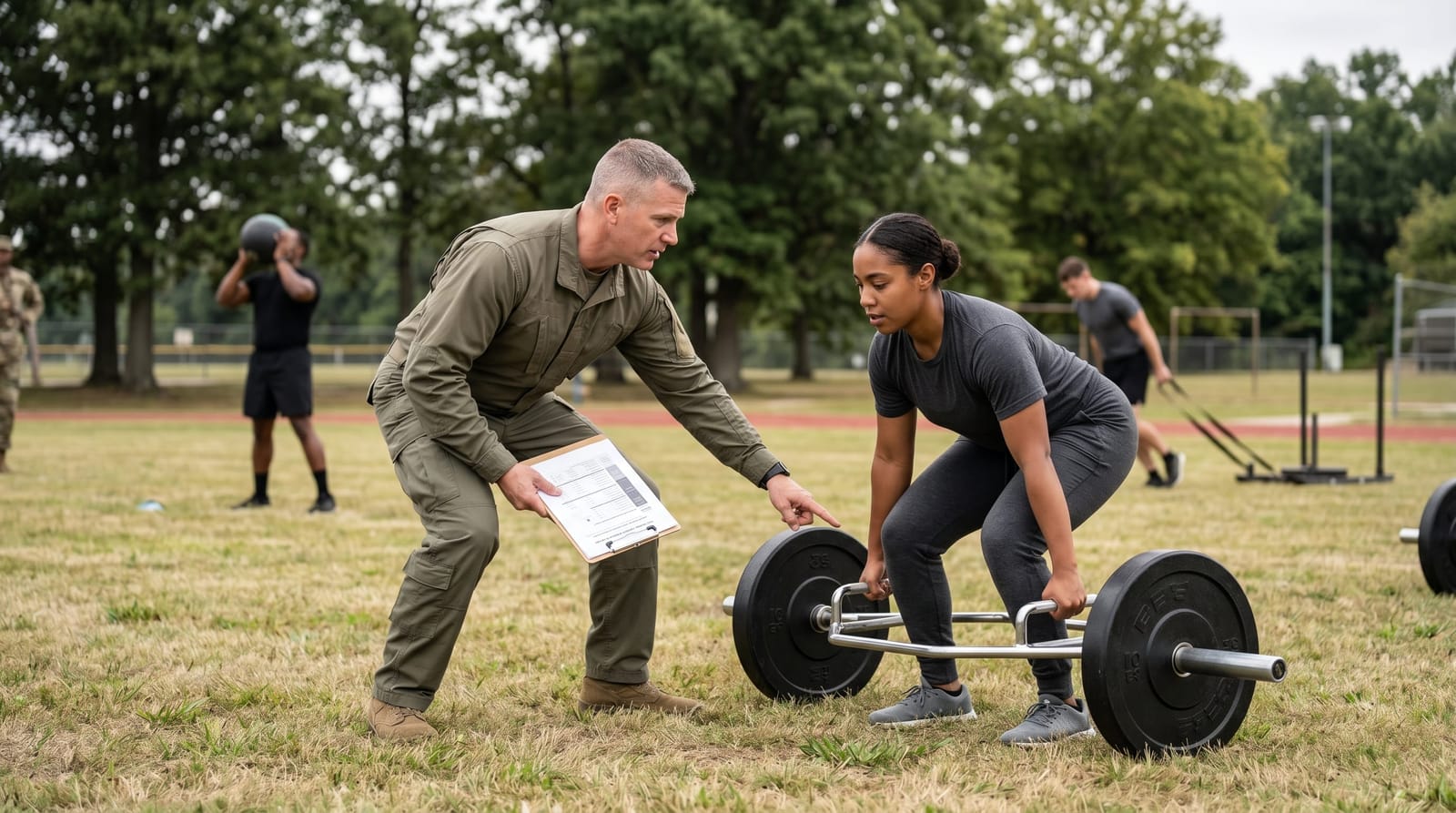
If you're starting your ACFT preparation from a low fitness baseline, one of the first questions you're probably asking is: how much time do I actually need? The honest answer depends on where you're starting and how structured your training is. As part of our broader guide to Army Combat Fitness Test training in Colorado Springs, this post breaks down realistic ACFT preparation timelines, 6 weeks, 12 weeks, and 6 months, and what you can expect to achieve in each window with expert-guided programming.
Why Your Starting Point Changes Everything
The ACFT is a six-event test that must be completed within 120 minutes. It taxes your body across multiple physical domains, strength, power, speed, coordination, and cardiovascular endurance, all in a single session. That means a soldier who only runs but never lifts is just as underprepared as one who lifts but can't run two miles. You need a baseline in all physical categories to score competitively.
Army guidance recommends a 6-month training period with 4 to 6 hours of structured training per week for soldiers preparing for the ACFT. That benchmark exists for a reason: building genuine fitness capacity across six different movement patterns takes time. Cutting that window short is possible, but the outcomes shrink significantly. Understanding which timeline applies to you, and what it can realistically deliver, is the first step to planning smart.
It's also worth noting the broader testing landscape. ACFT scores recorded before May 31, 2025, remain valid for promotion considerations until September 30, 2025, after which the Army Fitness Test general standard takes effect for promotions beginning October 1, 2025. Full implementation testing is scheduled to begin April 17, 2027. If you have upcoming promotion cycles or unit testing windows, you need to map your preparation timeline against those specific dates, not just a vague "someday."
The 6-Week Timeline: Damage Control and Quick Gains
Six weeks is a short runway, but it's not useless, especially with focused, coached programming. Here's what's realistic for a soldier starting from a low baseline:
- Strength events (3 Rep Max Deadlift, Hand Release Push-Up, Standing Power Throw): Expect 10-20% improvements in technique efficiency. Neural adaptations happen quickly. A soldier who has never deadlifted with proper form can improve their tested score meaningfully in 6 weeks simply by learning the movement, even before significant muscle is built.
- Sprint-Drag-Carry: Event-specific practice, learning the shuttle run pattern, grip technique on the drag, and carry mechanics, can shave 10 to 20 seconds off your time within 4 to 6 weeks of targeted drilling.
- Leg Tuck / Plank: Core endurance responds relatively quickly. Most soldiers can add 15 to 30 seconds to their plank time in a 6-week block.
- 2-Mile Run: This is the hardest to move quickly. If you're already running 3 to 4 times per week, you may see a 30-to-60-second improvement. If you're starting from very low cardiovascular fitness, the 6-week window is mostly about establishing the habit and reducing injury risk.
Bottom line for 6 weeks: You can pass the ACFT or improve your score, but significant transformation is unlikely. The goal in this window is to stop leaving points on the table from poor technique and event-specific unfamiliarity.
The 12-Week Timeline: The Most Common and Effective Short Window
Twelve weeks, roughly 3 months, is where real, measurable progress becomes achievable for most soldiers starting from a low baseline. With 4 to 5 structured training sessions per week, a 12-week block allows for:
- Progressive strength development: A soldier new to resistance training can expect a 20 to 40% increase in functional strength over 12 weeks. That translates directly into deadlift numbers and push-up volume.
- Aerobic base construction: Twelve weeks is enough time to build a legitimate aerobic base. Soldiers who start at a 20-minute 2-mile pace can realistically target a 17- to 18-minute finish with consistent training.
- Power and explosive capacity: The Standing Power Throw requires hip extension power. Training jumps, kettlebell swings, and medicine ball work for 12 weeks produces measurable improvements in explosive output, often 1 to 2 feet in throw distance for untrained soldiers.
Understanding ACFT score standards by age and gender is especially important during a 12-week block so you can set a specific score target and work backward through the weeks to hit it.
With a private, expert-guided program in a 12-week window, most soldiers starting from a low point can expect to move from a failing or marginal score to a passing score, and soldiers who are already near-passing can push toward competitive scores in the 450 to 500+ range.
The 6-Month Timeline: The Standard That Actually Works
The Army's own recommendation of 6 months with 4 to 6 hours of weekly training exists because that's the timeframe that produces comprehensive, sustainable fitness improvements. For soldiers starting from a genuinely low baseline, minimal lifting experience, poor cardiovascular endurance, or a history of physical inactivity, 6 months is not excessive. It's the minimum for responsible preparation.
Here's what a structured 6-month program can realistically deliver:
- Months 1-2 (Foundation Phase): Movement quality, injury prevention, baseline aerobic conditioning. Goal: Build consistency and fix movement dysfunction.
- Months 3-4 (Development Phase): Progressive overload on all strength events, tempo runs, event-specific drills. Soldiers typically see their most dramatic score jumps in this phase, often 50 to 100 points on their total ACFT score.
- Months 5-6 (Performance Phase): Peak training, test simulations, recovery protocols. Full ACFT run-throughs under timed conditions. Goal: Arrive at test day in peak condition with zero surprises.
Soldiers who commit to a 6-month expert-guided program and start from a low baseline routinely achieve competitive total scores, and some push into the 500 to 540+ range that signals physical readiness for demanding assignments and leadership evaluation.
The Hidden Cost of Waiting Too Long
One of the most common mistakes soldiers make is waiting until 3 to 4 weeks before a test date to seek help. At that point, the training window is too short to build real capacity, and the risk of overtraining injuries, from trying to cram months of work into days, actually increases. Starting early is the single most powerful thing you can do to improve your ACFT outcome.
With promotion scoring tied to ACFT results and the full implementation deadline of April 17, 2027, approaching, soldiers who begin structured preparation now, regardless of their current fitness level, give themselves the longest possible runway to achieve the scores that matter for their careers.
Frequently Asked Questions
Can I pass the ACFT with only 6 weeks of preparation?
It depends on your starting point. A soldier who is moderately fit but hasn't trained for the ACFT's specific events can often pass with 6 weeks of focused coaching. A soldier starting from a very low fitness baseline will struggle to pass safely in that window: the risk of injury from accelerated training is real. Six weeks is enough for targeted improvement, but not enough for comprehensive physical development.
How many days per week should I train for the ACFT?
Army guidance suggests 4 to 6 hours of training per week, which typically works out to 4 to 5 training sessions depending on session length. For soldiers in a structured private program, 4 days per week of focused training, with active recovery on off days, is an effective and sustainable approach for most preparation timelines.
What if I have a physical limitation or injury going into ACFT prep?
Training around injuries is one of the strongest reasons to work with a private fitness coach rather than a generalized unit PT program. A qualified trainer can modify loading, range of motion, and event-specific drills to maintain your progress while protecting vulnerable areas. Trying to push through injury without guidance is the fastest way to turn a minor setback into a test-day failure.
Does starting altitude at Fort Carson affect my ACFT timeline?
Yes, meaningfully. Fort Carson sits at approximately 5,900 feet elevation. Soldiers relocating from sea-level installations often experience a 10 to 20% reduction in aerobic performance for the first 2 to 4 weeks after arrival. This altitude adjustment period needs to be factored into your preparation timeline: it's an additional reason to start your structured training program as early as possible after a PCS move to Colorado Springs.
The Bottom Line on ACFT Preparation Timelines
Whether you have 6 weeks or 6 months before your next test date, the most important decision you can make is to start now with a structured, expert-guided plan. Six weeks can stop the bleeding and improve technique. Twelve weeks can move a failing soldier to a passing score. Six months can transform a low-baseline soldier into a high-performer. The ACFT preparation timeline that's right for you depends on where you're starting, but none of those timelines work if you wait. If you're in Colorado Springs and serious about your score, explore our full ACFT training preparation guide to understand exactly what a coached program looks like from day one.