
Common Deadlift Form Mistakes That Cost Soldiers Points (and Cause Injury)
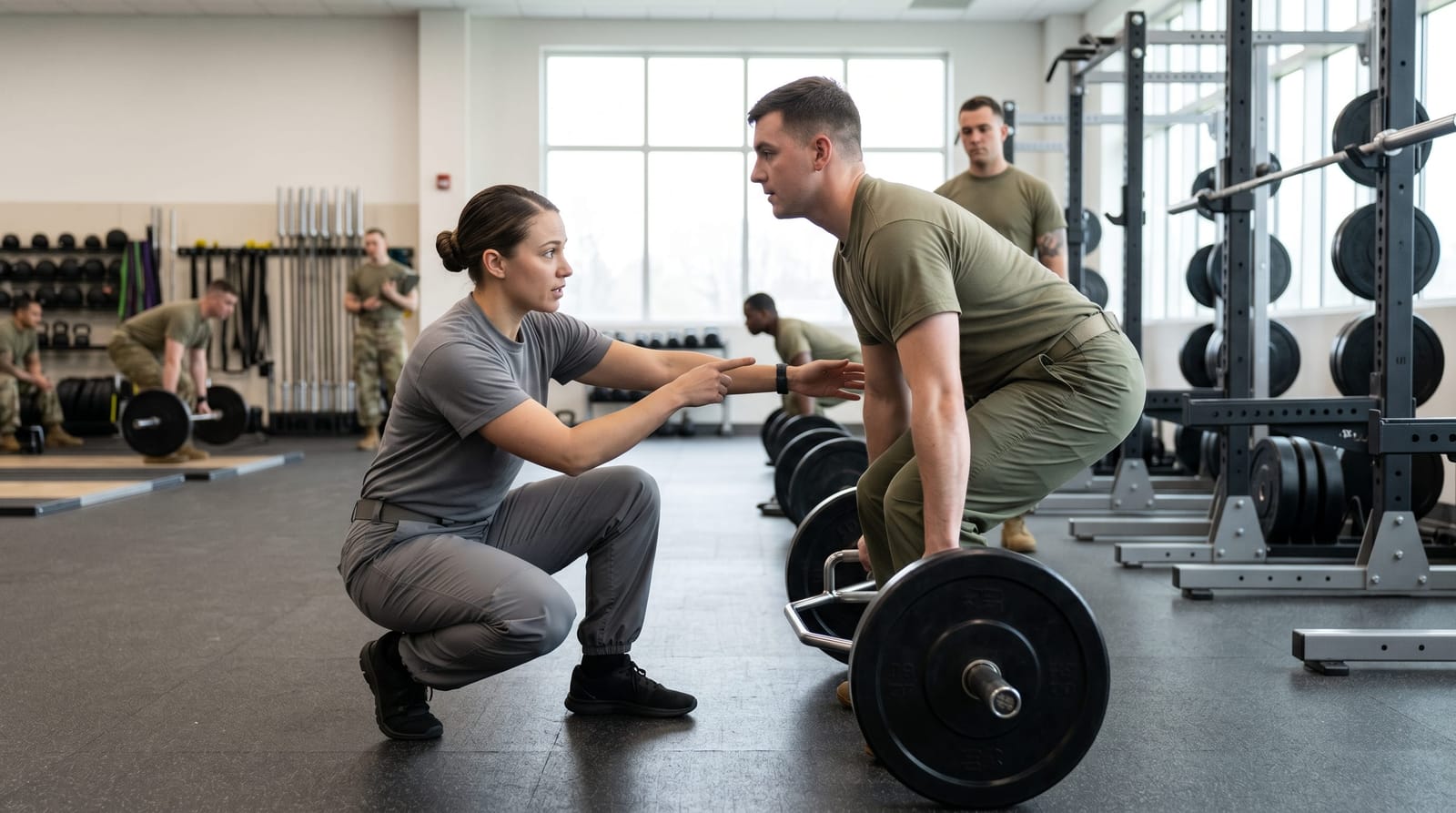
The Maximum Deadlift (MDL) is one of the most straightforward events on the Army Combat Fitness Test, until you watch someone fail it on a technicality or tweak their back chasing a heavier lift. For soldiers preparing for the ACFT, deadlift form mistakes soldiers make repeatedly are often the difference between a strong score and a disappointing one. Whether you're working toward your first passing mark or pushing for a max score, understanding what breaks down during the lift, and fixing it before test day, is essential preparation.
Why Deadlift Technique Matters More Than Raw Strength
Many soldiers approach the MDL as a simple "pick it up and put it down" event. The problem is that poor mechanics under load don't just risk injury: they actively steal power from the lift. A technically sound deadlift transfers force efficiently from the ground through the legs and hips and into the bar. When mechanics break down, energy leaks out at every weak link in the chain.
The ACFT deadlift is performed with a hex bar (trap bar), which is more forgiving than a straight barbell, but it doesn't eliminate the risk of form errors. Soldiers still need to establish proper position before the pull, maintain tension throughout the lift, and complete the movement fully at the top. Rushing through any of these phases without solid mechanics leads to both performance loss and unnecessary strain on the body.
If you want to build a stronger foundation alongside better technique, exploring the exercises that increase your ACFT deadlift max can help you develop the supporting muscle groups that keep your form locked in under heavier loads.
The Most Common ACFT Deadlift Form Mistakes Soldiers Make
1. Rounding the Lower Back
This is the most frequently seen ACFT deadlift form mistake soldiers encounter, and one of the most consequential. When a soldier sets up with the hips too high, the chest dropping toward the knees, or the spine flexing under load, the lower back takes on stress it was never designed to handle in that position. The result is reduced power output and increased strain on the lumbar spine.
The fix starts at setup. Before the pull begins, the chest should be lifted, the shoulders pulled back and down, and a neutral spine established from the tailbone to the neck. Think about showing your chest to the wall in front of you as you hinge. Maintaining that flat-back position from the floor to lockout is non-negotiable for both safety and scoring.
2. Bar Drift and Poor Grip Mechanics
Even with a hex bar, soldiers sometimes allow the handles to shift in their grip mid-pull, which causes instability at the top of the lift. A loose or inconsistent grip forces the arms and shoulders to compensate, throwing off the chain of tension from feet to hands.
Before each rep, grip the handles firmly, not just with the fingers, but with a full, engaged hand. Some soldiers benefit from imagining they're trying to "bend" the handles apart to activate the lats, which helps stabilize the shoulder and keep the bar path controlled. A consistent, locked-in grip across all three reps is part of what makes the difference between a smooth set and a shaky one.
3. Knee Cave During the Pull
Knee cave, where the knees collapse inward as the bar leaves the ground, is a sign that the glutes and hip abductors aren't fully engaged at the start of the pull. It's especially common when soldiers are lifting near their max weight or when fatigue sets in during the third rep.
The cue here is simple: push your knees out, not just your hips back. From the moment you begin the pull, think about driving the floor away from you while keeping your knees tracking in line with your toes. Strengthening the glutes and adductors in training directly translates to better knee stability under load on test day.
4. Holding Breath Incorrectly: or Not at All
Breath mechanics are one of the most overlooked aspects of MDL preparation. A proper brace, taking a deep breath into the belly and holding it through the most demanding part of the lift, creates intra-abdominal pressure that acts like a natural support belt for the spine. Soldiers who forget to brace, or who exhale at the wrong moment, lose that protective tension right when they need it most.
The sequence is: take a deep breath before the pull, brace the core as if you're bracing for a punch, lift through the full range of motion, then exhale at the top. For the ACFT's three-rep set, re-establishing that breath and brace between reps, rather than rushing, keeps each rep as solid as the first.
5. Incomplete Lockout at the Top
Failing to fully extend the hips and stand tall at the top of each rep is a common technical error that can result in a "no rep" during testing. The movement isn't complete until the hips are fully extended and the soldier is standing upright. Some soldiers stop just short, hips still slightly bent, back not fully engaged, especially under fatigue.
In training, practice finishing each rep with a deliberate hip squeeze at the top. This not only ensures the rep counts but also reinforces the glute activation that powers the entire lift from the bottom up.
How Coaching and Movement Analysis Fix These Problems Before Test Day
Identifying your own form errors while also managing the effort of a heavy lift is genuinely difficult. That's where working with a qualified coach makes a measurable difference. At Total Body Works, our trainers use structured movement analysis to watch how you set up, where your form breaks down under load, and which specific cues help your mechanics click into place.
We're familiar with the demands of ACFT preparation because we work closely with soldiers from Fort Carson and the broader Colorado Springs military community. That means our coaching isn't generic: it's calibrated to the test standards, the hex bar setup, and the physical demands that military service places on your body day in and day out.
Rather than guessing at what's going wrong and hoping it improves, personalized coaching gives you a clear picture of your movement patterns and a structured plan to address them, before a form error costs you points or causes a setback in training.
Frequently Asked Questions
What is the most common deadlift form mistake soldiers make on the ACFT?
Rounding the lower back is the most frequently seen error. It typically happens when the setup position isn't established correctly: hips too high, chest dropping, or the spine losing its neutral curve before the bar leaves the ground. Reinforcing proper hip hinge mechanics and flat-back positioning in training directly addresses this.
Can deadlift form mistakes actually cause a failed rep during ACFT testing?
Yes. Incomplete lockout at the top, where the hips aren't fully extended, is a common reason reps are not counted during scoring. In addition to losing points, poor mechanics under max-effort loads increases the risk of straining the lower back or knees, which can impact training and readiness.
How do I practice breath mechanics for the ACFT deadlift?
Practice the breath brace during every rep in training, not just on heavy days. Before the pull, inhale into your belly (not your chest), create tension throughout your midsection, and hold that brace through the lift. Exhale only at the top once the rep is complete. Making this a habit ensures it carries over automatically on test day.
How many reps are in the ACFT Maximum Deadlift event, and does that affect how I should approach form?
The MDL requires three repetitions at the maximum weight the soldier can lift. Because fatigue accumulates quickly at near-max efforts, it's important to reset your position, grip, and breath between every rep rather than rushing through the set. Maintaining form on rep three is just as important as rep one, and that's something trained deliberately in preparation.
Build Better Mechanics Before Your Next ACFT
Avoiding ACFT deadlift form mistakes soldiers commonly repeat isn't just about protecting your score: it's about training smarter and staying ready for the physical demands of service. A strong, technically sound deadlift builds the same posterior chain strength that carries soldiers through rucking, load-bearing tasks, and the full range of military physical requirements. At Total Body Works in Colorado Springs, we help soldiers train with purpose, correct mechanics early, and build the consistency that shows up when it counts. Contact us to start your ACFT preparation with coaching built around how you move.