ACFT Event-by-Event Breakdown: How to Train Specifically for Each of the 6 Tests

Preparing for the Army Combat Fitness Test requires more than general conditioning. Each of the six events tests a distinct combination of strength, power, endurance, and coordination. If you train everything the same way, you leave points on the table. Smart preparation means understanding exactly what each event demands, and then training accordingly. This guide offers a detailed look at all six ACFT events, the physical qualities each one requires, and the exercises that build those qualities most effectively. Whether you're stationed at Fort Carson or training with the National Guard, this event-by-event approach gives you a focused plan. For soldiers in the area, structured ACFT training events breakdown Colorado Springs programming can make a significant difference in your final score.
Event 1: The 3-Repetition Maximum Deadlift
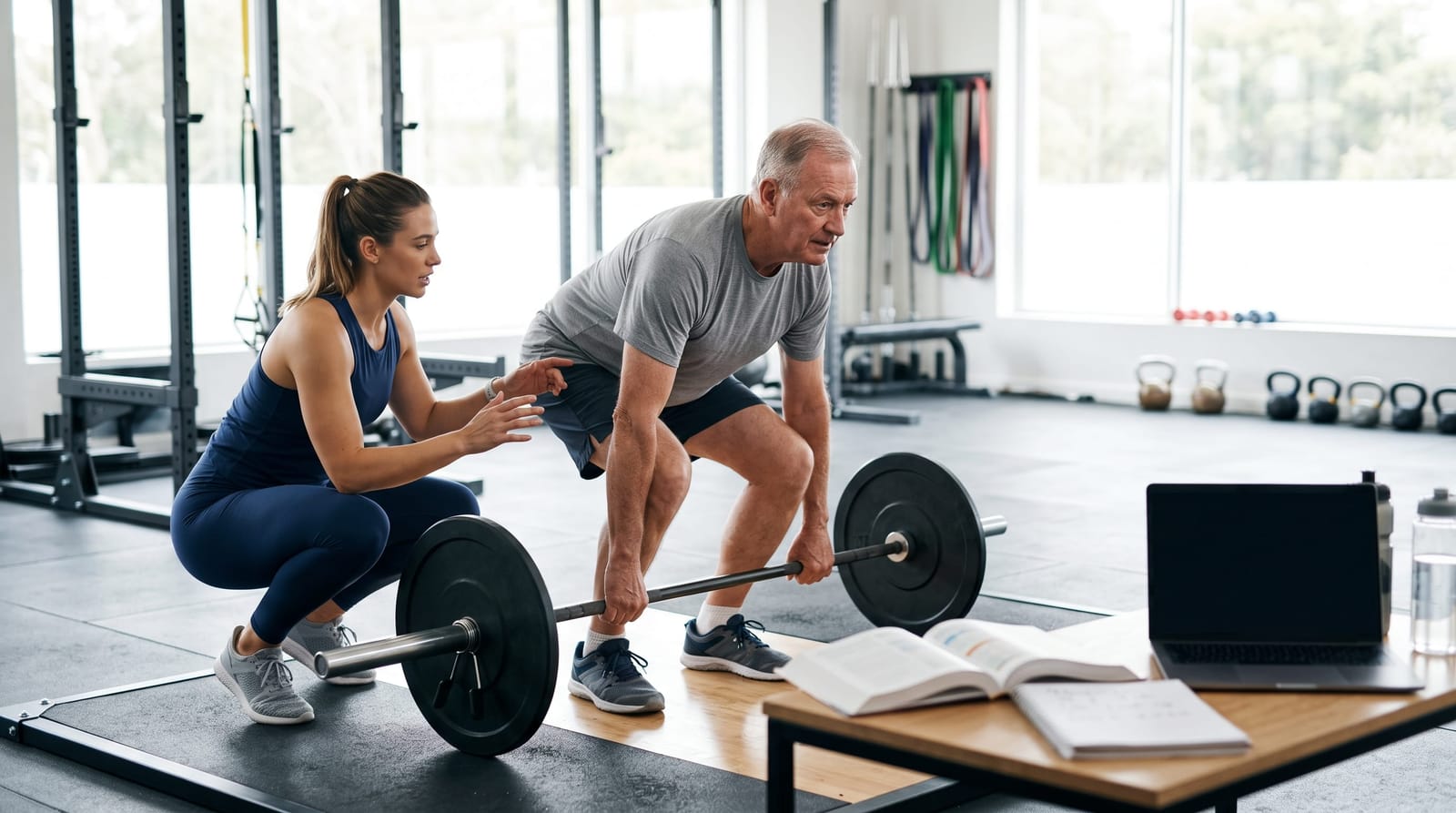
The deadlift opens the ACFT for a reason. It is the foundation of functional strength. This event requires you to lift a hex bar loaded with weight from the ground to a standing position: three times, at your maximum load.
What It Tests
The deadlift primarily challenges posterior chain strength. That includes your glutes, hamstrings, lower back, and upper traps. It also demands core stability and grip strength. Without a strong foundation in these areas, your numbers will plateau quickly.
How to Train for It
Focus on building strength progressively over time. Hex bar deadlifts are the most specific movement, but Romanian deadlifts, rack pulls, and trap bar variations also transfer well. Pair these with hamstring curls and single-leg work like Romanian deadlifts to address imbalances. Train heavy two days per week with adequate rest between sessions. Form comes first. A strong lift with poor mechanics will not serve you on test day, or beyond it.
- Hex bar deadlifts: 4-5 sets of 3-5 reps at moderate to heavy load
- Romanian deadlifts: 3 sets of 8 reps
- Farmer carries: 4 sets of 40 meters for grip and trunk stability
- Glute bridges and hip thrusts for posterior chain reinforcement
Event 2: The Standing Power Throw
The standing power throw often surprises soldiers. It requires you to heave a 10-pound medicine ball backward overhead as far as possible. Distance is the score. This event shifts the focus from maximal strength to explosive power.
What It Tests
This event targets triple extension: the coordinated explosion through your ankles, knees, and hips. It also challenges core power and shoulder mobility. Athletes who are strong but not explosive often underperform here.
How to Train for It
Power development requires training the nervous system to fire quickly. Medicine ball throws in multiple directions are the most direct tool. Overhead slams, rotational throws, and backward overhead tosses all build the coordination and explosiveness the event demands. Olympic lifting variations like hang cleans and jump shrugs also develop triple extension power effectively. Keep reps low and quality high. Power training fatigues the nervous system quickly, so rest fully between sets.
- Backward overhead medicine ball throws: 5 sets of 3 reps
- Hang power cleans or jump shrugs: 4 sets of 3 reps
- Box jumps: 3 sets of 5 reps
- Overhead medicine ball slams: 3 sets of 6 reps
Event 3: The Hand-Release Push-Up
This is not a standard push-up. At the bottom of each rep, you fully release your hands from the ground, then push back up. That added pause eliminates momentum and makes every rep a true test of upper body pressing strength and stability.
What It Tests
The hand-release push-up targets the chest, triceps, shoulders, and anterior core. It also demands scapular control and body tension throughout the full range of motion. Weak core stability causes form breakdown, which results in failed reps.
How to Train for It
Practice the actual movement regularly. Standard push-up volume builds endurance, but hand-release variations train the exact mechanics required. Add weighted push-ups, dumbbell bench press, and tricep work to build pressing strength. Don't neglect the upper back. Rows and face pulls maintain shoulder balance and reduce the risk of overuse discomfort from high-volume pressing. A strong posterior shoulder supports better mechanics in the event itself.
- Hand-release push-ups: 3-4 sets to moderate fatigue (not failure)
- Weighted push-ups or dumbbell press: 4 sets of 6-10 reps
- Tricep dips and close-grip pressing variations
- Dumbbell rows and face pulls for shoulder balance
Event 4: The Sprint-Drag-Carry
The sprint-drag-carry (SDC) is the most complex event on the ACFT. It combines five 25-meter shuttle runs with different implements: a sprint, a sled drag, lateral shuffles, a kettle bell carry, and a final sprint. The entire course is 250 meters total and scored by time.
What It Tests
This event tests everything simultaneously. Speed, lateral agility, aerobic capacity, grip strength, and lower body power all factor in. It is the closest thing to actual combat demands: sustained high-intensity movement with varied physical challenges.
How to Train for It
Interval training is the foundation of SDC preparation. Short, high-intensity work intervals with incomplete rest teach your body to recover quickly between efforts. Include specific movement practice: sled drags, lateral shuffles, and loaded carries should all appear in your weekly training. Conditioning circuits that mix these elements prepare your body for the event's varied demands. Improving your aerobic base also helps. A stronger cardiovascular engine allows you to maintain speed even in the later segments.
- 400-meter intervals at near-maximum effort: 6 sets with 90-second rest
- Sled drags: 4 sets of 25 meters
- Lateral shuffle intervals: 4 sets of 10 meters each direction
- Kettlebell farmer carries: 4 sets of 40 meters
- Mixed conditioning circuits combining all elements
Event 5: The Leg Tuck (or Plank Alternative)
The leg tuck requires you to hang from a pull-up bar and bring your knees up to touch your elbows. Soldiers who cannot perform the leg tuck may complete a timed plank instead. Both options test core and upper body strength in a demanding position.
What It Tests
The leg tuck heavily challenges your grip, hip flexors, core, and upper body pulling strength. The plank alternative tests isometric core stability and total body tension. Both require significant shoulder girdle control.
How to Train for It
If the leg tuck is your goal, begin with building the foundational movements. Hanging knee raises and hanging leg raises develop the hip flexor and abdominal strength needed. Pull-up volume builds the grip and upper body pulling capacity. For the plank, extended hold progressions and plank variations like RKC planks develop the total body tension required. Do not neglect grip training. Losing your hold on the bar mid-event costs you reps you earned through good conditioning.
- Hanging knee raises: 3 sets of 10-15 reps
- Pull-ups or assisted pull-up progressions: 4 sets of max controlled reps
- Hollow body holds: 3 sets of 20-30 seconds
- Extended plank holds: 3-4 sets building toward 2 minutes
- Farmer carries and dead hangs for grip development
Event 6: The Two-Mile Run
The two-mile run closes the ACFT. It is a timed aerobic event. After five demanding events, your legs are fatigued, your heart rate is elevated, and you still need to cover two miles as quickly as possible. Aerobic conditioning and mental toughness both matter here.
What It Tests
The two-mile run tests aerobic capacity, running efficiency, and mental endurance. Cardiovascular fitness is the core quality, but leg fatigue from earlier events makes pacing strategy important. Soldiers who neglect their aerobic base often fade significantly in the final half mile.
How to Train for It
Build your aerobic base with consistent moderate-intensity running two to three times per week. Add interval training to develop speed. 400-meter and 800-meter repeats at 5K pace improve both lactate threshold and running economy. Practice running on fatigued legs. Include short runs after leg strength sessions to simulate the demands of test day. Mobility work for the hips and ankles also supports efficient running mechanics, which helps maintain pace when fatigue sets in.
- Easy aerobic runs of 30-45 minutes: 2 times per week
- 400-meter intervals at 5K pace: 6-8 reps with 90-second rest
- Tempo runs: 20 minutes at a comfortably hard effort
- Post-strength session short runs: 1-2 miles to build fatigue tolerance
Putting It All Together: A Structured Weekly Approach
Training each event in isolation is a start. Training them as an integrated system is what produces real results on test day. A well-designed weekly plan balances strength, power, conditioning, and recovery. It sequences sessions so that hard efforts are followed by adequate rest. And it builds progressively over weeks and months rather than cramming everything into a few frantic weeks before the test.
A sample weekly structure might look like this:
- Monday: Lower body strength: deadlifts, Romanian deadlifts, farmer carries
- Tuesday: Cardio intervals: 400-meter repeats or SDC-specific conditioning
- Wednesday: Upper body strength: pressing, pulling, core work
- Thursday: Power development: medicine ball throws, explosive lower body
- Friday: Full-body circuit: mixed event practice under fatigue
- Saturday: Aerobic base run: easy pace, 30-45 minutes
- Sunday: Rest or active recovery
Understanding the ACFT score standards age gender requirements helps you set specific targets for each event and prioritize where to focus your training energy. And if you are starting from a low baseline, it is worth understanding the ACFT preparation timeline how long it realistically takes to build meaningful fitness for all six events.
How Total Body Works Supports Event-Specific ACFT Training in Colorado Springs
Generic fitness programming rarely addresses the specific demands of the ACFT. Each event has distinct requirements, and without a structured plan, it is easy to spend time on what you already do well rather than what will improve your score. Total Body Works offers one-on-one personal training in Colorado Springs designed around structured, progressive programming. Sessions focus on building the specific strength, power, and conditioning qualities the ACFT demands, with measurable progress tracked every week. For soldiers at Fort Carson or the Air Force Academy looking for expert local support, that kind of focused guidance makes a real difference.
Conclusion
The ACFT is not one test: it is six. Each event targets different physical qualities. Training effectively means understanding those differences and building a program that develops all of them deliberately. Deadlift strength, explosive power, upper body pressing endurance, lateral conditioning, core stability, and aerobic capacity all require their own focused attention. When these qualities come together through consistent, structured training, your overall performance improves significantly. If you are ready to take your ACFT training events breakdown Colorado Springs preparation to the next level, consider working with a coach who understands both the test and how to build a program around your individual starting point. Contact Total Body Works at (719) 416-5525 to learn how personalized training can support your ACFT goals.