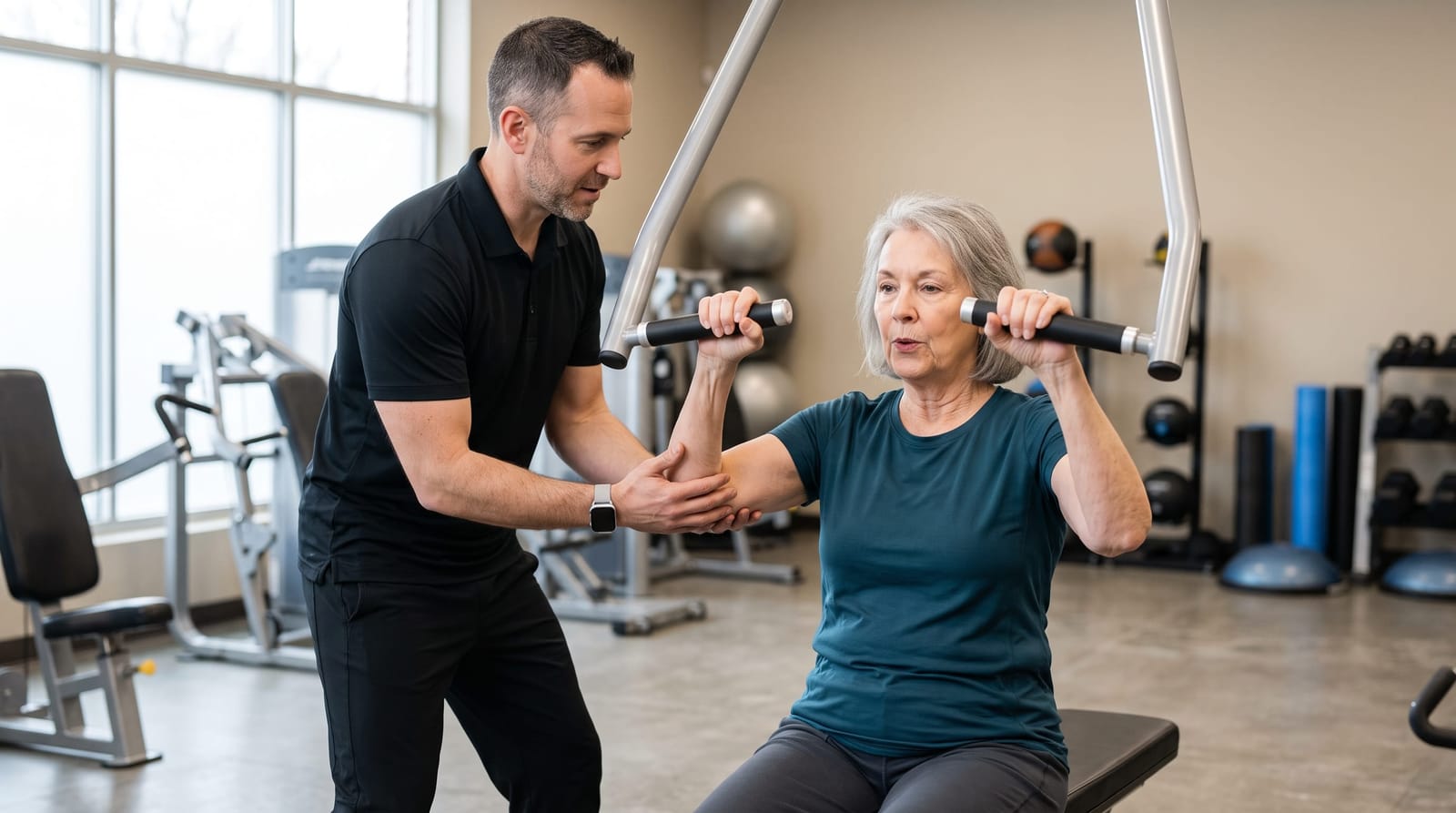
What Are Body Measurements and How Are They Used to Track Transformation?
When people begin a body transformation program, the instinct is often to step on the scale every morning and let that single number define progress. But experienced trainers know that weight alone tells an incomplete story. Body measurements tracking transformation fitness is one of the most reliable ways to understand what's actually changing in your body, and why those changes matter beyond any number on a scale. This post breaks down which measurements to take, how to take them correctly, how often to track them, and what the data actually means for your progress.
Why Body Measurements Tell a More Complete Story Than Weight Alone
The scale measures gravitational pull. That's it. It can't distinguish between fat, muscle, water, bone density, or the weight of a meal you ate two hours ago. Body measurements, on the other hand, capture changes in physical shape and composition, which is where real transformation is actually happening.
Consider this: muscle tissue is denser than fat tissue, meaning it takes up less space even though it weighs more. A client who gains two pounds of muscle while losing two pounds of fat will see no change on the scale, but their clothes will fit differently, their posture may improve, and their tape measure numbers will shift noticeably. Without body measurements, that meaningful progress would be entirely invisible.
Research consistently shows that tracking multiple metrics, rather than weight alone, leads to better long-term adherence to fitness programs. When people can see evidence of real change across several data points, they're more likely to stay consistent through the inevitable plateaus that occur in any structured program. Understanding why most body transformation programs fail after the first 90 days often comes down to a lack of meaningful feedback, and comprehensive measurement tracking directly addresses that gap.
Which Body Measurements Actually Matter for Tracking Transformation
Not every measurement carries equal value for every goal. Here are the key sites used by experienced trainers during structured transformation programs and what each one reflects:
Waist (at the Navel)
This is arguably the single most informative measurement for overall health and body composition. Reductions in waist circumference often reflect meaningful changes in both subcutaneous fat (just under the skin) and deeper abdominal fat stores. It's taken at the narrowest point of the torso or, if no natural narrowing exists, directly at the navel.
Hips (at the Widest Point)
Measured around the fullest part of the glutes, the hip measurement helps track lower-body fat distribution and overall body shape. When combined with the waist measurement, trainers use the waist-to-hip ratio to get a more complete picture of body composition change over time.
Chest (at the Nipple Line)
For both men and women, chest measurements reflect changes in pectoral muscle development, upper-body fat, and posture-related structural improvements. This number often shifts noticeably when upper-body strength training is consistent.
Arms (Bicep at Peak, Relaxed and Flexed)
Upper arm measurements, taken at the midpoint between the shoulder and elbow, help track muscle development in the biceps and triceps. Trainers often record both relaxed and flexed measurements to monitor strength gains reflected in muscle fullness.
Thighs (Midpoint of the Upper Leg)
The mid-thigh measurement captures changes in the quadriceps and hamstrings, which are often the largest muscle groups in the body. Increases in thigh measurement paired with waist reductions are a strong indicator of favorable body recomposition.
Calves (Widest Point)
Though often overlooked, calf measurements help track lower-leg development and can reflect improvements in overall lower-body conditioning.
How to Take Body Measurements Correctly
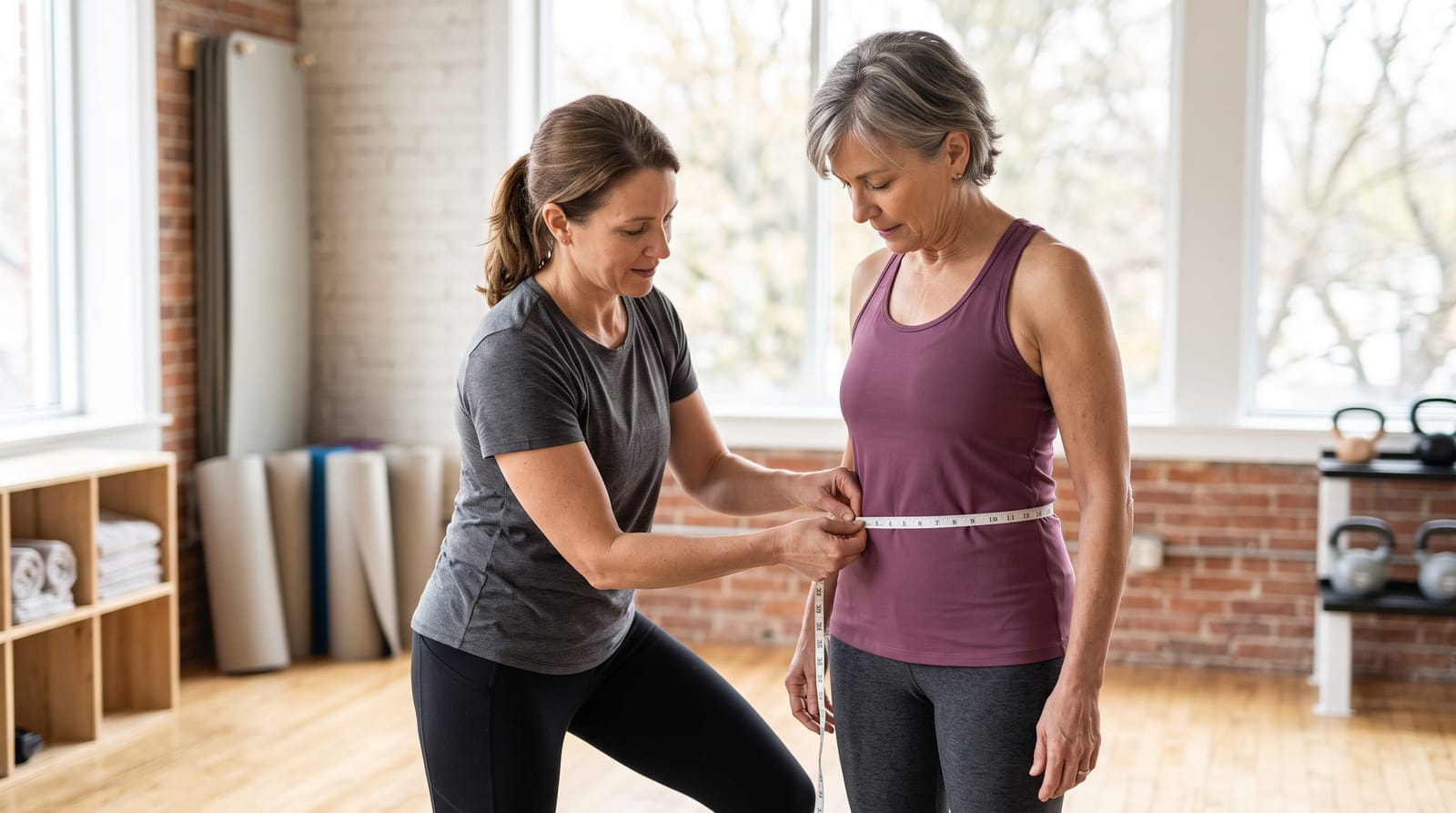
Accuracy is everything when tracking measurements over time. Even small technique inconsistencies, taking a measurement slightly above or below the correct site, can produce misleading data that undermines the value of tracking altogether. Follow these guidelines for reliable results:
- Use a flexible cloth or plastic tape measure, not a metal ruler or rigid tape. Cloth tape designed for body measurements is ideal.
- Keep the tape parallel to the floor at all times. Angled tape creates inflated or deflated readings.
- Don't pull the tape tight: snug but not compressing the skin. You should be able to slip one finger under the tape.
- Always measure on the same side of the body: most trainers default to the right side for arm and leg measurements.
- Measure at the same time of day each session: morning measurements before eating or drinking are typically the most consistent.
- Relax your muscles during measurement (unless specifically taking a flexed reading for arm comparisons).
- Record every measurement immediately, even confident trainers don't trust memory when numbers are this specific.
At Total Body Works, measurement check-ins follow a standardized protocol so that every reading is taken in exactly the same way, at the same sites, under the same conditions. This consistency is what transforms raw numbers into meaningful trend data over weeks and months.
How Often Should You Take Body Measurements?
Measurement frequency matters more than most people realize. Too often, and you're chasing daily fluctuations caused by hydration, sodium intake, hormonal cycles, and digestion: none of which reflect actual body composition change. Too infrequent, and you lose the feedback loop that keeps a program responsive and motivating.
Here's a practical framework used in structured transformation programs:
- Every 2-4 weeks: The ideal interval for most clients in an active transformation program. This gives enough time for measurable change to occur while keeping feedback cycles short enough to catch and correct issues early.
- Monthly minimums: For clients in maintenance phases or those newer to consistent training, monthly tracking provides a reliable baseline without creating unnecessary focus on short-term fluctuations.
- Progress photos every 4 weeks: Taken under consistent lighting, angle, and clothing conditions, photos complement measurement data in ways that numbers alone can't capture: particularly for symmetry and posture improvements.
Studies suggest that clients who track progress consistently, using measurements, photos, and subjective markers like energy and strength, are significantly more likely to sustain results long-term than those who rely solely on weekly weigh-ins. In one analysis of behavioral tracking in fitness programs, consistent self-monitoring was among the strongest predictors of continued progress at the six-month mark.
What Changes in Measurements Actually Indicate Real Progress
Reading your measurement data correctly is just as important as collecting it. Here's how to interpret common patterns:
Waist Decreasing, Weight Staying the Same
This is a hallmark of successful body recomposition: losing fat while gaining or maintaining muscle. It's one of the most positive patterns a trainer can see in a client's data and is often completely invisible on a standard scale.
Arm and Thigh Measurements Increasing with Waist Decreasing
This pattern strongly suggests muscle development alongside fat reduction: exactly the body composition shift that most transformation programs are designed to produce.
All Measurements Decreasing Rapidly
Rapid across-the-board reductions, particularly in arm and thigh measurements, may indicate significant muscle loss alongside fat loss: a pattern that warrants a conversation with your trainer about nutrition timing, training volume, and recovery quality.
Minimal Change Across 6-8 Weeks
A plateau in measurements after consistent training is a signal, not a failure. It's useful data that helps a coach adjust programming, recovery, or lifestyle factors. This is precisely why having a trainer review your measurement trends during check-ins is more valuable than tracking numbers in isolation.
Frequently Asked Questions
How many body measurements should I track at once?
Most structured programs track between 6 and 8 sites, waist, hips, chest, both arms, and both thighs, as a core set. Some programs also include calves, neck, and forearms depending on client goals. More isn't always better; what matters is measuring the same sites consistently each time so your data is comparable.
Does body weight matter at all if I'm taking measurements?
Weight still has value as one data point among many. Rather than tracking daily weight, many coaches recommend recording weight weekly under the same conditions, same time of day, same day of the week, and looking at 4-week rolling averages rather than day-to-day changes. When combined with tape measurements and subjective markers like energy levels and strength benchmarks, weight data becomes more meaningful and less emotionally loaded.
Can I take my own body measurements accurately, or do I need a trainer?
Self-measurement is possible and encouraged for between-session tracking: particularly for the waist, hips, and chest. Arm and thigh measurements are more difficult to take on yourself with consistent technique, so having a trainer or training partner take those readings improves reliability. At Total Body Works, trainer-led measurement check-ins ensure every reading follows the same standardized protocol, making the trend data far more useful over time.
Why do my measurements sometimes go up even when I'm training consistently?
Short-term measurement increases are common and often completely normal. Muscle tissue retains water during the repair process that follows strength training, which can temporarily increase circumference measurements, particularly in the thighs and arms, by 0.5 to 1 inch within 24 to 48 hours of an intense session. Hormonal fluctuations, sodium intake, and digestive volume also influence readings. This is one reason why tracking trends over 4-week windows is far more informative than comparing week-to-week snapshots.
The Bottom Line: Measurements as a Map, Not a Verdict
Body measurements tracking transformation fitness isn't about obsessing over numbers: it's about building a reliable map of where you've been and where you're heading. When taken correctly, tracked consistently, and interpreted with context, measurements give you and your trainer the information needed to make smart adjustments and recognize progress that would otherwise go unnoticed. At Total Body Works, measurement protocols are built into every client check-in as part of a broader approach to results-driven, personalized coaching, because lasting transformation deserves more than a single number to define it.