The Truth About Body Transformation After 40 and 50: What Actually Works

Body transformation after 40 and 50 is possible. What works is not a special age-specific shortcut, but a repeatable plan: progressive strength training, regular aerobic activity, attention to movement quality and enough recovery. Progress also deserves a broader definition than weight loss. Strength, mobility, endurance and confidence in everyday activities all matter.
Our approach to body transformation in Colorado Springs starts with building that foundation. Your current abilities, training history, goals and schedule are more useful starting points than comparing yourself with how you exercised decades ago.
What Changes After 40 and 50, and What That Means for Training
Aging is gradual, and people do not all experience the same changes at the same time. Understanding a few common factors can help you set expectations without treating age as a limitation.
Hormonal Changes Are Part of the Picture
Hormone levels change with age. Women experience hormonal fluctuations through perimenopause and menopause, which typically occurs between ages 45 and 55. Testosterone levels can also decline as men age. These changes can influence body composition, but they do not determine what an individual can accomplish through training.
Hormones are not something a workout assessment can diagnose. If symptoms, an existing injury or a medical condition affect exercise, a licensed healthcare professional can assess your individual situation and any exercise restrictions.
Muscle and Activity Habits Matter More Than a Birthday
The loss of muscle mass that often accompanies aging is one reason resistance training matters. Resistance training means working against a challenge, such as weights, bands or your own body weight, to develop strength.
It is misleading to assume that metabolism suddenly slows at 40 or 50, or that building muscle will dramatically increase calorie use at rest. A more useful focus is maintaining regular activity and developing strength rather than expecting exercise to “reset” your metabolism.
Recovery Needs Individual Attention
Some people need more recovery time as they age, but age is only one factor. Training experience, workout intensity, sleep and everyday stress also affect how demanding a session feels.
A useful plan leaves room to recover and adjusts when fatigue repeatedly interferes with the next workout. Soreness and exhaustion are not measures of workout quality.
Five Myths That Can Get in the Way of Progress
- Myth 1: You cannot build muscle after 50. Older adults can build muscle and strength through resistance training. The amount and pace of change vary, so a personal training plan needs to respond to actual progress rather than promise a particular result.
- Myth 2: Cardio is all that matters for changing your body. Aerobic exercise, such as walking or cycling, develops endurance. Resistance training develops strength and supports muscle maintenance. These activities have different roles and can complement one another.
- Myth 3: You need to train like you did at 25. Your current ability is the relevant starting point. A returning exerciser may need to rebuild familiarity with basic movements, while an experienced exerciser may already be ready for more challenging work. Age alone does not choose the program.
- Myth 4: The scale tells the whole story. Body weight cannot distinguish changes in muscle, fat and fluid. It also does not show whether you are stronger, moving more comfortably or handling a familiar activity with less effort.
- Myth 5: It is too late to begin. Starting later does not rule out progress. A manageable routine gives you something to practice, track and build on without needing to match someone else's starting level.
Build the Foundation Before Adding More Intensity
A demanding workout is not automatically a productive one. When returning to exercise, the first task is finding movements and effort levels you can perform with control and repeat consistently.
A foundation-first approach includes:
- Movement quality: Learning the basic patterns used in training, including sitting down and standing up, bending at the hips, pushing and pulling, before adding substantial resistance.
- Mobility and stability: Practicing movement through a comfortable range while maintaining control. More range is not always better if control is lost.
- Gradual progression: Increasing the challenge as an exercise becomes manageable. Progress might mean a little more resistance, another controlled repetition or better technique, not changing everything at once.
- Recovery: Allowing time between demanding sessions and considering how sleep and stress affect readiness to train.
- A workable schedule: Choosing a routine that fits ordinary weeks, including work, family responsibilities and activities you enjoy.
For example, someone returning after a long break might first practice standing from a bench with steady control. Adding resistance becomes a later step, rather than the test of whether the first workout was worthwhile.
At Total Body Works, we begin training with a movement screening. Our personalized programs emphasize strength, stability, function and flexibility before moving toward more demanding work. The screening helps guide exercise selection; it is not a medical examination.
What to Expect Without a Fixed Transformation Deadline
There is no single timeline for body transformation after 50. Starting fitness, consistency, recovery and the goal itself all affect the pace. Learning an exercise, increasing strength and noticing visible body changes are different milestones.
Early Sessions: Learn the Routine
The initial focus is becoming familiar with exercises, finding appropriate resistance and establishing a schedule. Useful signs of progress include needing fewer technique reminders and completing movements with more control. Visible change does not need to be the first sign that training is becoming more effective.
As Consistency Builds: Track What Changes
A simple training log can record the exercise, resistance, repetitions and how demanding the session felt. Comparing the same exercise over time is more informative than judging each workout by how tired it leaves you.
Over the Longer Term: Review and Adjust
When training becomes easier, the challenge can increase gradually. When attendance or recovery becomes difficult, the schedule or workload may need adjustment. Adding more exercise is not the only response to slower progress.
For a closer look at timing, see how long does body transformation take Colorado Springs. Treat a calendar as a way to schedule reviews, not as a deadline your body has to meet.
When Personalized Private Training Is Useful
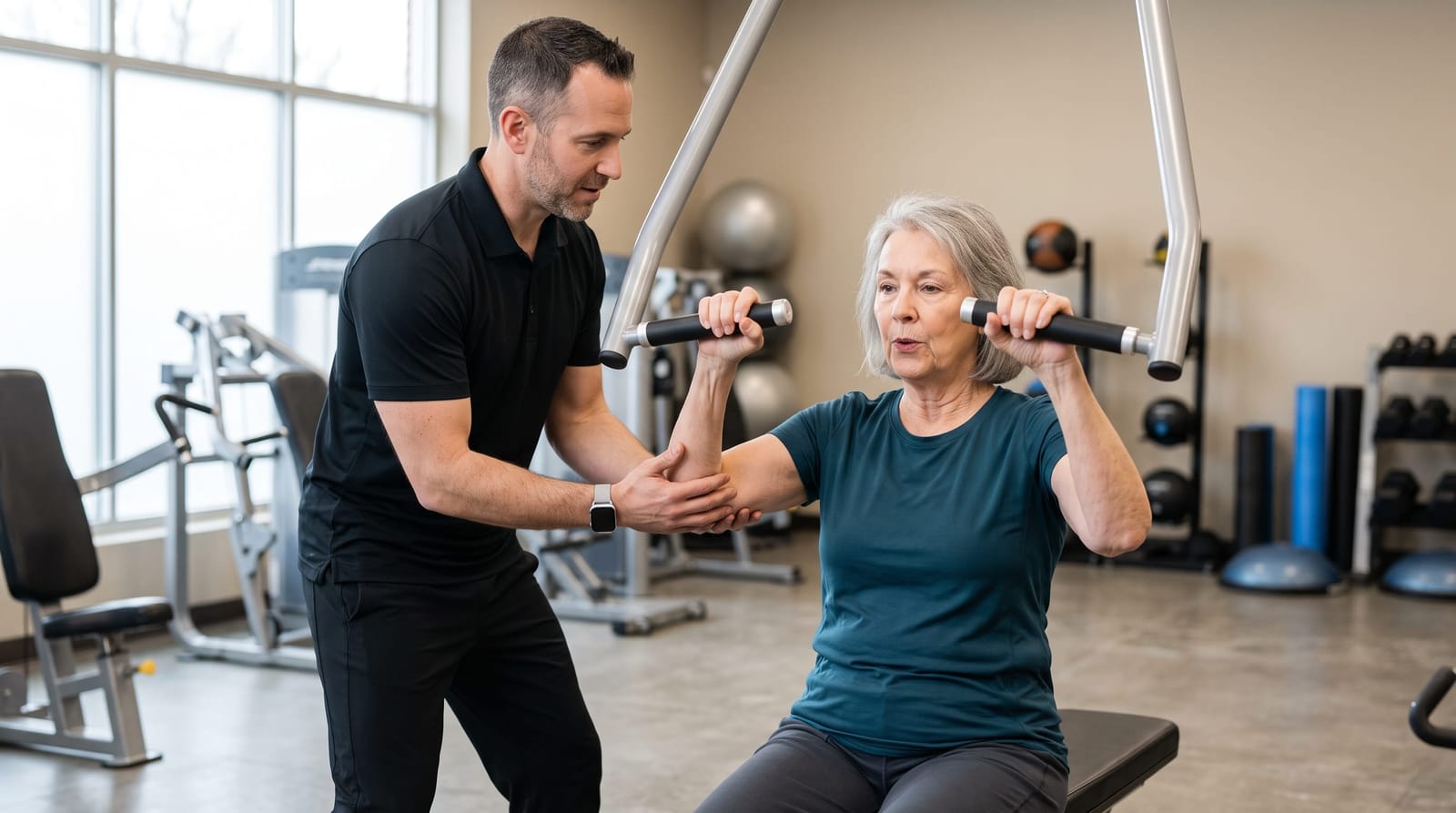
Self-directed programs and group exercise can both provide useful structure. Private training offers a different advantage: individual attention to exercise selection, technique and progression. That can be especially helpful when you are unsure where to start or how to adjust a familiar routine.
When comparing programs, look for these practical features:
- A clear starting assessment: The trainer considers your goals, exercise experience and current movement abilities.
- Exercise options: Movements can be adjusted to your present abilities rather than requiring everyone to follow an identical workout.
- Useful feedback: Coaching explains what to change and why, rather than simply encouraging more effort.
- A progression plan: There is a reason for increasing resistance, repetitions or complexity.
- Regular review: The plan changes when your schedule, goals or training response change.
At Total Body Works in Colorado Springs, we offer personalized training in a private gym environment. Our Colorado Springs functional fitness experts working with adults over 50 focus on balance, flexibility and functional strength, meaning strength that supports everyday movement. We do custom packages, and someone from our staff will reach out to discuss further.
Define Success in Terms You Can Track
A useful goal connects training to something you want to do. Instead of relying only on “get in shape,” choose a few indicators that reflect your priorities:
- Completing a familiar strength exercise with better control or more resistance.
- Walking a familiar route at a more comfortable effort.
- Feeling more capable carrying groceries or recreational gear.
- Building confidence for hiking, cycling or other activities you enjoy around Colorado Springs.
- Following a routine consistently without making the rest of your week unmanageable.
These are examples of goals, not promised outcomes. A short log gives you and your trainer something concrete to review. If body composition is also a goal, it can sit alongside these measures rather than replacing them.
For more on setting expectations, see body transformation over 50 results Colorado.
Further Reading
- how long does body transformation take Colorado Springs: Explore the factors that influence progress and the role of ongoing program reviews.
- body transformation over 50 results Colorado: Consider expectations and ways to recognize progress beyond body weight.
Age Is Context, Not the Whole Plan
With training matched to your starting point, body transformation after 50 is not only possible, it can mean more than a change in appearance. The practical aim is a routine that develops capability and remains workable over time. Start with a clear baseline, practice consistently and let your progress guide the next challenge.