Massage Therapy After 50: Why Your Body Responds Differently and What That Means for Recovery
If you've been getting regular massage therapy for years and recently noticed it feels different than it did in your 30s or 40s, you're not imagining things. The body changes in meaningful ways as we age, and those changes affect how massage therapy works, how long recovery takes, and which techniques deliver the best results. For active adults navigating massage therapy over 50 recovery differences in Colorado Springs, understanding the "why" behind those differences can help you get far more out of every session. Here's what's actually happening in your body, and how a skilled therapist works with those changes, not against them.
How the Aging Body Responds Differently to Massage
Several interconnected physiological shifts happen in the body between your 30s and your 50s and beyond. None of these are problems to be fixed: they're simply part of how the body evolves over time. But they do change the equation when it comes to manual therapy.
Connective tissue, the fascia, tendons, and ligaments that hold everything together, becomes less elastic and more fibrous with age. Research suggests that collagen production decreases by roughly 1% per year after age 25, meaning that by the time someone reaches 50, their connective tissue is meaningfully denser and less pliable than it was two decades earlier. This is one reason why the same pressure that felt relaxing at 35 might feel uncomfortable or even counterproductive at 55.
Circulation also changes. Blood vessels become less efficient at dilating and constricting, which means tissue nourishment and waste removal happen more slowly. Skin integrity shifts as well: the skin thins over time, becomes more sensitive, and requires a gentler touch to avoid unnecessary discomfort. Finally, pain tolerance and sensory feedback tend to change, with some adults over 50 experiencing heightened sensitivity in certain areas while others report reduced sensation in others.
Together, these factors mean that the same massage that worked well in your younger years may need to be recalibrated to deliver the results you're looking for now.
Key Physiological Changes That Shape Your Massage Experience
To get specific, here are the primary body changes that experienced therapists account for when working with adults over 50:
- Reduced connective tissue elasticity: Fascia and muscles respond better to slower, sustained pressure rather than rapid, aggressive techniques.
- Decreased circulation efficiency: Slower strokes and techniques that encourage lymphatic flow become more important for supporting tissue recovery.
- Thinner, more sensitive skin: The skin surface requires a lighter touch in certain areas, particularly over bony prominences or areas with reduced tissue depth.
- Changes in muscle fiber composition: Adults over 50 tend to have a higher ratio of slow-twitch muscle fibers and may experience more delayed muscle soreness after physical activity.
- Shifting pain perception: Sensory nerve sensitivity changes with age, which means therapists need to check in more frequently and adjust pressure based on real-time feedback rather than assumptions.
- Longer recovery windows: The inflammatory response that follows intense manual therapy tends to take longer to resolve in older adults, which informs how frequently and intensely sessions should be scheduled.
None of these are barriers to effective massage therapy: they're simply the context that informs a skilled therapist's approach.
What Adapted Techniques Actually Look Like in Practice
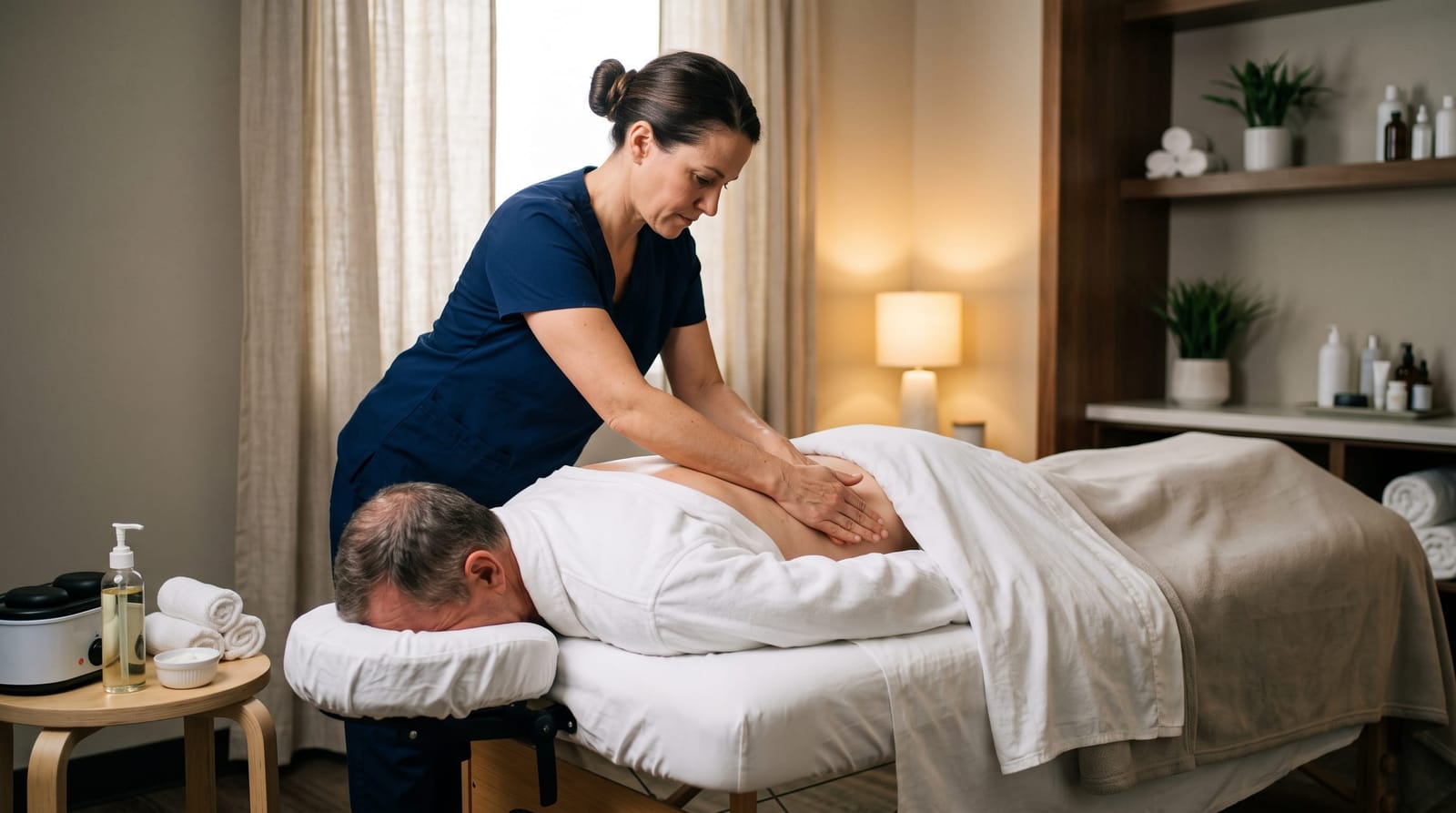
When a therapist is trained to work with adults over 50, the session looks and feels noticeably different from a standard relaxation massage or a deep-tissue session designed for a 28-year-old athlete.
Adapted approaches typically include:
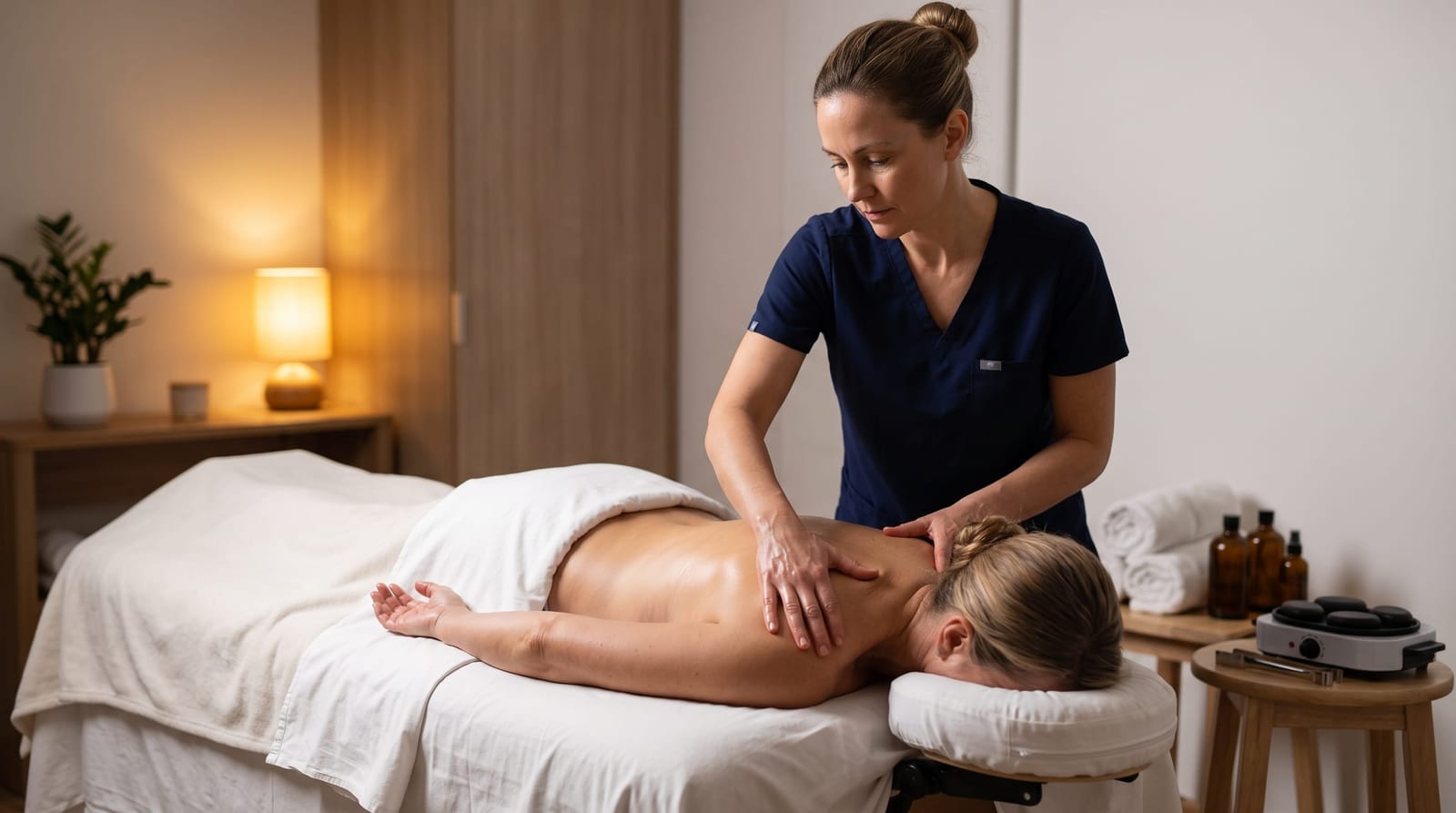
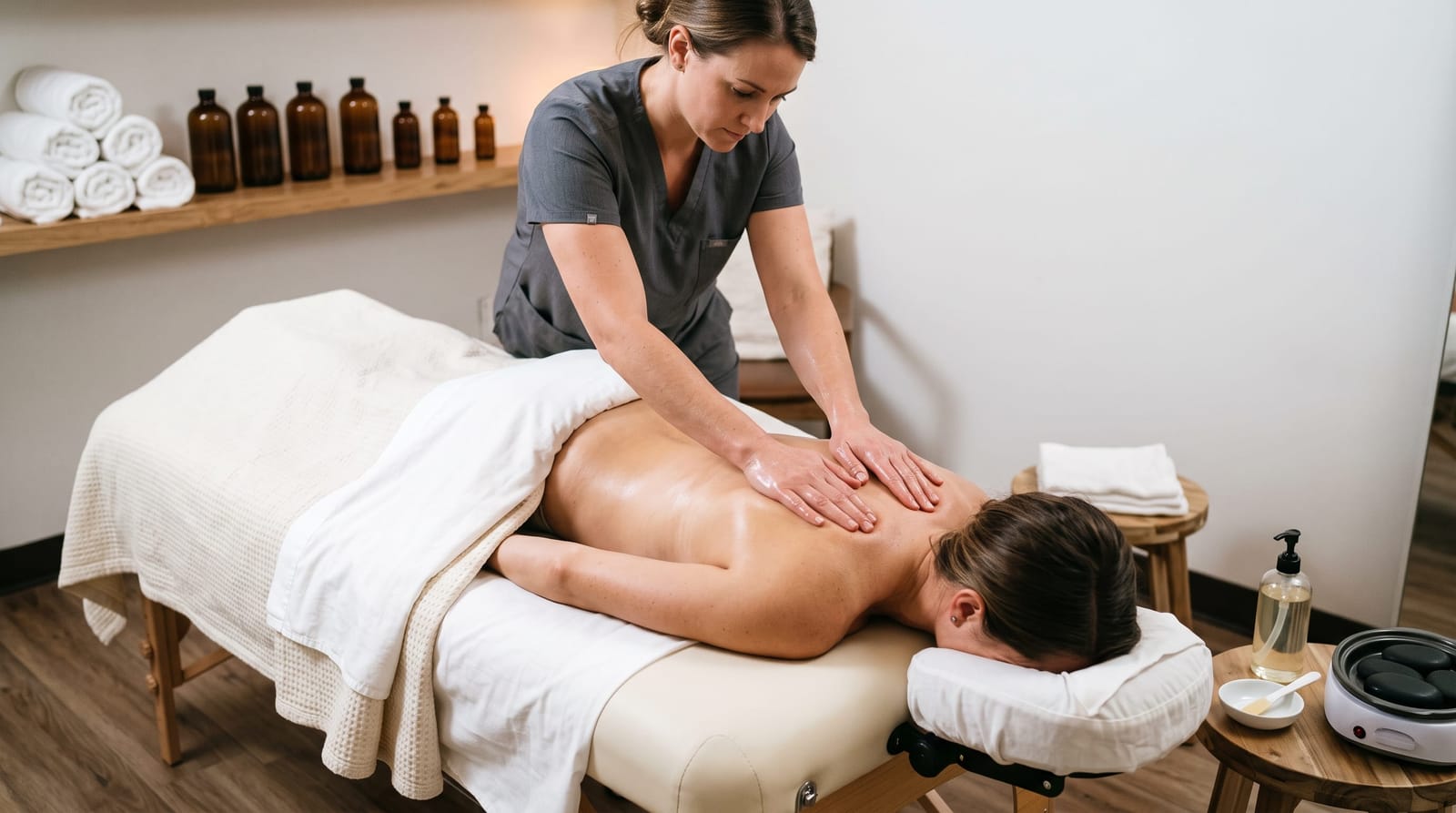
- Slower, more deliberate pressure: Rather than rapid kneading or aggressive friction, therapists use sustained compression that allows stiffer connective tissue time to respond and release.
- Modified positioning: Bolsters and positioning supports are used more extensively to reduce strain on joints and ensure the client is fully comfortable throughout the session.
- Reduced initial intensity: Starting lighter and building gradually allows both the therapist and client to gauge tissue response before applying deeper work.
- Increased focus on circulation support: Effleurage strokes that move fluid toward the heart become a more significant part of the session, supporting the body's natural recovery processes.
- More frequent verbal check-ins: Because sensory feedback is more variable in older adults, therapists stay in active communication rather than assuming a set pressure is working well.
At Total Body Works, therapists are trained to conduct a brief intake conversation before every session, ensuring that the approach is tailored to where your body is that day, not just where it was six months ago.
Recovery Benefits May Actually Be Stronger: and Last Longer
Here's something many people over 50 are pleasantly surprised to learn: while the body changes in ways that require technique adjustments, the recovery benefits of massage therapy can actually be quite significant for older adults. Because circulation tends to be less efficient at baseline, techniques that actively support blood flow and lymphatic movement deliver a proportionally larger effect. Studies suggest that regular massage therapy may help support tissue nourishment and reduce muscle tension in ways that have a longer-lasting effect for adults over 50 compared to younger clients who bounce back quickly on their own.
For active adults who train consistently, this is meaningful. If you're curious about how session frequency should shift based on your activity level, it's worth exploring how often to schedule massage for recovery when you're training three to four times per week: a question that takes on additional nuance after 50.
For adults managing joint discomfort or stiffness, it's also worth looking into what massage therapy may offer for arthritis and joint-related concerns, which Colorado Springs adults over 60 increasingly want to understand in practical terms.
Frequently Asked Questions
Is deep tissue massage safe for adults over 50?
Deep tissue work isn't automatically off the table for adults over 50, but it requires more careful application. Because connective tissue is less elastic and skin is more sensitive, therapists typically use slower, more controlled pressure rather than aggressive or rapid techniques. The key is working with a therapist who adjusts based on your body's feedback rather than applying a one-size-fits-all approach. Always communicate openly about what feels productive versus what feels uncomfortable.
How long does soreness last after a massage when you're over 50?
Post-massage soreness tends to resolve within 24 to 48 hours for most adults, but this window can extend slightly for those over 50 due to slower inflammatory response and circulation. Staying hydrated, moving gently after a session, and allowing adequate rest can all support the recovery process. If soreness regularly extends beyond 48 to 72 hours, it's a good sign that session intensity or frequency needs to be adjusted: something your therapist can help you calibrate.
How often should adults over 50 get massage therapy?
Session frequency depends on your activity level, goals, and how your body responds to treatment. For active adults over 50 who train regularly, many therapists suggest starting with bi-weekly sessions to establish a baseline, then adjusting based on recovery patterns. For those using massage primarily for mobility maintenance and general wellness, monthly sessions may be sufficient. There's no universal answer: it's always a conversation between you and your therapist based on how your body is responding.
What should I tell my massage therapist if I'm over 50 and new to regular bodywork?
Transparency is your best tool. Share your activity level, any areas of chronic stiffness or sensitivity, recent changes in how your body feels during or after physical activity, and any health conditions you're managing with your primary care provider. You don't need a detailed medical history, just an honest conversation about where your body is right now. A good therapist will use that information to shape the session appropriately from the very first appointment.
The Takeaway: Your Body Deserves Technique That Meets It Where It Is
Massage therapy after 50 isn't a lesser version of the experience: it's simply a smarter, more informed one. The body changes in real ways that affect how manual therapy works, and those changes are best met with adapted techniques, attentive communication, and a therapist who understands what's happening beneath the surface. At Total Body Works, that kind of individualized, experience-informed approach is built into every session. Whether you're a lifelong athlete, a recently active adult, or someone just beginning to prioritize recovery and mobility, your body responds best when the approach is designed specifically for it.