
How to Train for the ACFT Sprint-Drag-Carry in 8 Weeks
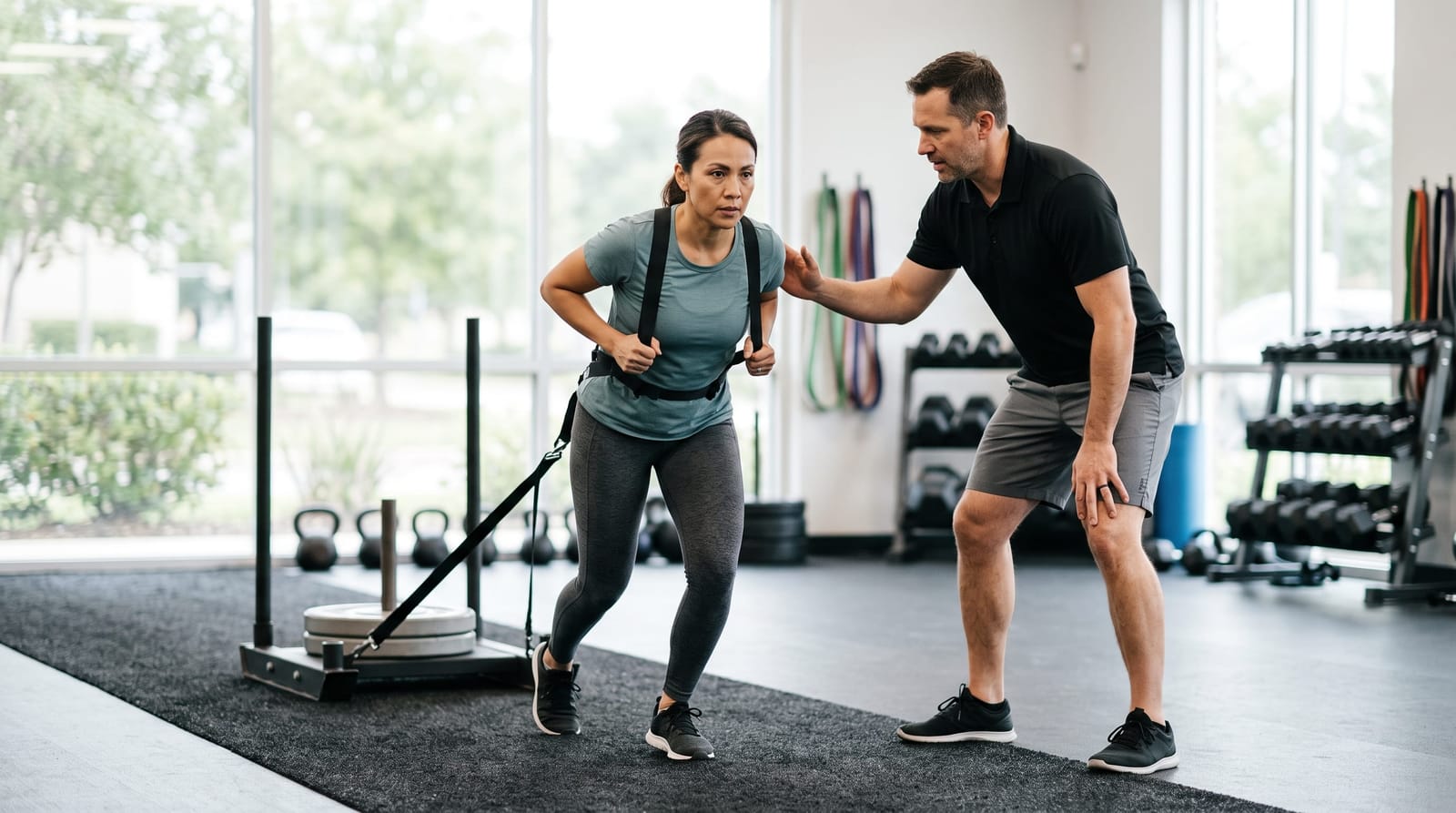
The Sprint-Drag-Carry is one of the most physically demanding events on the Army Combat Fitness Test. It tests explosive power, grip strength, cardiovascular endurance, and the ability to sustain intensity across multiple movement patterns, all within a tight time window. If you're looking for a structured ACFT sprint drag carry 8 week training plan, this guide breaks down exactly how to build the fitness qualities that event demands, week by week. Whether you're preparing for your first ACFT or working to improve your score, this framework gives you a clear starting point.
Understanding What the Sprint-Drag-Carry Actually Tests
Before you can train for the Sprint-Drag-Carry effectively, it helps to understand what your body is actually doing during the event. The five-leg shuttle includes a sprint, a sled drag, a lateral shuffle, a farmer carry, and a final sprint, all completed back and forth across a 25-yard lane. You're covering 250 yards total while transitioning between explosive, strength-based, and aerobic demands without a real break between legs.
This means your training can't just focus on one quality. A soldier who's a strong runner but has limited grip strength will struggle with the farmer carry. A soldier with excellent strength but poor conditioning will fade on the final sprint. Your 8-week plan needs to develop explosive power, muscular endurance, lateral movement efficiency, and the ability to sustain effort under accumulating fatigue, all at the same time.
The good news is that with intentional programming, eight weeks is enough time to make meaningful, measurable progress on all of these qualities, especially if you're training consistently and recovering well.
Weeks 1-2: Build Your Foundation
The first two weeks are about establishing baseline capacity in each movement pattern and identifying where your biggest weaknesses lie. This isn't the time to push maximum intensity: it's the time to build movement quality and tolerance.
- Sprint intervals: 3x per week, 6-8 x 25-yard sprints with full recovery between reps. Focus on acceleration and clean mechanics rather than all-out speed.
- Lateral shuffles: 3 sets of 25 yards each direction, 2x per week. Emphasize staying low, keeping a wide base, and not crossing your feet.
- Farmer carries: 3 sets of 30-40 yards with moderate weight (aim for roughly 40-50% of your body weight per hand). Focus on posture: tall spine, shoulders back, strong grip.
- Sled drags: If a sled isn't accessible, use resistance bands anchored low to simulate the pulling position. 3 sets of 25 yards, moderate resistance.
- Sandbag thrusters: 3 sets of 12-15 reps as accessory work to build the legs and shoulders you'll need for carries and transitions.
Keep total training sessions to 4-5 days per week in this phase and prioritize sleep and hydration for recovery.
Weeks 3-5: Build Strength and Work Capacity
Once your body has adapted to the foundational movement patterns, weeks 3 through 5 shift toward building the strength and cardiovascular work capacity that will improve your actual event time.
- Sled drags: Progress to 3-4 sets of 50 yards (25 out and back): matching the actual test distance. Increase resistance gradually across the three weeks. Your pulling mechanics matter here: hinge forward, drive with your legs, and maintain controlled breathing.
- Farmer carries: Increase load progressively. Incorporate shorter rest periods to build grip endurance and postural stamina under fatigue.
- Sprint intervals: Shift toward more event-specific intervals. Try 4-6 rounds of: sprint 25 yards, shuffle 25 yards each direction, carry 25 yards, rest 90 seconds. This trains your system to transition between demands rather than recover fully between efforts.
- Lateral shuffle conditioning: Add lateral banded walks and lateral box step-overs to build the hip stability that keeps your shuffles efficient when you're fatigued.
- Accessory work: Romanian deadlifts, trap bar deadlifts, and single-leg exercises to build the posterior chain strength that powers every leg of the event.
This phase is where training starts to feel demanding. It's normal. Managing effort, not going all-out every session, is what builds fitness over time without running yourself down.
Weeks 6-7: Event-Specific Simulation
This is where your training becomes the most sport-specific. You're not just training the individual components: you're training the full event sequence and teaching your body to sustain intensity from the first sprint through the final one.
- Full Sprint-Drag-Carry simulations: At least twice per week, complete the full event sequence at test conditions. Track your time, note where you slow down, and use that data to adjust emphasis in your accessory work.
- Reduced rest intervals: In your interval work, cut rest down to 60-75 seconds to build the ability to sustain effort across multiple rounds.
- Heavy sled work: One session per week with heavier-than-test resistance to build relative strength. When you return to standard resistance, the drag will feel more manageable.
- Grip-specific training: Dead hangs, plate pinches, and towel pull-ups keep your grip strength from becoming the limiting factor during the farmer carry legs.
By week 7, most soldiers training consistently will notice a clear improvement in their transition speed and their ability to maintain form in the later legs of the event.
Week 8: Taper and Prepare
The final week before your test isn't the time to add more volume: it's the time to let your body fully absorb the training you've done. Reduce overall training volume by roughly 40-50% while maintaining the intensity of a few key sessions. Complete one light full-event simulation early in the week at a comfortable pace just to reinforce movement patterns. Prioritize sleep, hydration, and nutrition. Trust the eight weeks of work you've put in.
Arriving at your ACFT well-rested and confident is itself a performance advantage. Fatigue accumulated from training too hard in the final week won't improve your score: it will only work against you.
Frequently Asked Questions
How many times per week should I train specifically for the Sprint-Drag-Carry?
Two to three focused sessions per week targeting the specific movement patterns of the Sprint-Drag-Carry is generally effective. This leaves room for your other ACFT event training and allows adequate recovery between sessions. Quality of training and consistency over eight weeks matters more than volume in any single week.
What's the most common weakness soldiers have on the Sprint-Drag-Carry?
Grip fatigue during the farmer carry legs and deceleration in the lateral shuffles are the two most common performance limiters. Both respond well to targeted training: farmer carry progressions for grip endurance, and lateral movement drills that emphasize staying low and controlling deceleration through the hips rather than the knees.
Can I train for the Sprint-Drag-Carry without a sled?
Yes: resistance bands anchored to a low, stable anchor point can simulate the hip-hinge pulling position used in the sled drag. While nothing fully replicates a loaded sled, band-resisted drags, Romanian deadlifts, and cable pull-throughs can build the posterior chain strength the event demands. If you have access to a sled even occasionally, prioritize getting those reps in.
Is an 8-week plan enough time to significantly improve my Sprint-Drag-Carry time?
For most soldiers training consistently, eight weeks of well-structured programming is enough time to see meaningful improvement in event time, especially if you enter with identifiable weaknesses that focused training can address. Soldiers starting from a higher fitness baseline may see smaller but still valuable gains in efficiency and consistency.
Your Training, Built Around Your Numbers
This 8-week ACFT sprint drag carry training framework gives you a strong structural foundation, but the most effective preparation is tailored to your individual starting point, your current ACFT scores, and the specific legs of the event where you're losing the most time. At Total Body Works in Colorado Springs, our coaches work directly with active duty soldiers, reservists, and National Guard members to build programming that fits around your training schedule and targets your real performance gaps. If you're serious about improving your ACFT results, reach out to learn how personalized coaching can make every week of training count.