How HBOT Therapy Speeds Up Recovery Between Training Sessions
When you're committed to a serious body transformation program, what you do between training sessions matters just as much as what you do during them. Recovery isn't passive: it's an active process that determines how well your body adapts, rebuilds, and prepares for the next workout. One recovery tool gaining real attention among dedicated fitness clients in Colorado Springs is hyperbaric oxygen therapy, or HBOT. In this post, we'll explain what HBOT is, how it supports the recovery process, and why Total Body Works incorporates it as a strategic part of comprehensive training programs.
What Is Hyperbaric Oxygen Therapy?
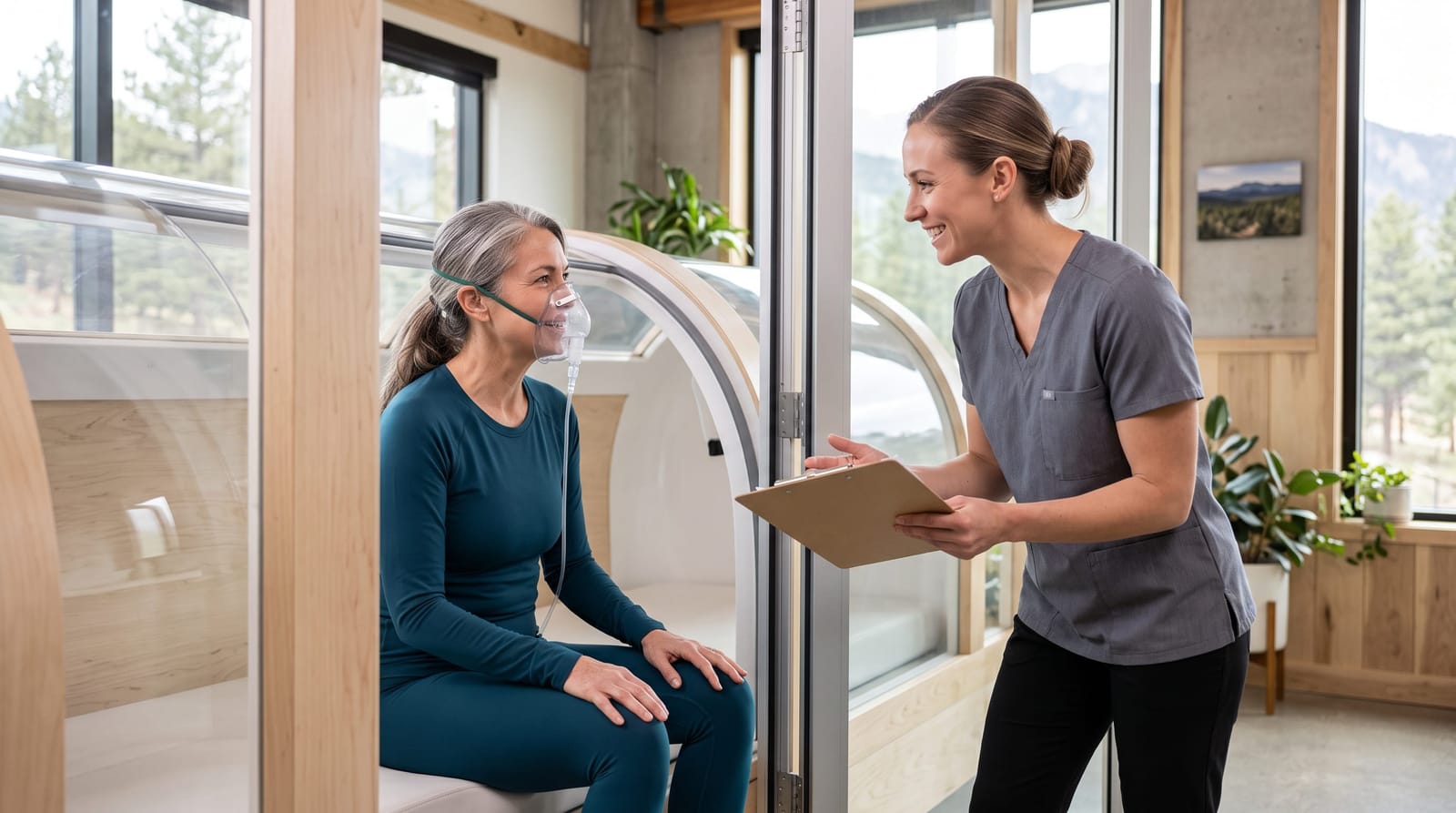
Hyperbaric oxygen therapy involves breathing concentrated oxygen inside a pressurized chamber. Under normal conditions, your lungs pull oxygen from the air around you, which is roughly 21% oxygen, and your blood carries it to tissues throughout the body. In a hyperbaric environment, the air pressure is increased significantly above normal atmospheric levels, and you breathe oxygen at much higher concentrations. This combination allows your blood plasma, not just your red blood cells, to carry elevated levels of oxygen to tissues that may be oxygen-deprived or working hard to repair themselves.
HBOT has been used in clinical settings for decades and is offered at several wellness facilities in Colorado Springs, including CollectIV Bio Wellness and others. There are also "mild" hyperbaric chambers (mHBOT) that operate at slightly lower pressure levels and are increasingly popular in wellness and fitness recovery contexts. While the two formats differ in intensity, both work on the same foundational principle: increasing the amount of oxygen your tissues can access at a cellular level.
It's worth noting that HBOT is not a substitute for medical care, and it isn't appropriate for every individual. Anyone considering it should consult with their healthcare provider before starting sessions, particularly if they have underlying health conditions.
The Connection Between Oxygen and Exercise Recovery
To understand why oxygen matters for recovery, it helps to think about what actually happens in your body during and after an intense training session. When you exercise hard, lifting heavy, doing high-intensity intervals, or pushing through a challenging strength circuit, your muscles work beyond their comfortable aerobic capacity. This creates metabolic stress, microscopic tissue damage, and localized inflammation. All of these are normal and even necessary parts of getting stronger and fitter. But they require resources to resolve.
Oxygen is central to that repair process. Your cells use oxygen to produce energy (ATP) through aerobic metabolism, and that energy fuels the cellular machinery responsible for rebuilding damaged muscle fibers, clearing metabolic waste products, and reducing inflammation. When tissues are inflamed or swollen after exercise, blood flow to those areas can become restricted, which means oxygen delivery is compromised at precisely the moment when your body needs it most.
This is where HBOT's mechanism becomes relevant. By dramatically increasing the oxygen dissolved in blood plasma, HBOT can help oxygen reach tissues even when normal circulation is partially impeded by swelling or post-exercise inflammation. Think of it as widening the delivery pipeline when the usual routes are temporarily congested.
Specific Recovery Benefits Relevant to Training
When used as part of a structured fitness program, HBOT sessions between training days may support recovery in several meaningful ways:
- Reduced muscle soreness: Delayed onset muscle soreness (DOMS) is the familiar ache that sets in 24 to 48 hours after a tough workout. It's associated with localized inflammation in stressed muscle tissue. Increased oxygen availability supports the body's natural anti-inflammatory processes, which may help moderate that soreness and allow clients to feel more prepared for their next session.
- Faster tissue repair: Oxygen is a critical input for collagen synthesis and cellular regeneration. After strength training creates micro-damage in muscle and connective tissue, oxygen-rich environments support the rebuilding phase: potentially shortening the recovery window between sessions.
- Improved energy restoration: Fatigue after hard training isn't just muscular: it's also metabolic. Replenishing cellular energy stores requires oxygen-dependent processes. Supporting those pathways between sessions may help clients feel more energized and ready to train again sooner.
- Support for connective tissue health: Tendons, ligaments, and fascia have relatively poor blood supply compared to muscle tissue, which is one reason they tend to recover more slowly. Enhanced oxygen delivery through HBOT may provide meaningful support for these structures, which are under significant load during progressive strength training programs.
It's important to frame these as potential supportive benefits, not guaranteed outcomes. Individual responses to HBOT vary, and it works best as part of a broader, well-structured recovery strategy, not as a standalone solution.
How Total Body Works Integrates HBOT Into Training Programs
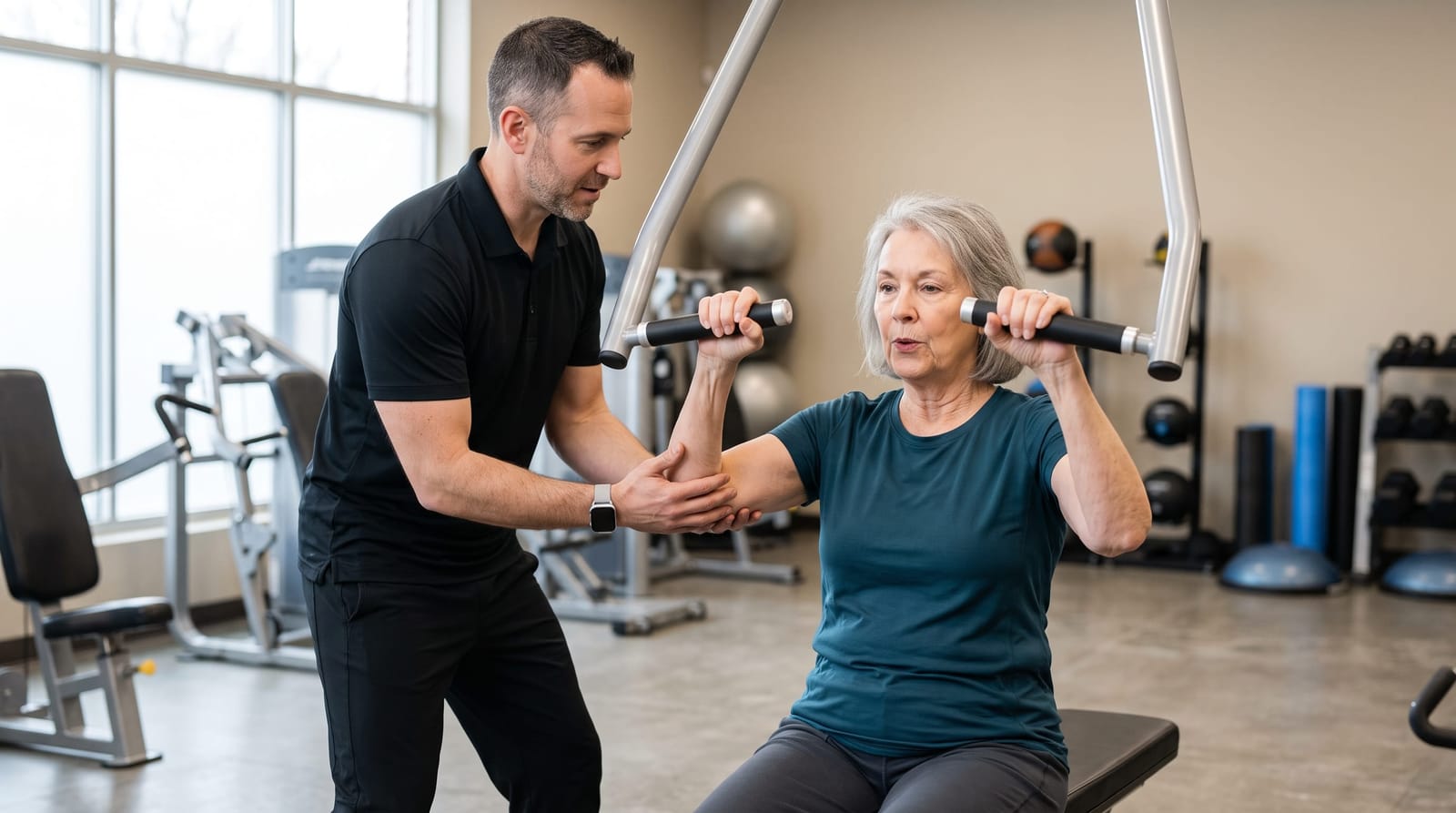
At Total Body Works in Colorado Springs, HBOT isn't offered as a trendy add-on: it's a thoughtfully integrated component of the recovery strategy built into body transformation programs for clients who can benefit from it. When you're training with intensity and consistency, your body needs structured recovery just as much as it needs structured workouts. Stacking high-effort sessions without adequate recovery doesn't produce better results; it produces fatigue, stalled progress, and increased risk of overuse issues.
The approach at Total Body Works starts with understanding each client's training load, schedule, and recovery capacity. For clients in more demanding phases of their program, higher volume lifting, more frequent sessions, or accelerated progression, HBOT sessions can be scheduled strategically between training days to support the repair and adaptation cycle. This is particularly valuable for upper-middle-aged clients whose natural recovery timelines may be longer than they were in their twenties, and who want to train hard without paying for it with excessive soreness or prolonged fatigue.
The goal is a smarter, more sustainable path through transformation, where recovery is planned and prioritized, not left to chance. This integrated approach is part of what distinguishes a personalized training program from a generic gym membership or a self-directed plan.
Is HBOT Right for Your Training Program?
HBOT isn't necessary for everyone, and it's not the only recovery tool available. Sleep, nutrition timing, active recovery movement, and stress management all play essential roles in how well your body bounces back between sessions. But for clients who are pushing hard toward meaningful fitness goals and want every reasonable advantage in the recovery process, HBOT is a science-backed option worth considering.
The best way to determine whether it makes sense for your program is to have a conversation with your trainer about your training intensity, recovery patterns, and goals. At Total Body Works, those conversations are part of the process, because individualized programming means looking at the full picture of how you train, recover, and progress over time.
Frequently Asked Questions
How many HBOT sessions are typically needed to support exercise recovery?
This varies depending on the individual's training intensity, recovery goals, and overall health status. Some clients benefit from sessions scheduled 1-2 times per week during periods of high training volume, while others use them more selectively during particularly demanding training blocks. A qualified trainer and your healthcare provider can help determine what frequency makes sense for your specific situation.
Is there a difference between hard-sided HBOT chambers and mild hyperbaric chambers for fitness recovery?
Yes. Hard-sided hyperbaric chambers operate at higher pressure levels and are typically used in clinical settings for medical applications. Mild hyperbaric chambers (mHBOT) use lower pressure levels and are more commonly found in wellness and recovery-focused settings. Both can support recovery through increased oxygen delivery, though the intensity and application differ. Facilities in Colorado Springs, including CollectIV Bio Wellness, offer hard-sided chambers, while mHBOT options are available through other local providers.
Can HBOT replace rest days in a training program?
No, and it shouldn't be thought of that way. HBOT supports the recovery that happens on rest days; it doesn't eliminate the need for them. Genuine rest, adequate sleep, and reduced training load on recovery days remain essential. HBOT is best understood as a tool that may enhance and accelerate the quality of recovery, not a workaround for skipping necessary downtime.
Are there any situations where someone should not use HBOT?
Yes. Certain medical conditions and medications may make HBOT inappropriate or require medical clearance before use. This is why it's important to consult with your healthcare provider before beginning HBOT sessions, regardless of your fitness goals. A responsible training program always prioritizes safety and individual health considerations above any performance or recovery benefit.
Putting Recovery at the Center of Your Transformation
Sustainable progress in any body transformation program depends on the full cycle of effort and recovery, not just how hard you train, but how intelligently you recover. HBOT is one of the more compelling recovery tools available to serious fitness clients in Colorado Springs, offering science-backed support for the cellular processes that rebuild and strengthen your body between sessions. When integrated thoughtfully into a personalized training program, it can help you stay consistent, reduce the friction of post-workout soreness, and maintain the kind of progressive momentum that produces real, lasting results. If you're curious whether HBOT belongs in your program, that conversation starts with your trainer.