Functional Fitness for Adults Over 50: Training for Real Life, Not Just the Gym
When most people think about getting fit after 50, they picture machines, mirrors, and workout routines built around how you look. But for adults in the Monument and Colorado Springs area, the more meaningful question is: what can your body actually do? Functional fitness over 50 in Colorado Springs is a growing priority, and for good reason. This approach focuses on training your body for the movements that matter in real life: carrying groceries, hiking a trail, keeping up with grandchildren, or traveling without fatigue. As part of our broader guide to active aging fitness in Colorado Springs, this post breaks down what functional fitness really means, why it matters more than ever after 50, and how a functional-first approach can help you stay strong, capable, and independent for decades to come.
What Is Functional Fitness, Exactly?
Functional fitness is a style of training that emphasizes movement patterns your body uses in everyday life. Instead of isolating a single muscle on a machine, functional training works multiple muscle groups together: the way your body actually functions when you're moving through the real world.
Think about what happens when you get up from a low chair, reach overhead to grab something from a shelf, or step off a curb. Each of those actions requires coordination, balance, strength, and mobility working together. Functional fitness trains exactly those combinations.
The Six Core Movement Patterns
Most functional training programs are built around six foundational patterns:
- Push: pressing weight away from your body (think pushing open a heavy door)
- Pull: drawing weight toward your body (lifting a bag into an overhead compartment)
- Hinge: bending at the hips while maintaining a neutral spine (picking something up off the floor)
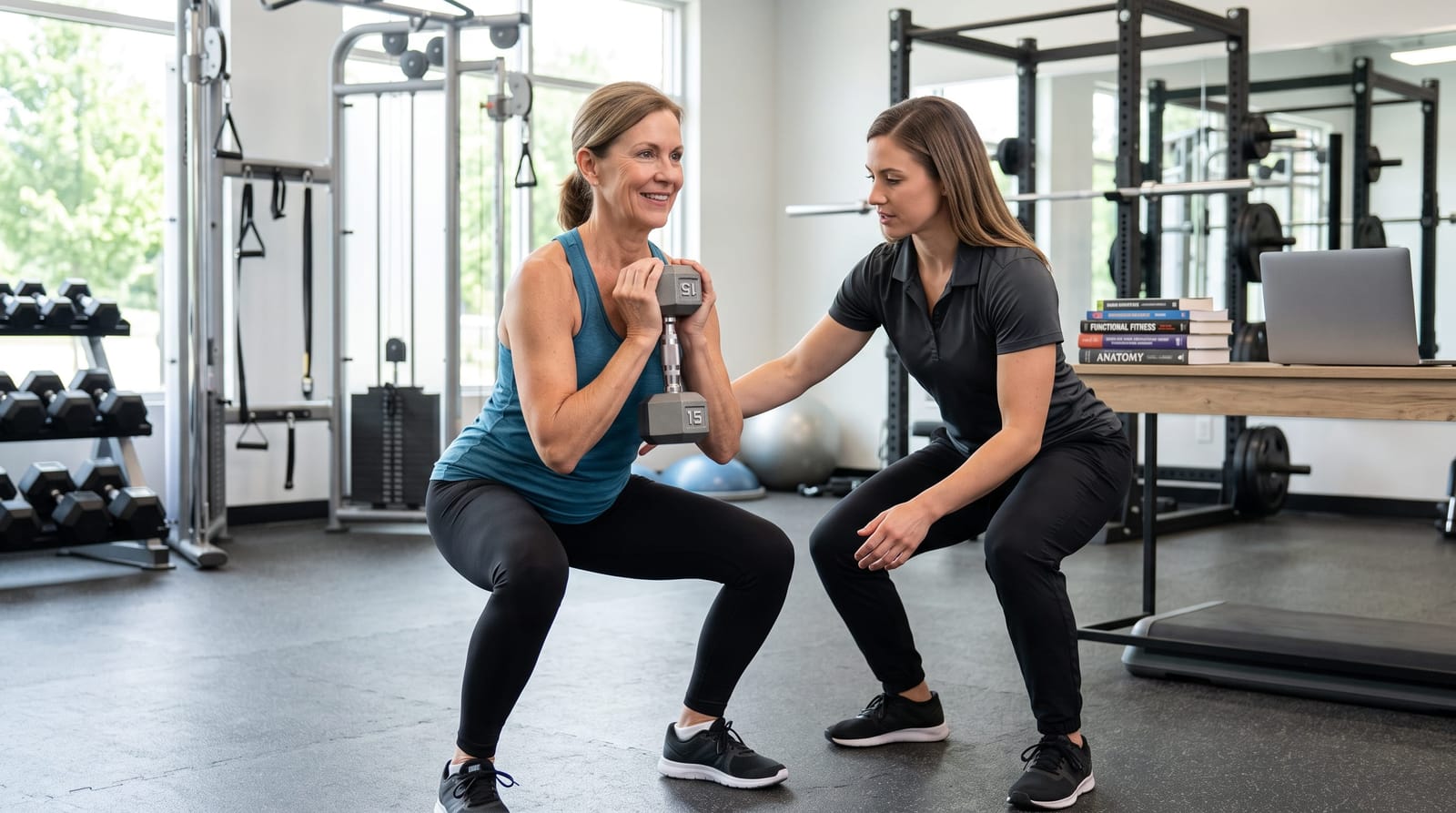
- Squat: lowering and rising from a seated or crouched position (getting in and out of a car)
- Carry: moving while holding weight (carrying groceries or luggage)
- Rotate: turning through the torso (looking behind you while driving or reaching across your body)
When these patterns are trained consistently and progressively, daily life becomes noticeably easier. Research from the American College of Sports Medicine indicates that adults who engage in functional strength training report measurably better performance on daily tasks compared to those who focus on isolated machine-based exercise alone.
How Functional Fitness Differs From Traditional Gym Training
Traditional gym-based training, the kind built around rows of weight machines and bodybuilding splits, was largely designed for one purpose: changing how your body looks. While there's nothing wrong with caring about appearance, machine-based training has real limitations for adults over 50.
The Problem With Isolation Machines
Weight machines guide your body through a fixed range of motion. They remove the need for balance and coordination. They isolate one muscle at a time. This can be useful in certain rehabilitation contexts, but it doesn't prepare your body for the unpredictable demands of real life.
When you sit in a leg press machine and push weight away from you, your core, stabilizers, and balance systems aren't being challenged. But when you carry a 30-pound bag of mulch from your car to your backyard, all of those systems fire at once. That's the difference functional training is designed to close.
Aesthetics vs. Capability
Studies suggest that by age 50, adults begin losing approximately 1 to 2 percent of muscle mass per year: a process called sarcopenia. But the goal of addressing this isn't to look a certain way. It's to preserve the physical capability to live the life you want. Functional fitness shifts the focus from aesthetics to performance: not how your body looks, but what it can do for you.
For many adults in Colorado Springs and Monument, that means staying active in hobbies like hiking, golf, skiing, cycling, and gardening. It means playing on the floor with grandchildren. It means traveling without worrying about whether your body will cooperate. These are the real-life outcomes that functional training is built to support.
Why Functional Fitness Matters More After 50
The case for functional fitness grows stronger with every decade. After 50, several changes in the body make movement-based training especially valuable.
Changing Mobility and Flexibility
Joints tend to lose range of motion gradually over time, particularly in the hips, thoracic spine, and shoulders. Functional training incorporates mobility work, not just as a warm-up, but as a core component of the program. Movements like hip hinges, thoracic rotations, and single-leg exercises keep joints moving through their full range and help maintain the flexibility needed for daily activities.
Balance and Fall Risk
According to the Centers for Disease Control and Prevention, falls are the leading cause of injury among adults 65 and older, with approximately 36 million falls reported each year in the United States. Functional training directly addresses this by incorporating balance challenges, single-leg movements, unstable surfaces, and multi-directional exercises, that build the neuromuscular coordination your body needs to stay upright and recover when you stumble.
Our post on balance training and fall prevention in Colorado Springs goes deeper into this topic if you're looking for more detail.
Maintaining Independence
Independence is perhaps the most compelling reason adults over 50 seek out functional fitness programs. The ability to carry your own luggage, climb stairs without effort, or spend a full day on your feet during travel is directly tied to how well your body moves under real-world conditions. Functional training is essentially independence training.
What Functional Fitness Training Looks Like in Practice
A well-designed functional fitness program for adults over 50 looks different from a typical gym workout. Here's what you can generally expect.
Free Weights and Bodyweight Over Machines
Programs tend to use dumbbells, kettlebells, resistance bands, and bodyweight movements rather than fixed machines. These tools require your stabilizer muscles to engage, which builds the kind of whole-body coordination that translates to real life.
Multi-Joint Movements
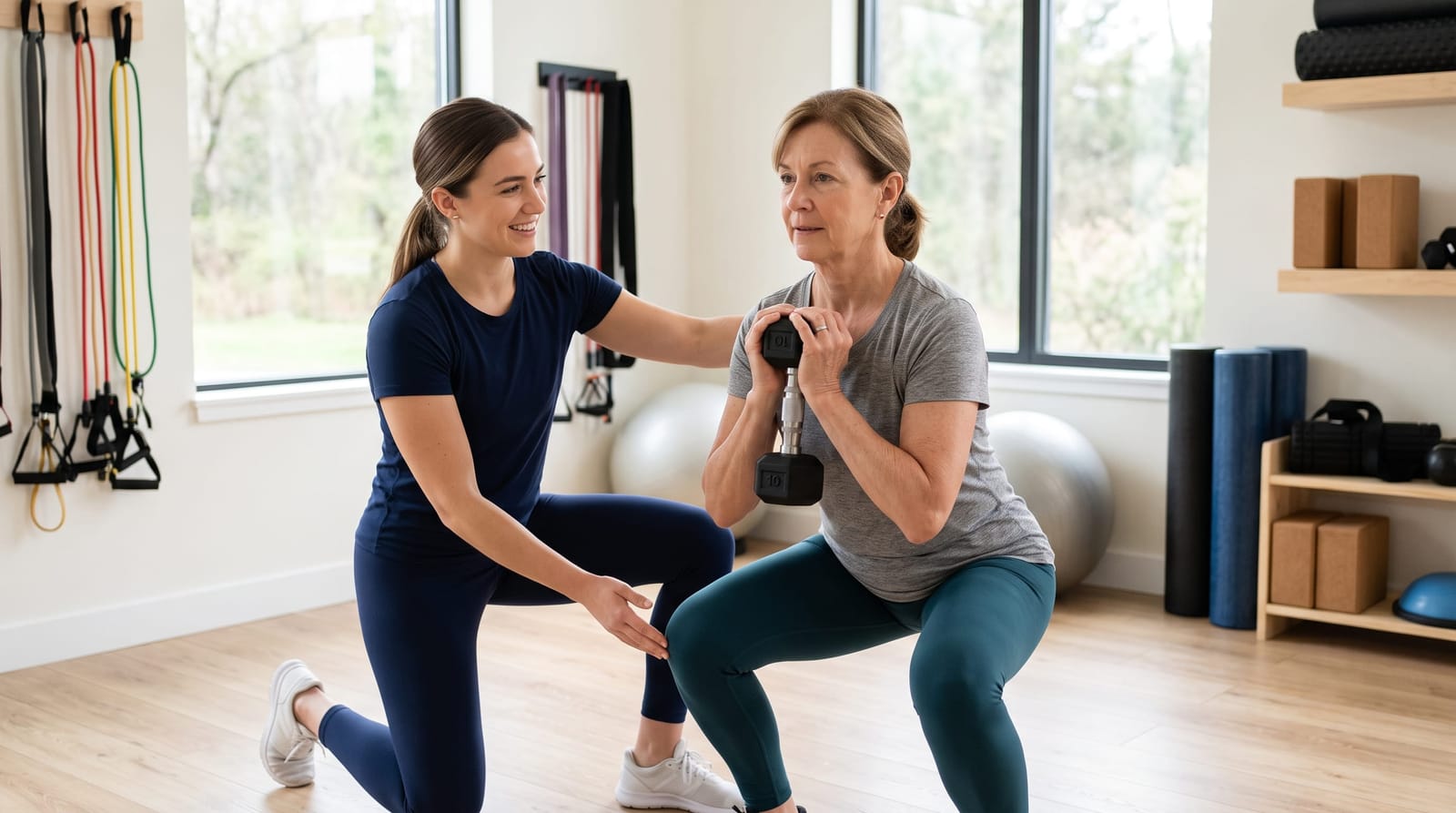
Exercises like goblet squats, Romanian deadlifts, single-leg stands, and farmer's carries challenge multiple joints and muscle groups at once. A single goblet squat, for example, works your quads, glutes, core, and upper back simultaneously, while also training the hip hinge and squat patterns essential for everyday movement.
Progressive Overload at a Sustainable Pace
Good functional programs build gradually. Resistance, complexity, and volume increase over time as your body adapts. This progressive approach is important for adults over 50 because it allows meaningful strength gains while respecting recovery time. Research shows that adults over 60 can achieve 25 to 35 percent strength increases within 12 weeks of consistent resistance training: progress that directly supports functional capability.
Mobility and Stability Integrated Throughout
Rather than treating stretching as an afterthought, functional programs weave mobility and stability work into every session. Hip openers, thoracic rotations, and single-leg balance drills aren't extras: they're central to the program.
If you're curious about how this kind of training supports specific hobbies and recreational activities, take a look at our post on how functional fitness helps you stay active in your favorite hobbies after 50.
The Total Body Works Approach to Functional Fitness
At Total Body Works, functional fitness isn't a feature: it's the foundation. Every program is built around helping adults over 50 move better, feel stronger, and stay active in the ways that matter most to them personally.
That means programs start with an assessment of how you currently move, not just how much you can lift. It means coaching on technique and form before adding intensity. And it means your program evolves based on your goals, whether that's keeping up on a ski slope, hiking at altitude, staying energetic during a long trip, or simply getting through your workday without stiffness and fatigue.
This is also why functional fitness over 50 in Colorado Springs is a core part of what makes Total Body Works different from a general-purpose gym. The programming is specifically designed for the movement needs, recovery patterns, and lifestyle goals of adults in this stage of life.
Functional fitness works hand-in-hand with the strength work we cover in our post on strength training after 50 in Colorado Springs. The two approaches complement each other well, and most effective programs combine elements of both.
Getting Started: What to Expect in Your First Sessions
If you're new to functional fitness, the first few sessions are typically focused on assessment and movement education rather than intensity. Here's a realistic picture of what early training often looks like:
- Movement screening: A coach evaluates how you squat, hinge, push, pull, and balance: identifying areas to prioritize.
- Foundational movements: You'll practice the core patterns with light resistance or bodyweight, focusing on form before adding load.
- Gradual progression: Resistance and complexity increase week by week, keeping you challenged without overwhelming your recovery.
- Consistent check-ins: A good program tracks how your movement quality, strength, and energy levels evolve over time.
Most adults are surprised by how quickly they notice improvements, not just in the gym, but in everyday life. Walking upstairs, getting off the floor, or spending a full day on your feet during travel often feel different within just a few weeks of consistent training.
Related Topics Worth Exploring
Functional fitness connects to several other important areas of active aging. In this cluster, we cover topics like how functional training supports your performance in recreational hobbies, the role of balance and stability work in reducing fall risk, and the foundational importance of strength training for long-term independence. Each of these topics builds on the functional fitness principles introduced here and offers more specific guidance for particular goals or concerns.
Start Moving Well, Then Move More
Functional fitness over 50 is about investing in the quality of your movement so that every other part of your life benefits. It's not about looking a certain way or following a rigid program designed for a 25-year-old. It's about training your body to do the things that matter to you, hiking, traveling, playing with grandchildren, staying independent, with strength, confidence, and ease.
If you're ready to explore what a functional-first training program could look like for your lifestyle and goals, Total Body Works offers personalized coaching specifically designed for adults over 50 in the Monument and Colorado Springs area. Reach out to schedule a consultation and take the first step toward training that works for your real life.