Strength Training After 50: Why It's the Most Important Thing You Can Do for Your Health
If you're exploring ways to stay strong, mobile, and independent as you get older, you've likely come across the broader conversation around active aging fitness in Colorado Springs. Within that conversation, one topic rises to the top consistently: strength training. Not cardio. Not stretching. Not a trendy class. Resistance training, the deliberate practice of challenging your muscles against load, is arguably the single most powerful tool available to adults over 50 who want to protect their health, maintain their independence, and feel capable in everyday life. This guide walks you through what happens to your body without it, what changes when you add it, and how a thoughtful, personalized approach to strength training after 50 in Colorado Springs can be both safe and genuinely life-changing.
What Is Sarcopenia: and Why Should Every Adult Over 50 Know This Word?
Sarcopenia is the age-related loss of muscle mass and strength. Most adults begin losing muscle mass in their 30s, but the process accelerates significantly after 50. Research suggests that without intervention, adults can lose between 3% and 8% of their muscle mass per decade, and that rate increases after age 60. By the time someone reaches their 70s, the cumulative effect can be dramatic: reduced strength, slower movement, less stability, and a much higher risk of falls and functional decline.
What makes sarcopenia particularly important to understand is that it doesn't happen all at once. It's quiet and gradual. You might notice that carrying groceries feels harder than it used to, or that getting up from a low chair requires more effort. These aren't just signs of "getting older": they're signs that your muscles need a stimulus to stay strong, and daily life on its own often doesn't provide enough of that stimulus.
The good news is that sarcopenia is not inevitable. It's a condition that responds powerfully to resistance training at any age. Adults in their 50s, 60s, and 70s who engage in regular strength training can not only slow muscle loss: they can rebuild meaningful muscle mass and functional strength. For a deeper look at the science and how personalized coaching addresses this directly, see our post on sarcopenia treatment exercise Colorado Springs.
The Real Benefits of Strength Training After 50
When most people think of strength training, they picture aesthetics: bigger arms, a leaner physique. For adults over 50, the benefits go far deeper than appearance, touching nearly every system in the body.
Bone Density and Skeletal Health
Bone loss, like muscle loss, accelerates with age. Resistance training creates mechanical stress on bones, which signals the body to maintain and even build bone density over time. This is particularly significant for adults at risk of osteoporosis: a condition that affects approximately 10 million Americans over age 50, with another 44 million having low bone density. Strength training is one of the most evidence-supported lifestyle interventions for supporting skeletal health in this population.
Metabolic Health
Muscle is metabolically active tissue. The more muscle you carry, the more efficiently your body manages blood sugar, processes energy, and regulates inflammation. Research has shown that resistance training can improve insulin sensitivity, which plays a role in reducing the risk of type 2 diabetes: a condition that affects roughly 29% of adults over age 65 in the United States. Strength training after 50 is one of the most practical ways to support long-term metabolic health without relying solely on dietary restriction.
Functional Strength and Daily Independence
This is where strength training becomes truly personal. The ability to lift a grandchild, carry luggage through an airport, climb stairs without gripping the railing, or get up off the floor confidently: these aren't athletic feats. They're the markers of independent, active life. Strength training builds the capacity to do all of these things more easily and with less risk of injury.
Mental Health and Cognitive Benefits
The benefits of strength training aren't limited to the body. Studies have linked regular resistance training to improvements in mood, reduced symptoms of anxiety and depression, and better cognitive function in older adults. For professionals and business owners over 50 who carry significant mental load every day, this is a meaningful part of the picture.
Why Adults Over 50 Are Often Afraid to Start: and Why Those Fears Are Understandable
Let's be honest about something. Many adults over 50 who haven't strength trained before carry real concerns about starting. These are worth naming directly:
- Fear of injury: "What if I hurt my back, my knees, or my shoulders?"
- Fear of doing it wrong: "I don't know the proper technique: I could make things worse."
- Fear of looking out of place: "The gym feels like it's designed for 25-year-olds."
- Uncertainty about where to start: "There's so much conflicting information: I don't know what's right for me."
- Pre-existing discomfort or limitations: "I already have some aches and pains: won't lifting weights make that worse?"
These concerns are legitimate, and they deserve a thoughtful response, not dismissal. The key insight is this: the risks of not strength training after 50 are far greater than the risks of doing it thoughtfully with proper guidance. The answer isn't to avoid resistance training. The answer is to approach it correctly.
How Movement Screening Makes Strength Training Safer
One of the most important things a qualified trainer does before programming strength work for an adult over 50 is conduct a thorough movement screening. This isn't about diagnosing medical conditions: it's about understanding how you move, where your mobility limitations are, which patterns feel stable and which feel restricted, and what your training history looks like.
A movement screen before beginning a strength program helps identify:
- Asymmetries in strength or mobility between left and right sides
- Movement patterns that may need modification before loading with weight
- Areas of the body that need mobility work before progressing to heavier resistance
- Exercises that are appropriate starting points versus those that should be introduced gradually
- Postural tendencies that affect how certain movements should be coached and cued
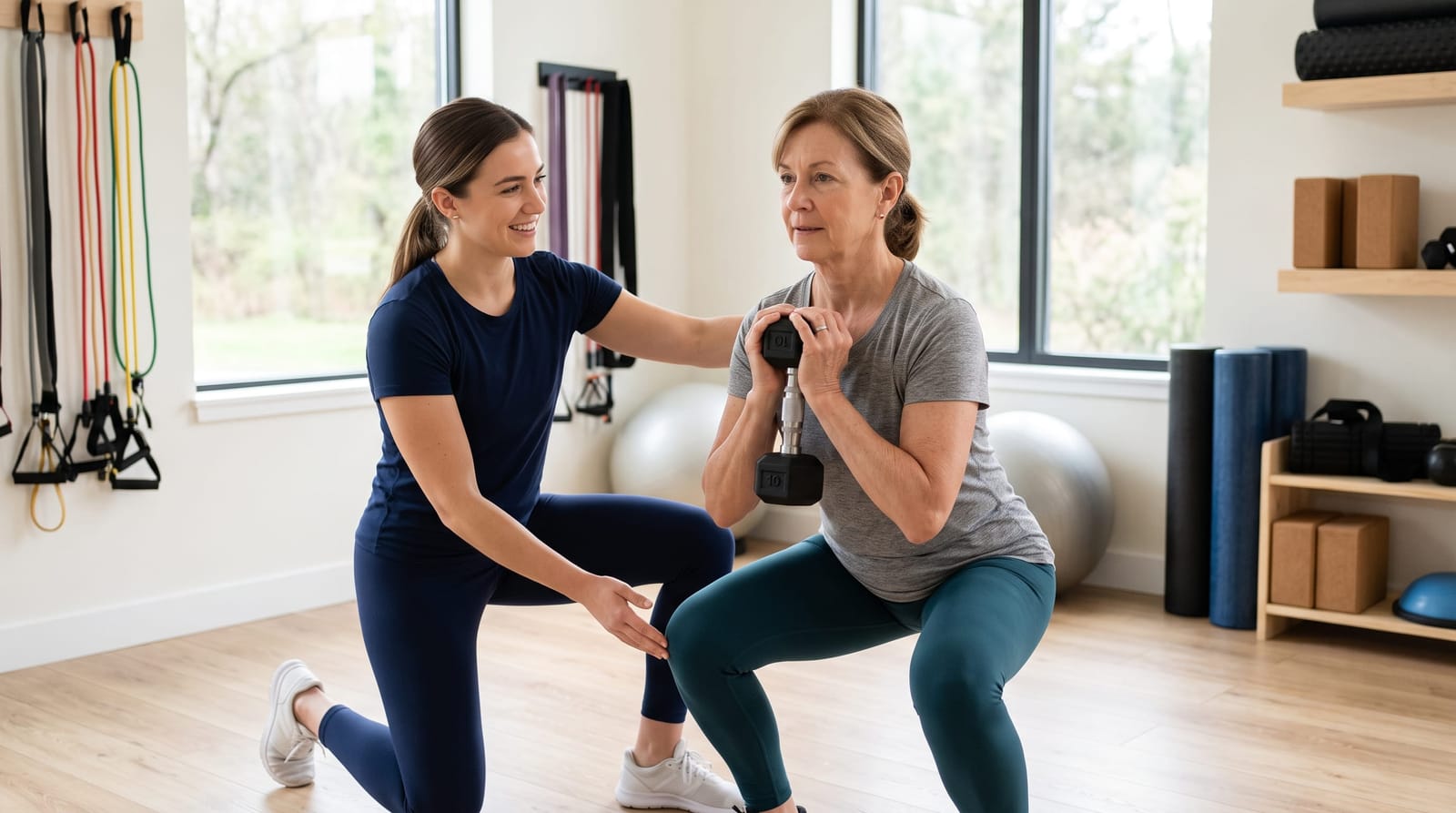
This information allows a trainer to build a program that challenges you appropriately, one that creates the stimulus your muscles need to grow stronger, without putting you in positions your body isn't ready for. The goal is progressive, sustainable challenge, not maximum effort from day one.
At Total Body Works, every new client goes through this kind of individualized assessment before a single workout begins. It's how we make sure your strength training after 50 starts on the right foot, literally and figuratively.
What a Beginner Strength Program for Adults Over 50 Actually Looks Like
If you've never strength trained before, or haven't in many years, the idea of a structured program might feel overwhelming. In practice, a well-designed beginner program is simpler and more manageable than most people expect.
Frequency and Session Length
Most beginners over 50 see excellent results training 2 to 3 days per week. Sessions typically run 45 to 60 minutes. This frequency allows enough recovery time between sessions while providing the consistent stimulus muscles need to adapt. For more specific guidance on structuring your weekly training schedule, our post on exercise frequency for adults over 50 covers this topic in detail.
Core Movement Patterns
Rather than an overwhelming list of 30 exercises, effective beginner strength programs for adults over 50 focus on fundamental movement patterns:
- Hinge movements (like deadlifts or Romanian deadlifts) that train the posterior chain: hamstrings, glutes, and lower back
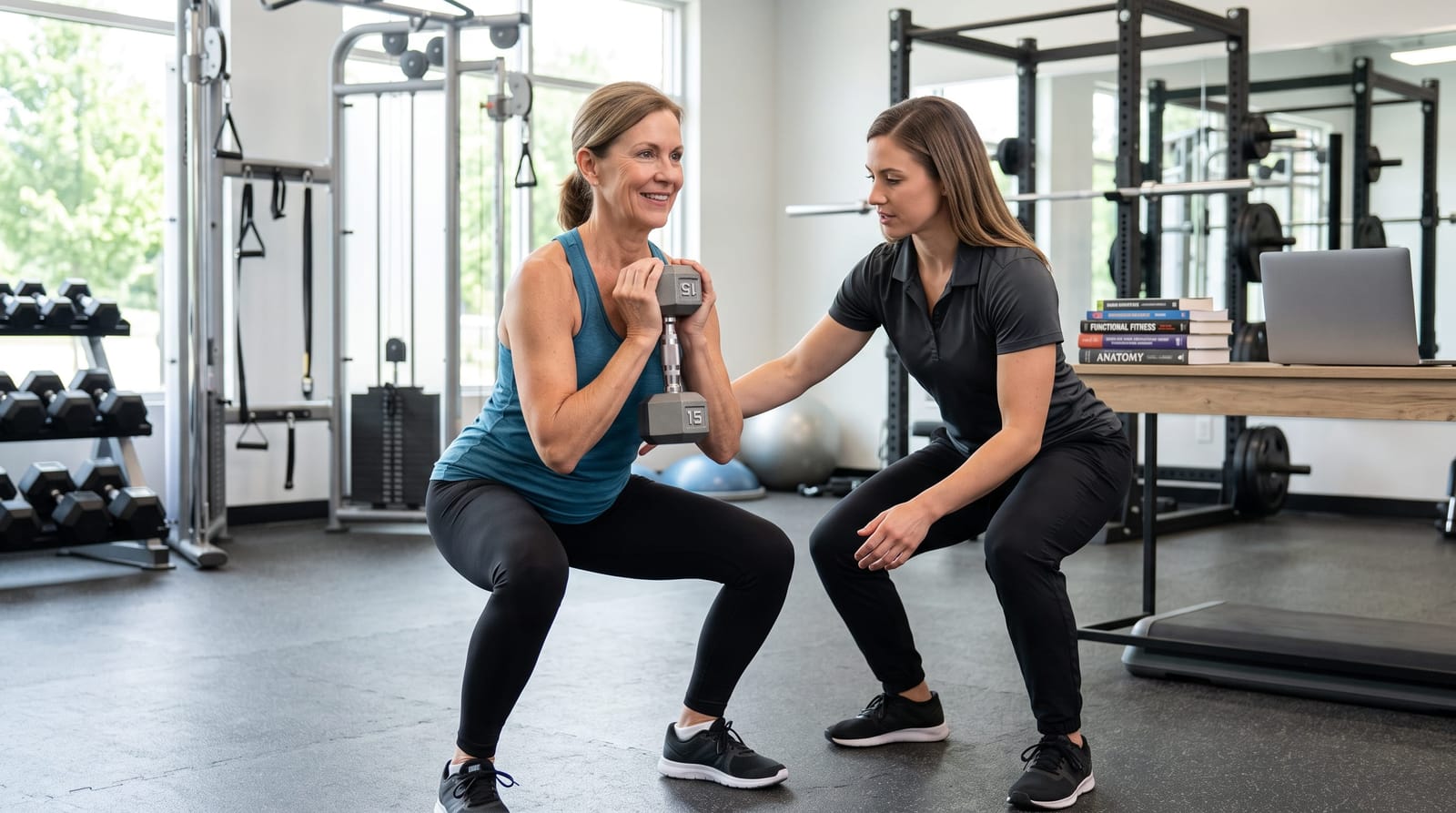
- Squat patterns that build leg strength and hip mobility
- Pushing movements (like chest press or shoulder press) that strengthen the upper body and support posture
- Pulling movements (like rows or lat pulldowns) that counteract the forward-rounded posture many adults develop over decades of desk work
- Carry and core stability work that builds the functional strength needed for everyday tasks
Load and Progression
Beginners start with lighter loads that allow for clean, controlled movement. Weight increases gradually over time as technique becomes consistent and confidence builds. This principle, progressive overload, is the foundation of all effective strength training, and it applies just as powerfully at 55 or 65 as it does at 25.
Is It Too Late to Start If You've Never Lifted Weights Before?
This question deserves a clear, direct answer: no, it is not too late. Adults who begin strength training in their 60s, 70s, and even beyond are able to build meaningful muscle and functional strength. The body's ability to adapt to training stimulus doesn't disappear with age: it simply requires a thoughtful approach that respects recovery needs and starts from an appropriate baseline.
If you're wondering specifically about beginning a program with no prior experience in your 60s, our post on starting strength training at 60 Colorado Springs addresses this question in detail, including what to expect in the first several months of training.
The most common regret we hear from clients who started later in life isn't that they started: it's that they waited as long as they did.
Related Topics Worth Exploring
Strength training is the foundation, but a complete picture of active aging fitness includes several connected topics. As you continue learning, you may want to explore:
- The biology of sarcopenia and how targeted exercise addresses it at the cellular level
- How to structure your weekly training schedule for recovery and consistency
- Safe entry points for adults over 60 who are beginning resistance training for the first time
- How mobility work and strength training complement each other for adults over 50
Conclusion: Strength Is a Choice You Can Make Right Now
Strength training after 50 isn't about looking a certain way or competing with anyone. It's about maintaining the physical capacity to live the life you want: independently, actively, and with confidence. The research is clear: resistance training supports bone density, metabolic health, functional strength, and mental wellbeing in ways that few other interventions can match. And with proper screening, individualized programming, and experienced coaching, it's an approach that adults at every fitness level can pursue safely.
At Total Body Works in Colorado Springs, we specialize in building strength programs specifically designed for adults over 50 in the Colorado Springs area. If you're ready to find out what the right program looks like for where you are right now, we'd be glad to talk. Your strongest years may still be ahead of you.