Does Massage Help with Lower Back Pain from Sitting All Day?
If you spend most of your workday at a desk, you've probably felt it: that familiar ache that builds through your lower back by mid-afternoon and doesn't fully release even after you get home. It's one of the most common complaints among office professionals, and it makes sense: prolonged sitting puts the body in a position it wasn't designed to hold for hours at a time. The good news is that massage therapy can play a meaningful role in addressing the physical patterns that build up from desk work. Here's what's actually happening in your body, and how a structured approach can help you feel better and move better.
What Prolonged Sitting Actually Does to Your Body
Before exploring how massage fits in, it's worth understanding why sitting creates so much lower back tension in the first place. When you sit for extended periods, several things happen simultaneously. Your hip flexors, the muscles that connect your spine to the front of your thighs, remain in a shortened position for hours. Over time, this shortening becomes a pattern, and those muscles start to pull on your lumbar spine even when you stand up.
At the same time, your glutes, the muscles that are supposed to support and stabilize your pelvis, become underactivated. When your glutes aren't doing their job, surrounding muscles compensate. Your lower back picks up the slack, and that's where the chronic tension and discomfort tend to settle.
Your thoracic spine (the mid-back) also tends to round forward when you're seated and focused on a screen. When this region becomes stiff and immobile, your lumbar spine has to compensate for rotational and extension demands that should be shared across the entire spine. The result is a back that works harder than it should, and feels it.
Which Massage Techniques Address Desk-Related Lower Back Pain
Not all massage approaches target the same structures, and understanding the differences can help you make a more informed choice about your care.
Deep Tissue Massage for Lumbar Tension
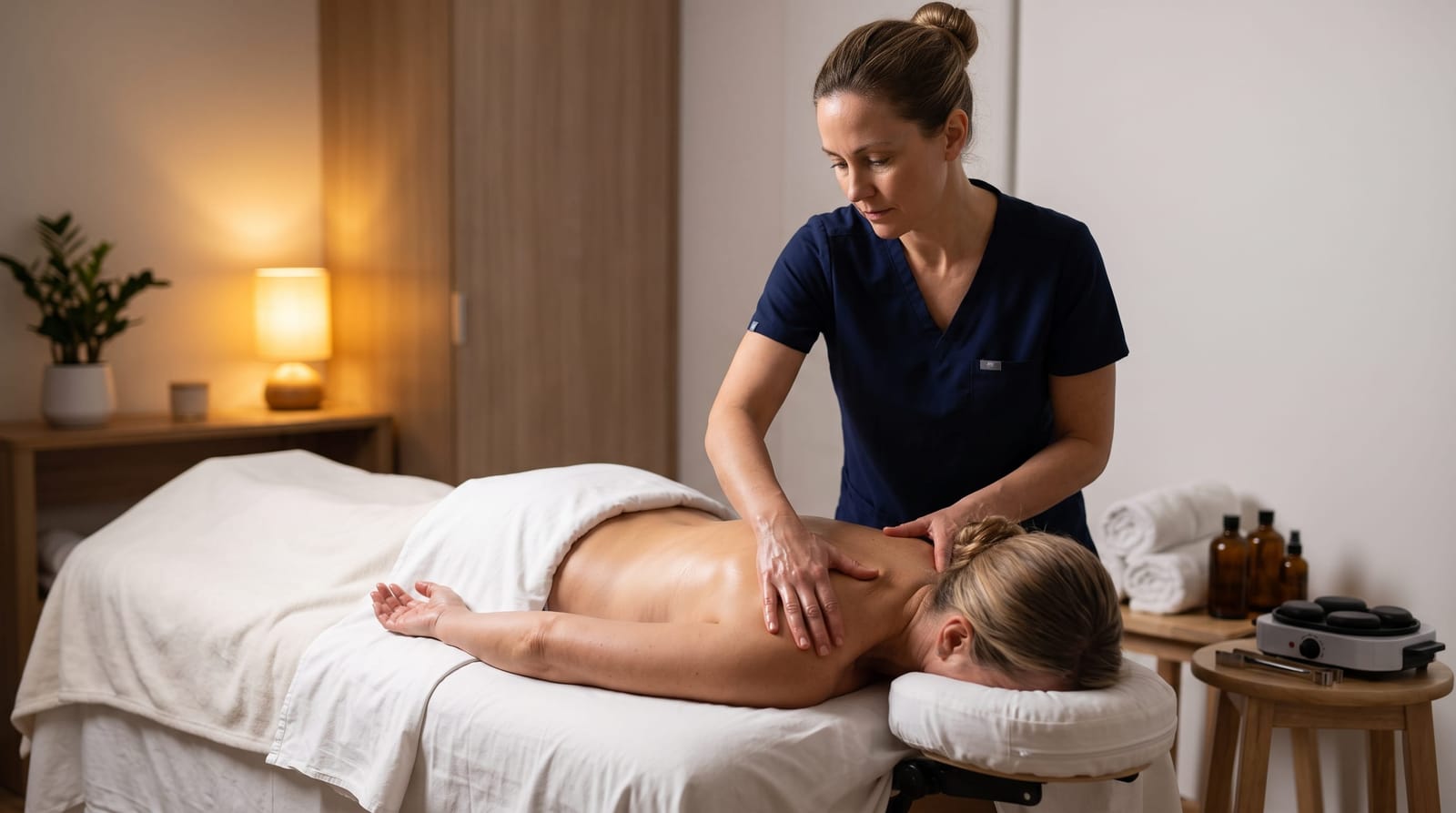
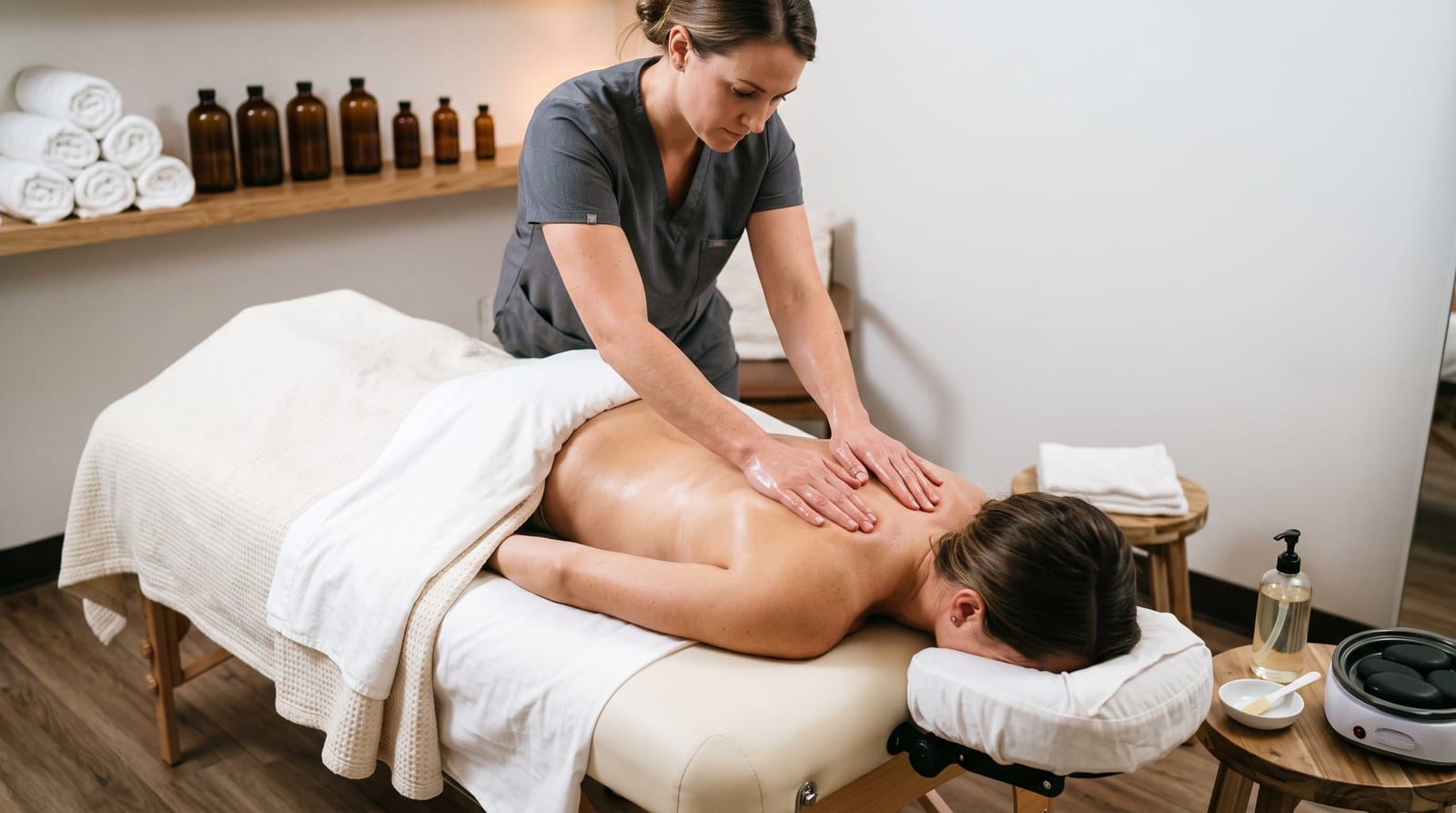
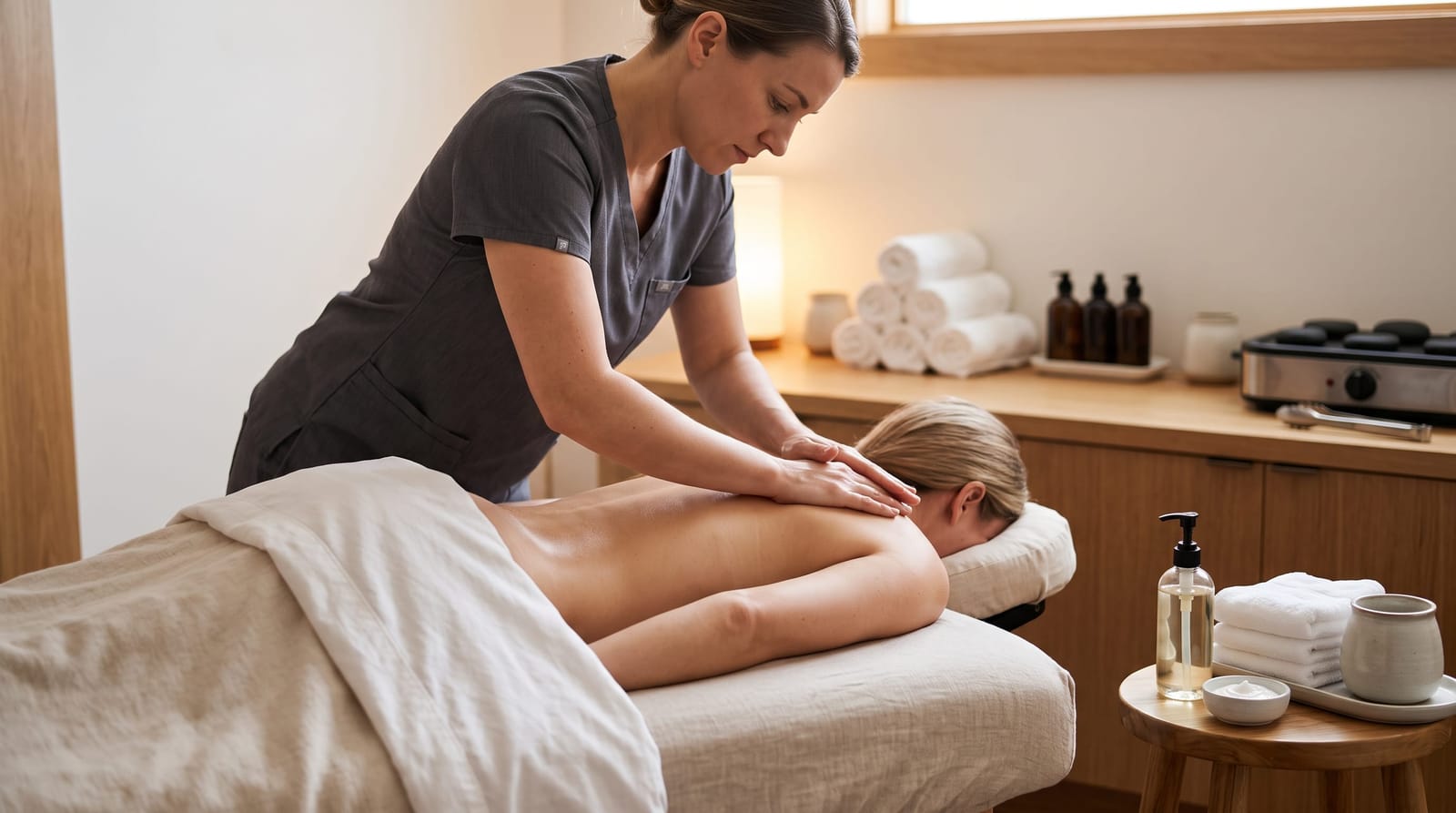
Deep tissue massage uses focused, sustained pressure to address the deeper layers of muscle and connective tissue. For the lower back specifically, this technique can help release the chronic holding patterns that develop in the lumbar erectors and quadratus lumborum: muscles that run alongside the spine and are frequently overworked in desk workers. The work is deliberate and methodical, not simply forceful, and a skilled therapist will adjust depth based on your body's response.
Hip Flexor and Psoas Work
Addressing lower back tension without working on the hip flexors is like fixing a symptom without touching the source. Skilled massage therapists can work on the hip flexor group, including the psoas, to help release the chronic shortening that builds up from sitting. When these muscles have more length and mobility, the pull they exert on the lumbar spine is reduced, and that often translates directly into less tension and discomfort in the lower back.
Thoracic Mobility and Upper Back Release
Because thoracic immobility is often a contributing factor in lower back overload, effective massage therapy for desk workers frequently includes work on the mid-back and surrounding musculature. Releasing tension through the thoracic region can help restore a more natural distribution of spinal movement: reducing the demand placed on the lumbar spine during everyday activities like reaching, rotating, and bending.
Why Massage Alone Isn't the Complete Answer
Here's where honesty matters: massage therapy is a valuable part of addressing desk-related lower back tension, but it works best as one component of a broader approach. If the movement patterns and postural habits that created the problem aren't addressed, the tension will return, often within a few days of a session.
This is particularly true for office professionals who spend eight or more hours a day in the same seated position. Massage can help release the tissue, but the muscles and movement patterns need to be retrained to support a different outcome long-term. That means building strength in underactive areas like the glutes and deep core, improving hip mobility through consistent movement practice, and developing greater awareness of how you carry yourself throughout the day.
At Total Body Works, this is exactly why massage therapy is integrated alongside movement screening and personal training rather than offered as a standalone service. A massage therapist who communicates with a trainer, and vice versa, creates a feedback loop that makes progress more sustainable. What's found in a massage session informs what's addressed in training, and what's developed in training supports what the massage work is trying to achieve.
Building a Lasting Solution, Not Just Temporary Relief
For an executive or office professional dealing with chronic lower back tension, the most effective path forward usually looks something like this:
- Start with massage therapy to address the immediate tissue tension, release overworked muscles, and improve circulation to chronically tight areas.
- Identify movement patterns through a basic screening process that highlights where mobility is limited and where strength gaps exist.
- Begin structured movement training that targets the specific deficits, often hip mobility, glute activation, and core stability, that contribute to ongoing lower back strain.
- Use ongoing massage sessions strategically to support recovery, manage tension that accumulates between training sessions, and maintain progress.
This isn't about committing to an intensive program or overhauling your entire schedule. Even modest, consistent changes in how you move and care for your body can produce meaningful improvements in how you feel throughout the workday and beyond.
Frequently Asked Questions
How often should I get massage therapy for desk-related lower back pain?
Frequency depends on how much tension has accumulated and how much you're addressing contributing factors through movement and exercise. Many desk workers find that starting with more frequent sessions, perhaps every one to two weeks, helps build progress, which can then be maintained with monthly sessions. A therapist familiar with your specific patterns can give you more personalized guidance based on how your body responds.
Is deep tissue massage the right choice, or are there other options?
Deep tissue massage is one of the most commonly used techniques for addressing chronic muscular tension in the lower back, but it's not the only approach. Swedish massage can improve circulation and reduce overall tension, while more targeted work on the hips and surrounding structures may be incorporated depending on your needs. The best approach is determined by a skilled therapist who can assess what's present and adapt accordingly.
Can massage therapy help even if I've had lower back discomfort for years?
Chronic patterns take longer to address than acute ones, but that doesn't mean they can't improve. Many people who have dealt with ongoing lower back tension for years find meaningful relief through a consistent approach that combines massage with movement. Results will vary from person to person, so it's always a good idea to consult with your healthcare provider as well, particularly if your discomfort is severe or accompanied by other symptoms.
Do I need to be an athlete to work with Total Body Works?
Not at all. While Total Body Works specializes in supporting athletic performance and active recovery, a significant part of their work is with everyday professionals who want to move better, feel less tension, and maintain their quality of life. If you sit at a desk for most of the day and want a more functional, comfortable body, that's a completely valid reason to explore what they offer.
The Bigger Picture
Lower back tension from desk work is genuinely common, and it's easy to normalize it as just part of the job. But chronically tight hips, an overworked lumbar spine, and a stiff thoracic region aren't inevitable: they're patterns that respond well to the right kind of attention. Massage therapy is one of the most effective tools for starting to shift those patterns, especially when it's paired with purposeful movement and strength work. If you're tired of ending every workday with a back that aches, it may be time to take a more complete approach to how you care for your body.