5 Balance Exercises That Dramatically Reduce Fall Risk for Adults Over 60
Falls are one of the leading causes of injury among older adults, yet the good news is that your balance is highly trainable at any age. If you've been exploring active aging personal training in Colorado Springs, you've likely heard that balance work is a cornerstone of any well-designed fitness program for adults over 60. This post walks you through five practical, progressive balance exercises, explains the logic behind how they're sequenced, and shows how structured coaching helps you build this skill safely and consistently.
Why Balance Training Deserves a Dedicated Place in Your Routine
Balance isn't just about not falling: it's about moving through your day with ease and confidence. Reaching for something on a high shelf, stepping off a curb, navigating uneven ground on a hiking trail: all of these everyday moments rely on your body's ability to sense its position in space (a skill called proprioception) and respond quickly.
Research supports making this a priority. A systematic review on exercise interventions for fall prevention found that lower limb strength training, including step-marching exercises, meaningfully reduces fall rates in community-dwelling older adults. For those over 60, fall prevention isn't a passive concern: it's an active, trainable goal.
Effective balance programming follows a clear progression:
- Supported → Unsupported: Starting near a wall or sturdy chair before moving away from support
- Static → Dynamic: Holding a position before adding movement through that position
- Two-leg → Single-leg: Building confidence on two feet before challenging one
- Eyes open → Eyes closed: Removing visual input to train the body's internal balance systems
This progression matters because skipping steps increases the risk of stumbling during the workout itself. A qualified trainer helps you identify where you are in this continuum and advances you at a pace that's challenging but safe.
The 5 Balance Exercises: From Foundation to Challenge
1. Supported Heel-to-Toe Stand (Tandem Stance)
Stand with one foot directly in front of the other, heel touching toe, while lightly holding a countertop or the back of a stable chair. Your goal is to hold this position for 10 seconds initially, working toward 30 seconds as your stability improves. This exercise narrows your base of support, which immediately challenges your ankle and hip stabilizers. It's a foundational exercise before any single-leg work begins.
2. Shoulder-Width to Feet-Together Progression
Begin standing with feet shoulder-width apart for 30 seconds, then bring feet together and hold again for 30 seconds. The shift from wide to narrow stance progressively reduces your margin for error. Aim to complete 3 sets of each position. Once this feels steady, close your eyes briefly, even 5 to 10 seconds with eyes closed significantly increases the neurological demand.
3. Single-Leg Stand
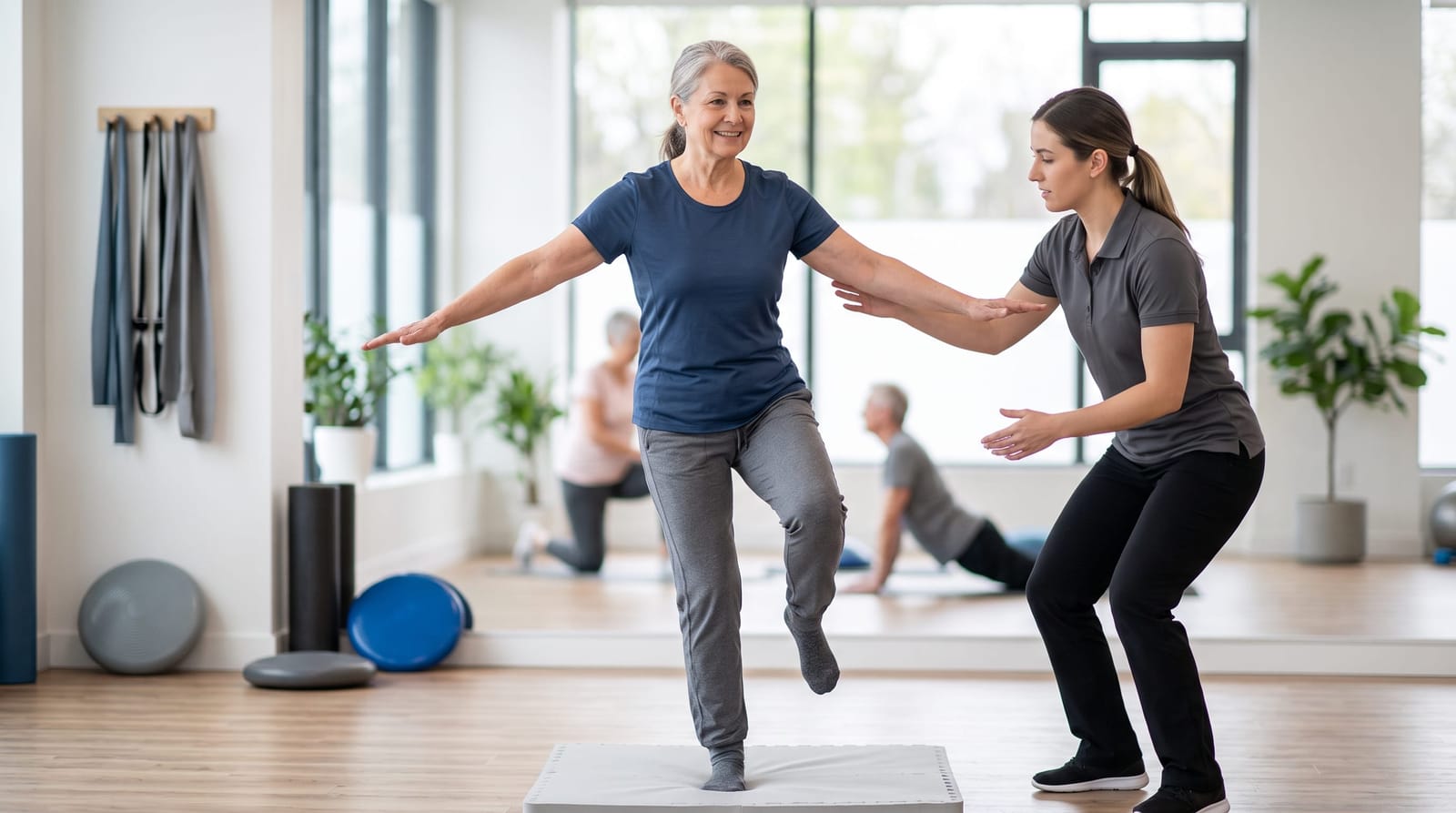
Stand on one foot while holding light support nearby. Start with a 10-second hold on each side and build toward 30 seconds. Research recommends working toward 3 sessions per week, with each balance session lasting 15 to 20 minutes total. Single-leg stance directly mimics what your body must do during walking: every step involves a brief single-leg support phase. Strengthening this capacity translates directly to a more stable, confident gait.
4. Step Marching in Place
March in place, lifting alternating knees to hip height while standing near but not touching a wall. This dynamic exercise adds movement to the balance challenge. Step marching has been specifically highlighted in fall prevention research for its ability to improve lower limb strength and neuromuscular efficiency simultaneously. Begin with 20 total steps (10 per side) and progress to 40 steps as your control improves.
5. Controlled Weight Shifts with a Mini Lunge
Stand with feet hip-width apart and slowly shift your weight forward over one foot, allowing the back heel to rise slightly: a controlled, small lunge movement. Return to center and repeat on the opposite side. This trains your body to manage weight transfer, which is exactly what happens when you step over an obstacle or recover from a stumble. Start with 8 repetitions per side and build to 15.
How Total Body Works Structures Balance Training Into Your Program
At Total Body Works, balance exercises for adults over 60 and fall prevention aren't treated as an afterthought or a warm-up filler. They're programmed deliberately as part of a broader active aging fitness strategy.
Here's what structured integration typically looks like:
- Assessment first: A trainer evaluates your current balance baseline: how long you can hold a single-leg stance, whether you compensate by gripping support, and how you respond to gentle perturbations
- Frequency: Balance-specific work is included in 3 sessions per week, aligned with research-backed recommendations for meaningful improvement
- Progressive overload: Just like strength training adds weight over time, balance training adds challenge: moving from static holds to dynamic movement, from supported to unsupported, from flat surfaces to slight instability
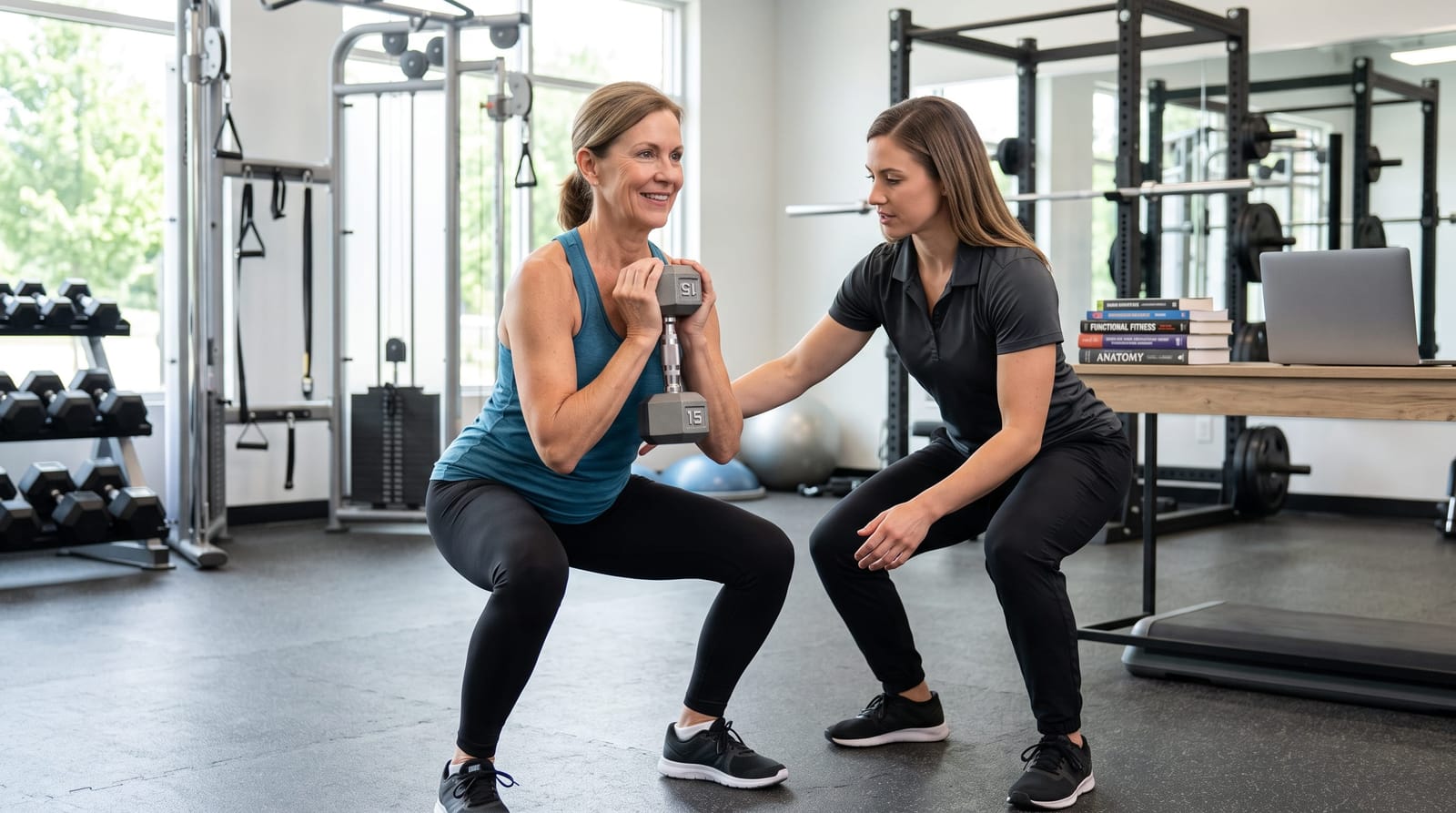
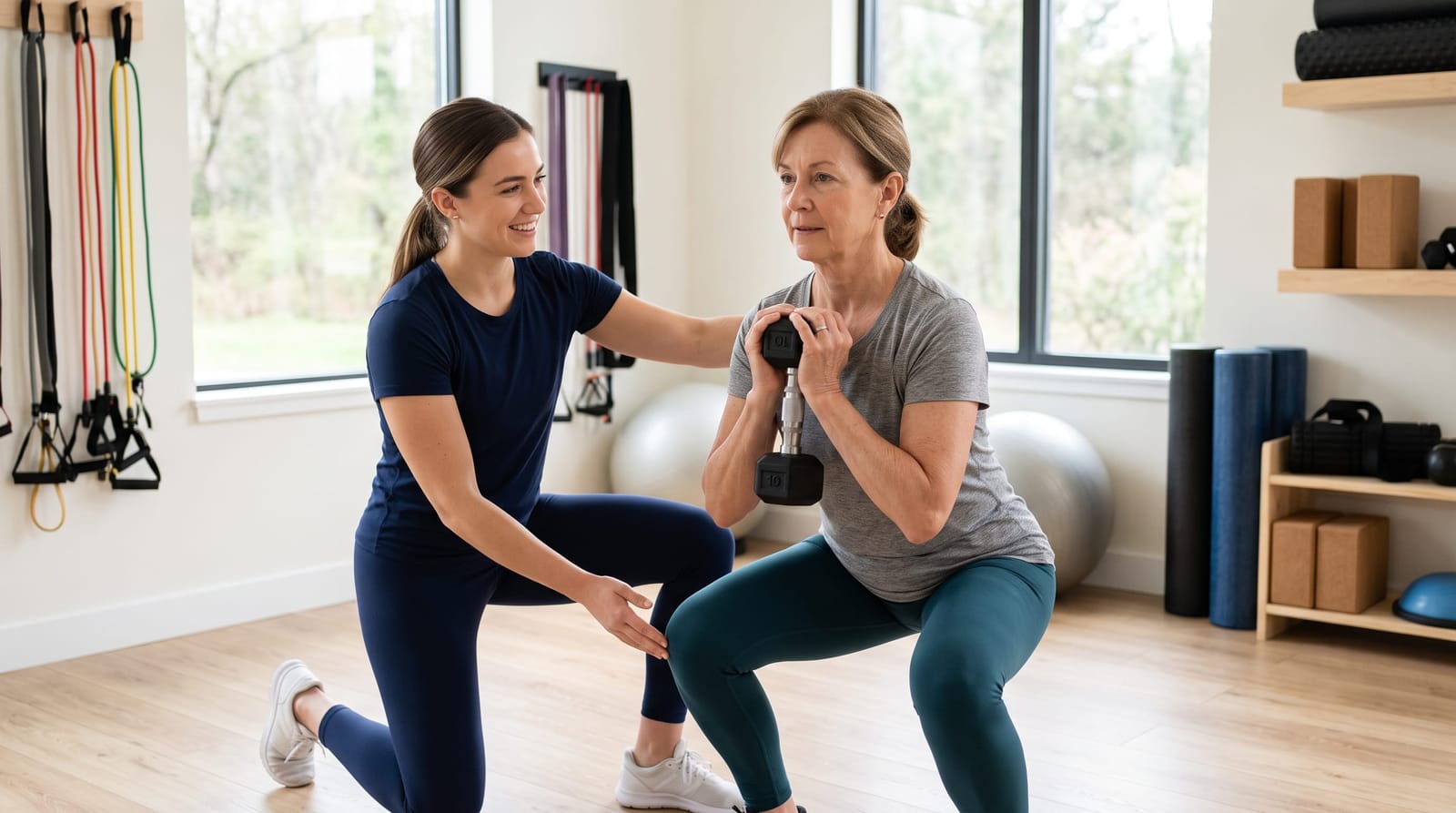
- Pairing with strength work: Lower body exercises like squats and step-ups build the leg strength that directly supports balance ability
- Regular reassessment: Progress is tracked so you can see your improvement: a 10-second single-leg hold becoming a 30-second hold is a meaningful, motivating result
This structured approach is what separates a thoughtful fitness program from a random collection of exercises.
Common Mistakes to Avoid When Starting Balance Training
Even well-intentioned balance practice can go sideways without proper guidance. Watch out for these common errors:
- Removing support too soon: Progressing to unsupported standing before you have the stability for it increases the risk of stumbling during training itself
- Rushing through holds: Quality matters more than speed: a solid 20-second hold builds more neurological adaptation than a shaky 5-second attempt
- Skipping the dynamic component: Static holds alone don't fully prepare you for the balance demands of real movement; dynamic exercises like step marching are essential
- Inconsistency: Balance adaptations require regular practice: sporadic sessions produce sporadic results
- Ignoring footwear: Training in supportive, stable shoes makes a genuine difference in how confidently you can challenge your balance
Frequently Asked Questions
How often should adults over 60 do balance exercises to see results?
Research consistently recommends 3 sessions per week, with each dedicated balance session lasting 15 to 20 minutes. Consistency matters more than duration: shorter, regular sessions produce better neurological adaptation than infrequent longer workouts. Most adults begin noticing meaningful improvements in stability within 4 to 6 weeks of consistent practice.
Is it safe to do balance exercises at home without a trainer?
Basic, supported balance exercises can be practiced at home safely when you position yourself near a sturdy surface for support. However, working with a qualified trainer, at least initially, ensures you start at the right level, use correct technique, and progress at a pace appropriate for your current fitness and health status. A trainer can also identify compensations you might not notice on your own.
What's the difference between balance training and strength training for fall prevention?
They address different but complementary aspects of the same goal. Strength training builds the muscle power in your legs and core needed to catch yourself when you start to tip. Balance training develops the neuromuscular communication: the speed and accuracy with which your body senses and responds to instability. The most effective fall prevention programs include both, which is why they're typically combined in a well-structured active aging fitness program.
Can balance really be improved significantly after age 60?
Yes. The nervous system retains meaningful adaptability well into older age. Studies on fall prevention exercise programs show that regular balance and strength training leads to measurable reductions in fall rates among community-dwelling adults over 60. Your starting point matters less than your consistency and willingness to progress gradually.
Building Confidence One Step at a Time
The five exercises outlined here, tandem stance, feet-together progression, single-leg stand, step marching, and controlled weight shifts, represent a complete, progressive approach to building balance from the ground up. Each one has a specific purpose in preparing your body for the demands of daily movement. As part of a broader active aging fitness strategy here in Colorado Springs, balance training is one of the most impactful investments you can make in your independence, mobility, and confidence for the years ahead.
If you'd like to see how these exercises fit into a fully personalized program, Total Body Works offers one-on-one coaching specifically designed for adults 50 and over in the Monument and Colorado Springs area.