Can I Train for the ACFT While on Profile or Recovering from Injury?

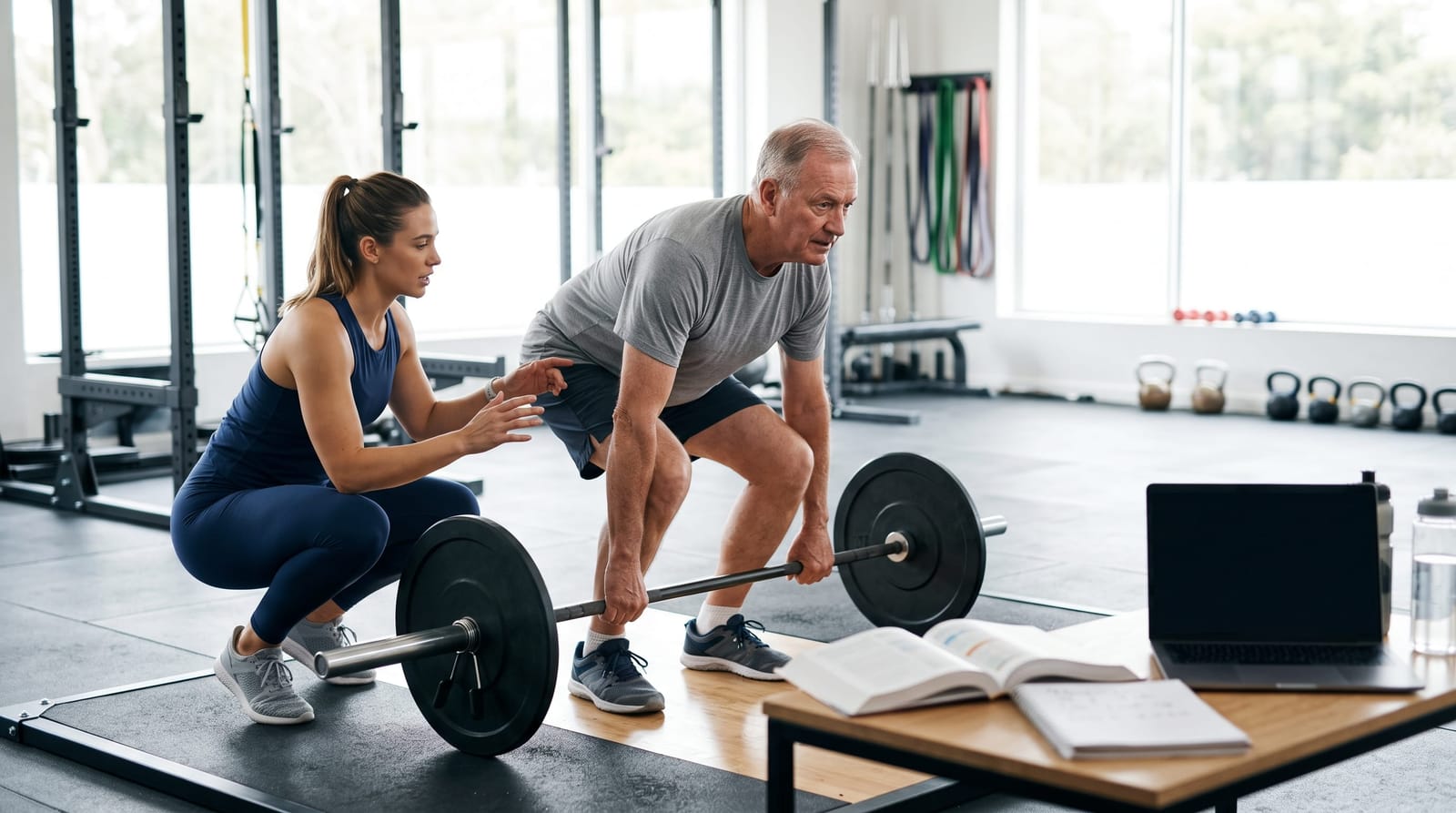
Being placed on a medical profile is frustrating, especially when you're committed to your performance and know the Army Combat Fitness Test is waiting on the other side of recovery. The good news is that staying on profile doesn't have to mean standing still. With the right approach, soldiers in Colorado Springs can maintain meaningful fitness, protect long-term readiness, and set themselves up to return to full ACFT training stronger than before. This post breaks down what smart, adapted training looks like when injury limitations are part of the equation.
Understanding What "On Profile" Actually Means for Your Training
A medical profile restricts certain movements or activities while your body heals. It doesn't mean all training stops: it means training has to change. The key distinction is between movements that are restricted and the broader goal of maintaining strength, mobility, and conditioning in areas that aren't affected by your injury.
Under the legacy Army Physical Fitness Test, soldiers with a permanent profile were often required to complete a 2.5-mile walk as a minimum standard. The ACFT raised the performance ceiling across the board, but it also created a more complex landscape for soldiers managing injuries, since its six events demand full-body functional capacity. That complexity is actually an opportunity: because the ACFT tests so many different physical qualities, there's almost always something a soldier can continue developing while one area heals.
Research on ACFT-related injuries has noted that soldiers beginning new training programs or significantly increasing their training volume are at elevated risk for overuse injuries. That context matters: returning to training after a profile shouldn't involve jumping back to maximum effort. A structured, progressive approach is always the safer path, and consulting with your unit's medical personnel before modifying your training routine is an important first step.
How Adapted Training Works Around Common ACFT Injury Limitations
Every profile is different, and every soldier's injury pattern is unique. That said, there are common themes in how training can adapt without aggravating restricted areas.
Lower Body Restrictions
Knee, hip, and ankle injuries are among the most common limitations soldiers face heading into ACFT training on profile. When lower-body loading is restricted, training can shift toward upper-body pulling and pressing strength: directly relevant to the Hand Release Push-Up and the Sprint-Drag-Carry event. Core stability work, which supports every ACFT event, is often entirely accessible even with lower-body limitations. Seated or lying positions can allow for significant trunk endurance development while eliminating stress on an injured joint.
Upper Body Restrictions
Shoulder, elbow, and wrist profiles are common after heavy pressing or load-bearing activities. In these cases, emphasis can shift to lower-body conditioning: building the leg strength and hip power that drive performance in the Leg Tuck, Sprint-Drag-Carry, and 2-Mile Run. Cardiovascular capacity can be maintained through low-impact options like stationary cycling or incline walking, which preserves aerobic fitness without loading an injured upper extremity.
Back Injuries
Spinal and lower back issues require careful attention, but controlled movement is often part of a well-managed recovery: always in coordination with your medical provider. General mobility work, breath control, and progressive core endurance training can often continue within appropriate limitations. If you're dealing with deadlift-related back strain specifically, understanding how targeted therapy can address that root cause is worth exploring: the approach outlined in our post on ARPWave therapy lower back pain deadlift Colorado Springs explains how this technology works for exactly that type of injury pattern.
ARPWave and HBOT: Tools That Support Faster Return to Full Training
At Total Body Works in Colorado Springs, two technologies play a meaningful role in helping soldiers on profile bridge the gap between injury and full ACFT training readiness: ARPWave therapy and Hyperbaric Oxygen Therapy (HBOT).
ARPWave Therapy
ARPWave uses electrical stimulation to engage the neurological system during active movement: helping the body re-establish normal muscle function in areas affected by injury or compensation patterns. Rather than passive treatment, ARPWave involves active participation, which means it integrates naturally with a functional training session. Many soldiers find that addressing the neurological component of an injury, not just the tissue itself, accelerates their return to meaningful movement capacity. This isn't a substitute for medical care, but it can be a valuable complement to your existing recovery plan when cleared by your provider.
Hyperbaric Oxygen Therapy (HBOT)
HBOT involves breathing concentrated oxygen inside a pressurized chamber. The increased atmospheric pressure allows oxygen to dissolve more thoroughly into the bloodstream, which supports the body's natural recovery processes at the cellular level. Sessions typically run 60 minutes, and many athletes use HBOT to support recovery during high-volume training periods, not just acute injury situations. For soldiers managing the cumulative wear of military service, HBOT offers a low-exertion complement to active training that fits naturally into a recovery-focused schedule.
Neither ARPWave nor HBOT is a standalone solution, and neither replaces the guidance of your military medical team. They work best as part of a broader, coordinated approach to maintaining readiness while you recover.
Building a Profile-Friendly ACFT Preparation Plan in Colorado Springs
The most effective approach to ACFT training on profile in Colorado Springs starts with honest communication, with your medical provider about what's cleared, and with your trainer about what your actual limitations are. From there, a well-designed program can address several goals simultaneously:
- Maintain aerobic capacity through low-impact cardiovascular work appropriate to your profile restrictions
- Develop strength in unrestricted areas so you return to full training with a higher baseline
- Build movement quality, mobility, stability, and motor control, that reduces reinjury risk when you step back up
- Use recovery tools like ARPWave and HBOT to support your body's natural processes between sessions
- Track progress against ACFT-relevant benchmarks so you have clear data on where you stand as your profile resolves
Total Body Works works with active duty soldiers, reservists, and National Guard members from Fort Carson and the Air Force Academy who are navigating exactly this situation. The studio's proximity to both installations and its familiarity with military fitness standards makes it a practical resource for soldiers who need their training to mean something, not just fill time during recovery.
Frequently Asked Questions
Can I still work on ACFT events while on a temporary profile?
In many cases, yes: depending on which movements your profile restricts. The ACFT includes six distinct events that test different physical qualities, so it's often possible to continue preparing for unrestricted events while protecting the injured area. Always confirm with your military medical provider what activities are permitted under your specific profile before beginning or modifying any training program.
How does ARPWave therapy fit into ACFT injury recovery?
ARPWave combines electrical stimulation with active movement to help address neurological disruption caused by injury: a component of recovery that traditional rest alone doesn't fully resolve. For soldiers dealing with common ACFT-related strains or compensation patterns, it can be used alongside a modified training program to support a more complete return to function. It is not a medical treatment and does not replace care from your provider.
Is HBOT covered by military health benefits?
Coverage for HBOT varies depending on your specific plan and the clinical indication. For questions about what your benefits cover, contact your TRICARE representative or a benefits coordinator. Total Body Works can provide information about session costs and scheduling, but benefit eligibility is determined by your healthcare plan.
How long does it typically take to get back to full ACFT training after an injury?
There's no universal timeline: recovery depends on the nature and severity of the injury, how consistently recovery protocols are followed, and how well the transition back to full training is managed. What's consistent is that soldiers who maintain appropriate fitness activity during their profile period, rather than going fully sedentary, tend to report smoother returns to full training capacity. Your medical team is the right resource for guidance specific to your situation.
The Bottom Line for Soldiers Training on Profile
A medical profile isn't a signal to stop preparing for the ACFT: it's an invitation to train smarter. With adapted programming, supportive recovery tools like ARPWave and HBOT, and a clear understanding of what your body can handle right now, it's entirely possible to come out of a profile period in a stronger position than when you went in. Total Body Works in Colorado Springs is built to help military personnel navigate exactly this challenge: keeping you moving, keeping you ready, and keeping your long-term fitness goals firmly in view.