Body Transformation in Colorado Springs: The Complete Guide to Real, Lasting Results with Private Personal Training
You've done the research. Maybe you've tried a group fitness class, followed a meal plan from the internet, or pushed through a few months at a big-box gym: only to find yourself back at square one, frustrated and wondering what's missing. If that sounds familiar, you're not alone, and more importantly, you're not the problem.
The fitness industry is full of programs that promise dramatic results but deliver generic workouts and one-size-fits-all advice. What actually drives lasting physical change is something different: a structured, personalized approach that accounts for where you are right now, where you want to go, and the real-life demands you're navigating every day.
This guide was written for people who are serious about change, not the kind that lasts six weeks, but the kind that reshapes how you move, how you feel, and how you function for years to come. Whether your goal is to reduce body fat, build meaningful strength, move without discomfort, or simply feel like yourself again, a well-designed body transformation program in Colorado Springs can serve as the framework that makes it possible.
Inside, you'll find a comprehensive overview of what a real transformation program includes, from initial movement assessment and progressive training phases to nutrition guidance and advanced recovery therapies. You'll also find deeper resources on specific aspects of the journey, so you can explore what matters most to your situation.
Let's start from the beginning.
---What "Body Transformation" Actually Means: and Why the Definition Matters
The phrase "body transformation" gets used a lot in fitness marketing, and that overuse has muddied its meaning. For many people, it conjures images of dramatic before-and-after photos or extreme physical changes accomplished in unrealistically short timeframes. That's not what a well-designed program actually delivers, and it's not what most people actually need.
A genuine body transformation is a meaningful, measurable shift in how your body looks, moves, feels, and performs. It's a process, not an event. And while aesthetic changes like reduced body fat or increased lean muscle are certainly part of the picture, they're one piece of a much larger outcome.
The Four Pillars of Physical Transformation
At Total Body Works, we think about transformation across four interconnected dimensions:
- Composition: Changes in the ratio of lean muscle to body fat, not simply weight loss or weight gain, but a meaningful shift in how your body is built and how it uses energy.
- Strength and Performance: Your ability to perform daily activities, carry groceries, climb stairs, play with your kids or grandkids, and move through life without limitation.
- Mobility and Movement Quality: The freedom to move your joints through their full range of motion with control, reducing the risk of injury and improving posture and physical confidence.
- Health Markers: Measurable indicators like resting heart rate, sleep quality, energy levels throughout the day, and how your body responds to physical stress, all of which improve with consistent, progressive training.
Research published by the American College of Sports Medicine consistently shows that regular resistance training improves multiple health markers simultaneously, including insulin sensitivity, bone mineral density, and cardiovascular function: independent of changes in body weight. That's why the scale is a poor measure of progress on its own, and why a complete transformation program tracks much more than pounds.
When you approach transformation this way, the goal becomes building a body that serves you well: one that's strong, capable, resilient, and energized. The aesthetic results follow naturally from that process.
---Why Generic Fitness Programs Fall Short for Busy Professionals
If you're a working professional, managing a career, a family, and a calendar that never seems to have enough space, you already know that one-size-fits-all fitness advice rarely fits your life.
Group boot camp classes, subscription workout apps, and self-guided gym programs all have their place, but they share a common limitation: they're built for an average person who doesn't exist. They don't account for your movement history, your injury background, your energy patterns, your schedule constraints, or your specific goals. And when a program doesn't fit, most people don't blame the program: they blame themselves.
The Cost of the Wrong Program
According to the International Health, Racquet and Sportsclub Association (IHRSA), approximately 67% of gym memberships go unused, and the majority of people who begin a new fitness program abandon it within the first three months. This isn't a willpower problem. It's a design problem.
Programs that don't match your current fitness level lead to early burnout or injury. Programs that don't evolve as you progress stop producing results. Programs without accountability allow easy opt-outs on hard days. And programs without nutritional guidance leave one of the most important levers for change completely untouched.
For the professional adult who has tried other approaches and come up short, the answer isn't to try harder with the wrong tool. It's to find a program that's actually built for you: your body, your goals, your life.
That's the foundational premise behind private personal training at Total Body Works, and it's what distinguishes a true body transformation program in Colorado Springs from a generic fitness membership.
---The Foundation Phase: Why Starting Right Changes Everything
One of the most common mistakes in fitness is skipping the foundation. People arrive motivated, eager to train hard, and ready to push, but without a proper starting point, even well-intentioned effort can reinforce poor movement patterns, exacerbate existing limitations, or produce frustration when results plateau early.
At Total Body Works, every body transformation program begins with a structured foundation phase designed to establish the baseline from which everything else builds.
Movement Screening
Before any training begins, we conduct a thorough movement screening to assess how your body moves across fundamental patterns: squatting, hinging, pushing, pulling, rotating, and carrying. This isn't about passing or failing: it's about understanding. The screening reveals asymmetries, mobility restrictions, areas of compensation, and movement habits that, if left unaddressed, would limit your progress or increase injury risk down the road.
The Functional Movement Screen (FMS), a widely used assessment tool in professional sports and physical performance settings, has been shown in multiple studies to identify injury risk factors before they become problems. Addressing these patterns early in a program is one of the most valuable investments a client can make.
Goal Alignment and Baseline Metrics
The foundation phase also establishes clear, measurable baselines, not just body weight, but movement capacity, cardiovascular baseline, strength benchmarks, and a clear picture of lifestyle factors like sleep, stress, and current activity levels. These baselines become the reference points against which genuine progress is measured throughout the program.
This phase typically spans the first four to six weeks of the program, though the timeline is adjusted based on each individual's starting point. Clients who are completely new to structured training may spend more time here; those returning after a gap may move through it more quickly. The goal is to arrive at the transformation phase well-prepared, not just physically, but with a clear understanding of the program's logic and your own body's responses.
---The Transformation Phase: Progressive Programming That Actually Produces Change
Once the foundation is established, the real work begins, and it's built on one of the most proven principles in exercise science: progressive overload.
Progressive overload means that your training systematically increases in demand over time, whether through more resistance, more volume, more complexity, or shorter rest periods. This ongoing challenge is what signals your body to adapt: building muscle, improving cardiovascular efficiency, and restructuring body composition in meaningful ways.
Periodized Training for Long-Term Results
At Total Body Works, transformation-phase programming is periodized: meaning it's organized into intentional training blocks, each with a specific focus. A strength-emphasis block might be followed by a hypertrophy-focused block, which is then followed by a metabolic conditioning phase. This structure prevents adaptation plateaus, protects against overtraining, and keeps your body responding consistently over months rather than weeks.
Research from the Journal of Strength and Conditioning Research consistently supports periodized training as superior to non-periodized approaches for both strength gains and body composition improvement in trained adults, with some studies showing periodized programs producing up to 29% greater strength gains over 12-week training cycles.
Private, One-on-One Coaching
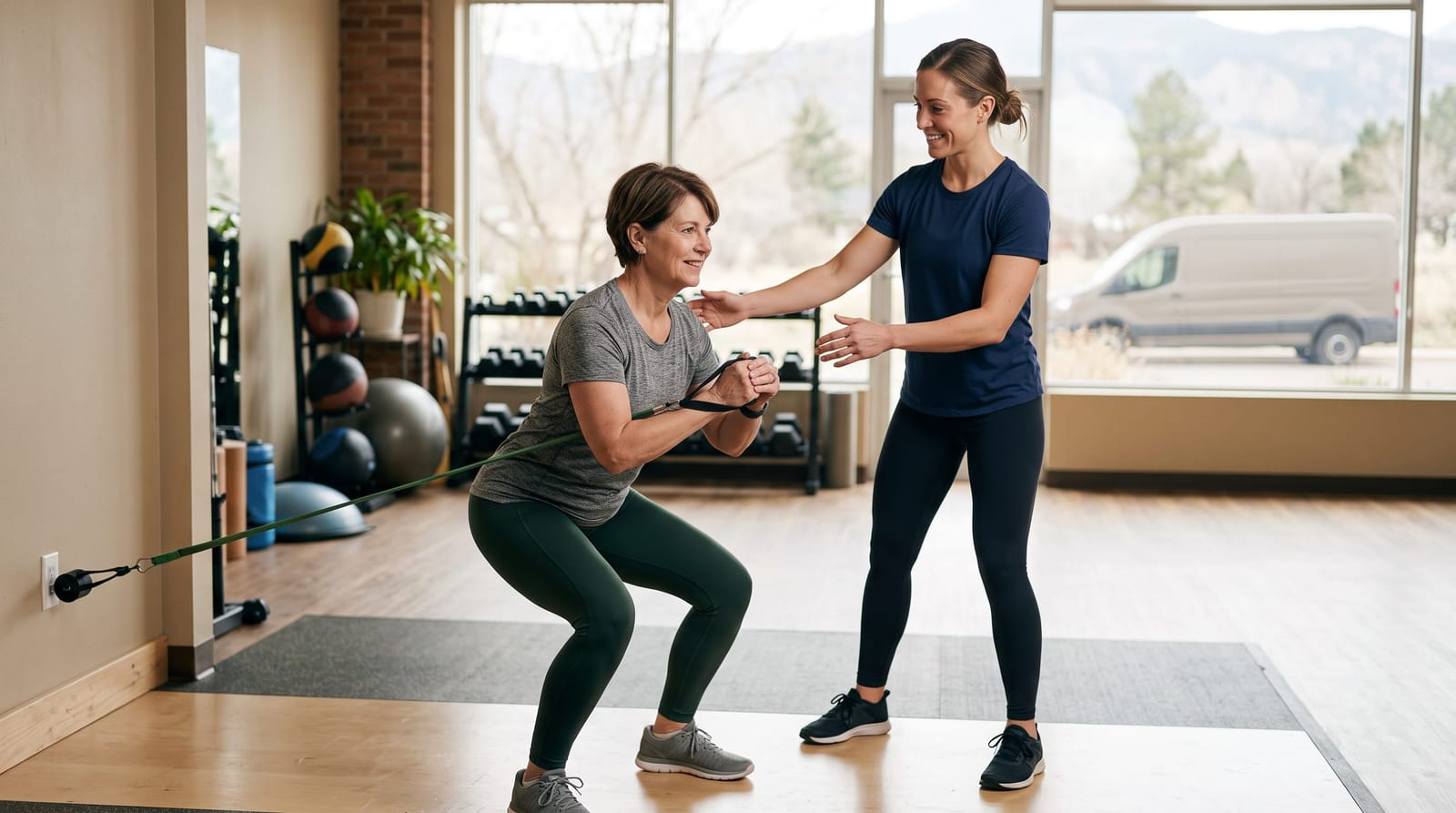
The transformation phase is delivered through private, one-on-one personal training sessions, not group classes, not semi-private pods, but dedicated time between you and your trainer with no competing demands. This structure allows for real-time technique coaching, immediate adjustments when something isn't working, and a level of personalization that group settings simply cannot replicate.
Your trainer tracks every session, monitors your recovery between workouts, and adjusts programming based on how you're responding. When life gets complicated, a stressful week at work, disrupted sleep, travel, your program adapts accordingly rather than pushing you through a rigid template that doesn't fit the moment.
---Nutrition Guidance: The Partner to Every Great Training Program
No training program, regardless of how well-designed, produces its full potential without nutritional support. The two systems work together, and when they're aligned, results compound in ways that neither approach achieves independently.
This doesn't mean following a rigid diet plan or eliminating food groups. For most busy professional adults, the most impactful nutrition changes are behavioral and structural: building sustainable eating patterns that support training, recovery, and energy levels without requiring constant calculation or restriction.
What Nutrition Guidance Looks Like in a Transformation Program
At Total Body Works, nutrition guidance is integrated into the program, not bolted on as an afterthought. Your trainer works with you to understand your current eating patterns, identify gaps that might be limiting your results, and develop practical strategies that fit your lifestyle.
This might include guidance on protein distribution throughout the day (research consistently shows that spreading protein intake across meals supports muscle protein synthesis more effectively than consuming the same total protein in fewer sittings), strategies for pre- and post-workout fueling, habits around hydration and sleep that directly affect body composition, and approaches to eating well during high-stress or high-travel periods.
According to a 2020 meta-analysis published in Obesity Reviews, combined exercise and dietary interventions produced significantly greater reductions in body fat, averaging 20% greater fat loss, compared to exercise alone over comparable timeframes. The message is clear: training and nutrition are partners, not alternatives.
For more on how these two elements work together in practice, explore our detailed guide on nutrition and personal training body transformation.
---Recovery Therapies: The Accelerator Most Programs Ignore
Recovery is not a passive process. It's not simply "the time between workouts." It's an active, physiological adaptation window, and how you manage that window determines how quickly your body rebuilds, how consistently you can train, and how sustainable your results become over time.
Total Body Works offers three specialized recovery modalities that set our body transformation program in Colorado Springs apart from standard personal training offerings.
Sports and Therapeutic Massage
Structured massage therapy reduces delayed onset muscle soreness (DOMS), improves circulation to recovering tissues, releases chronic muscular tension that can restrict movement patterns, and supports the parasympathetic nervous system: helping the body shift from a stress state into a recovery state. For clients training two to four times per week, regular massage is a meaningful contributor to both performance and consistency.
Hyperbaric Oxygen Therapy (HBOT)
Hyperbaric oxygen therapy involves breathing concentrated oxygen in a pressurized environment, which dramatically increases the amount of oxygen dissolved in the bloodstream and delivered to tissues throughout the body. Used by professional athletes and sports medicine practitioners, HBOT supports tissue recovery, reduces inflammation, and can meaningfully shorten the time between high-effort training sessions. While HBOT is not a medical treatment in this context, its application as a recovery support tool is well-documented in sports performance literature.
ARPWave Therapy
ARPWave is a neuromuscular electrical stimulation technology that works by rapidly cycling electrical frequencies through muscle tissue, targeting compensatory patterns, reducing protective tension, and accelerating neuromuscular re-education. In a transformation context, ARPWave can help clients address movement restrictions more quickly, reduce the muscular guarding that often follows years of sedentary work or past injury, and recover from high-intensity training sessions faster than passive rest alone.
Together, these three modalities form a recovery ecosystem that keeps you training consistently, progressing without breakdown, and arriving at each session ready to perform. To learn more about the science and application of these therapies, visit our in-depth resource on recovery therapy body transformation Colorado Springs.
---Measuring Real Progress: What to Track and Why It Matters
One of the most disempowering experiences in a fitness program is doing the work and not being able to see it. This often happens not because results aren't occurring, but because the wrong metrics are being tracked.
Body weight fluctuates daily based on hydration, hormonal cycles, sodium intake, and sleep quality: sometimes by as much as three to five pounds within a single 24-hour period. Relying on the scale as your primary progress indicator creates a feedback loop that rewards water retention patterns rather than real physiological change.
A Smarter Measurement Framework
At Total Body Works, we track transformation through multiple lenses:
- Body composition measurements: Tracking changes in lean mass and fat mass separately, rather than total weight, provides a far more accurate picture of what the body is actually doing.
- Performance benchmarks: How many push-ups can you perform with proper form? What's your single-leg balance duration? How has your cardiovascular recovery time changed? These numbers tell a story that the scale never could.
- Movement quality reassessments: Regular re-screening identifies improvements in mobility, symmetry, and movement efficiency, often the first place clients notice change, before it becomes visible in the mirror.
- Subjective wellbeing markers: Energy levels, sleep quality, mental clarity, and how you feel throughout the day are meaningful data points that reflect the systemic impact of your program.
- Circumference measurements: Changes in waist, hip, chest, and limb measurements often outpace visible aesthetic changes and provide concrete evidence of body composition shifts.
For a comprehensive framework on tracking your transformation accurately and motivatingly, see our guide on tracking progress body transformation program.
---Transformation After 40 and 50: What's Different and What's Still Possible
If you're in your 40s or 50s and wondering whether a body transformation program is still relevant for you: the answer is unequivocally yes. The approach, however, deserves some specific attention.
The physiology of middle-age adults differs from that of 25-year-olds in ways that are real, measurable, and entirely manageable with the right program design. Testosterone and growth hormone levels decline gradually after age 30, with research suggesting that testosterone levels in men decrease by approximately 1% per year after age 35. Muscle protein synthesis becomes slightly less efficient, requiring higher protein intake to achieve the same anabolic stimulus. Recovery windows tend to lengthen, making strategic deload weeks and recovery modalities more important than in younger years.
What doesn't change: the body's fundamental ability to adapt. Resistance training in adults over 50 has been shown in numerous studies to produce meaningful gains in lean muscle mass, bone density, and functional strength, in some cases matching the relative gains seen in younger populations when programming is appropriately designed. The key is a program that respects your physiology rather than ignoring it.
This means smarter loading progressions, greater emphasis on joint health and mobility, more intentional recovery structure, and a longer-term perspective on the transformation arc. The results are real, they're sustainable, and they often represent the most significant quality-of-life improvement a client experiences at any point in their life.
We've written a complete resource specifically for this population: body transformation after 50 Colorado Springs.
---Body Composition vs. Body Weight: Why This Distinction Defines Your Program
The conversation about body transformation in Colorado Springs, and everywhere, is too often dominated by weight loss language. "Lose 20 pounds." "Drop two dress sizes." "Get back to your high school weight." These goals aren't inherently problematic, but they can lead people toward programs that prioritize scale outcomes over genuine physiological change.
Consider this: two people can weigh exactly the same and look, feel, and perform completely differently if one has significantly more lean muscle and less body fat than the other. Muscle is metabolically active tissue: it burns energy at rest, supports joint function, improves posture, and contributes to the strength and independence that define quality of life as we age. Body fat, in excess, does none of those things.
A body transformation program focused on composition rather than weight works to increase lean muscle while reducing excess body fat: a process called body recomposition. This often means scale weight changes more slowly than clients expect, but the visible and functional changes are dramatically more meaningful.
Understanding this distinction is foundational to setting expectations and measuring success in a way that actually motivates continued progress. Dive deeper into this topic with our resource on body composition training Colorado Springs.
---Deep Dive Topics in This Cluster
This pillar page provides the foundational framework for understanding what a complete body transformation program entails. The following resources take each major component of that framework and explore it in greater depth: giving you the specific knowledge to make informed decisions about your own program.
- Body Composition Training Colorado Springs: Understand the critical difference between losing weight and changing your body composition, and why the most successful transformation programs focus on the latter. Covers how lean muscle and body fat ratios determine physical function, metabolic health, and long-term results.
- Body Transformation After 50 Colorado Springs: A dedicated guide for adults over 40 and 50 navigating the specific physiological realities of training at this stage of life. Covers hormonal shifts, recovery differences, programming adjustments, and what genuinely works for this demographic.
- Recovery Therapy Body Transformation Colorado Springs: An in-depth look at how massage therapy, hyperbaric oxygen therapy, and ARPWave work individually and together to accelerate recovery, reduce injury risk, and sustain training capacity over time.
- Tracking Progress Body Transformation Program, A practical guide to measuring your transformation accurately, including which metrics matter, which mislead, and how to build a tracking framework that keeps you motivated and informed throughout your program.
- Nutrition and Personal Training Body Transformation: Explores the partnership between structured training and purposeful nutrition, including practical strategies for eating well within a demanding professional lifestyle without rigid diets or calorie obsession.
Conclusion: Transformation Is a Process: and You Don't Have to Figure It Out Alone
A genuine body transformation isn't something that happens to you: it's something you build, one well-designed session and one good decision at a time. The most important factors aren't genetics, age, or how much time you have available. They're the quality of your program, the expertise guiding it, and the consistency with which you show up.
A comprehensive body transformation program in Colorado Springs, one that includes movement screening, progressive private training, nutrition guidance, and strategic recovery support, gives you a structure that makes consistency easier and results more predictable. It removes the guesswork, adapts to your life, and builds toward something that lasts far beyond the program itself.
At Total Body Works, we work with real people, professionals, parents, older adults, people returning from injury or a long fitness gap, who are ready to invest in their health with the same seriousness they apply to every other area of their life. Our approach is built on evidence, experience, and a genuine commitment to your long-term wellbeing.
If you're ready to stop guessing and start building, we'd love to talk. Reach out to Total Body Works to schedule your initial consultation and take the first step toward a transformation that's built to last.