Private ACFT Training vs. Unit PT: Why Personalized Coaching Dramatically Improves Scores
Preparing for the Army Combat Fitness Test is one of the most important professional responsibilities a soldier can take on. If you're exploring your options for private personal trainer ACFT preparation in Colorado Springs, you've likely already recognized that unit physical training alone may not be getting you where you need to go. While unit PT builds camaraderie and general conditioning, it operates on a one-size-fits-all model that simply cannot address every soldier's individual strengths, weaknesses, and movement patterns. This post takes a deep dive into why personalized, one-on-one coaching produces measurably better results than group training alone, and how a targeted approach to ACFT preparation can help you walk into test day feeling genuinely confident in every event.
What Unit PT Does Well: and Where It Falls Short
Unit PT serves a critical function. It builds unit cohesion, establishes consistent training habits, and ensures every soldier maintains a baseline level of readiness. Group runs, calisthenics, and formation-based workouts have been the backbone of military fitness culture for decades, and for good reason.
But the ACFT is not a one-size-fits-all test. It demands six distinct physical competencies:
- Muscular strength (3-Repetition Maximum Deadlift)
- Upper body explosive power (Standing Power Throw)
- Upper body muscular endurance (Hand-Release Push-Up)
- Functional agility and coordination (Sprint-Drag-Carry)
- Core and grip strength under fatigue (Leg Tuck or Plank)
- Aerobic endurance (2-Mile Run)
The challenge with unit PT is that a 45-minute group session cannot simultaneously address a soldier who struggles with hip mobility on the deadlift and another who needs to rebuild run pacing strategy after a period of reduced activity. Instructors manage the group, not the individual. According to Army doctrine, unit PT is designed to maintain general fitness readiness across a formation, not to diagnose and correct individual performance deficits.
The result? Soldiers who are already strong in certain events keep improving them, while persistent weak spots go unaddressed. When test day arrives, one low-scoring event can drag down an otherwise solid performance.
The Case for Private ACFT Preparation: What the Numbers Show
Research consistently supports individualized training as more effective than group-based programs for improving specific performance outcomes. A 2019 study published in the Journal of Strength and Conditioning Research found that individualized resistance training programs produced significantly greater strength gains compared to standardized group programs over a 12-week period, with participants in personalized programs showing up to 26% greater improvement in targeted lifts.
For ACFT-specific performance, the implications are clear. Soldiers who receive personalized coaching focused on their weakest events show faster score improvements because:
- Training time is allocated based on individual data, not group averages
- Movement analysis catches technique errors that silently limit performance
- Programming is adjusted weekly based on actual progress, not a fixed schedule
- Recovery, volume, and intensity are calibrated to the individual's current fitness level
- Mental preparation and pacing strategies are tailored to each event
Colorado Springs has a growing community of certified personal trainers who specialize in working with active duty military personnel, reservists, and National Guard members: many of whom need structured, individualized ACFT preparation beyond what their unit schedule provides. For soldiers stationed near Fort Carson or the Air Force Academy, this kind of personal trainer Air Force Academy Fort Carson Colorado resource is closer than many realize.
How Personalized Coaching Identifies Hidden Weaknesses
One of the most valuable things a skilled private coach brings to ACFT preparation is a structured assessment process. Before any programming begins, a qualified trainer will observe movement quality, evaluate baseline strength and endurance across all six events, and identify the specific limiters holding a soldier back.
Movement Analysis
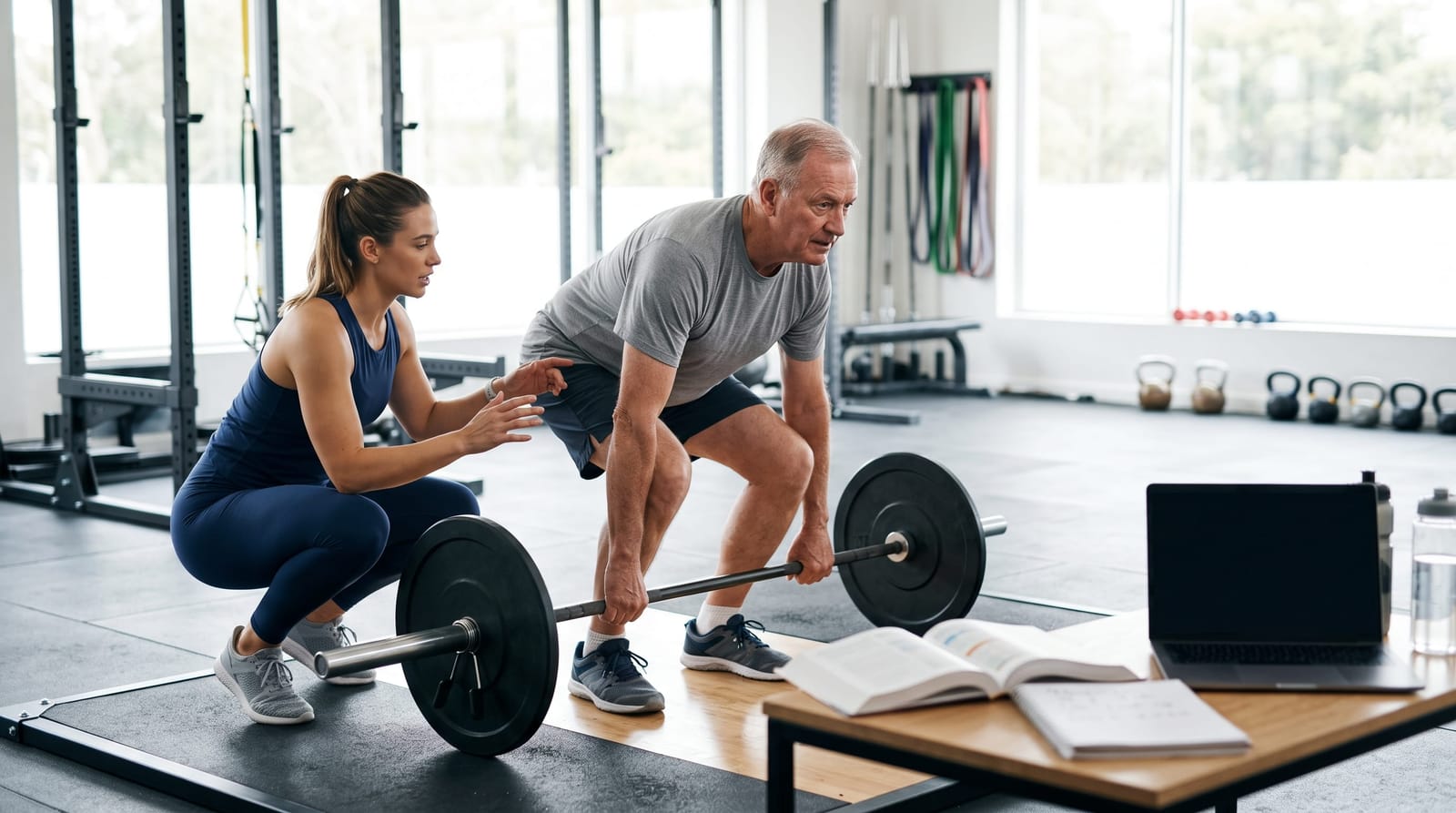
Many soldiers lose points on the deadlift not because they lack strength, but because of movement pattern inefficiencies: a rounded lower back, poor hip hinge mechanics, or grip limitations. A private coach identifies these patterns during an initial assessment and builds corrective strategies into the program from day one. Understanding ACFT deadlift training program Colorado Springs resources can be a helpful complement to this individualized approach.
Event-Specific Baseline Testing
A good coach will run each soldier through a mock assessment of all six events to establish a starting point. Typical baseline metrics might reveal:
- A soldier with a strong deadlift but a 2-mile run time that needs 90+ seconds of improvement
- A soldier who struggles with hand-release push-up rep counts due to shoulder stability, not chest strength
- A soldier whose Sprint-Drag-Carry time is limited by grip fatigue rather than cardiovascular conditioning
Without this baseline data, training remains guesswork. With it, every session has a clear purpose tied to a measurable goal.
Identifying Recovery and Load Tolerance
Overtraining is a real risk for soldiers who are already carrying a significant physical workload through unit commitments. A private coach evaluates how quickly a soldier recovers between sessions and adjusts training volume accordingly: protecting long-term readiness rather than just pushing harder.
What an Individualized ACFT Program Looks Like in Practice
A well-designed private ACFT preparation program doesn't look like generic boot camp circuits or random CrossFit-style workouts. It's structured, progressive, and built around the soldier's schedule and current fitness level. Here's what a thoughtful individualized approach typically includes:
Phase 1: Assessment and Foundation (Weeks 1-2)
- Full movement screen across all six ACFT events
- Identification of the 2-3 events with the most score improvement potential
- Establishment of baseline loads, reps, and times for each event
- Building consistency with movement mechanics before adding intensity
Phase 2: Targeted Development (Weeks 3-8)
- Event-specific strength and conditioning sessions targeting weak areas
- Progressive overload on the deadlift, push-up, and power throw
- Interval-based conditioning for the Sprint-Drag-Carry and 2-Mile Run
- Regular check-ins to track progress and adjust programming
Phase 3: ACFT Simulation and Peak (Weeks 9-12)
- Full mock ACFT assessments under test-like conditions
- Pacing strategy refinement for the run and Sprint-Drag-Carry
- Taper period to ensure the soldier is fresh and sharp on test day
- Mental preparation: managing nerves, understanding scoring thresholds
This kind of structured progression is exactly what separates private coaching from the general fitness maintenance of unit PT. To understand how each event is trained specifically within this kind of framework, exploring an ACFT training events breakdown Colorado Springs resource can provide deeper context for each component of the test.
The Role of Accountability and Real-Time Feedback
One of the most underappreciated advantages of working with a private coach is the quality of feedback received during every single repetition. In a unit setting, a Platoon Sergeant or NCO is managing 20, 40, or 80 soldiers simultaneously. Technique corrections are broad and general. Soldiers may be reinforcing poor movement habits for months without realizing it.
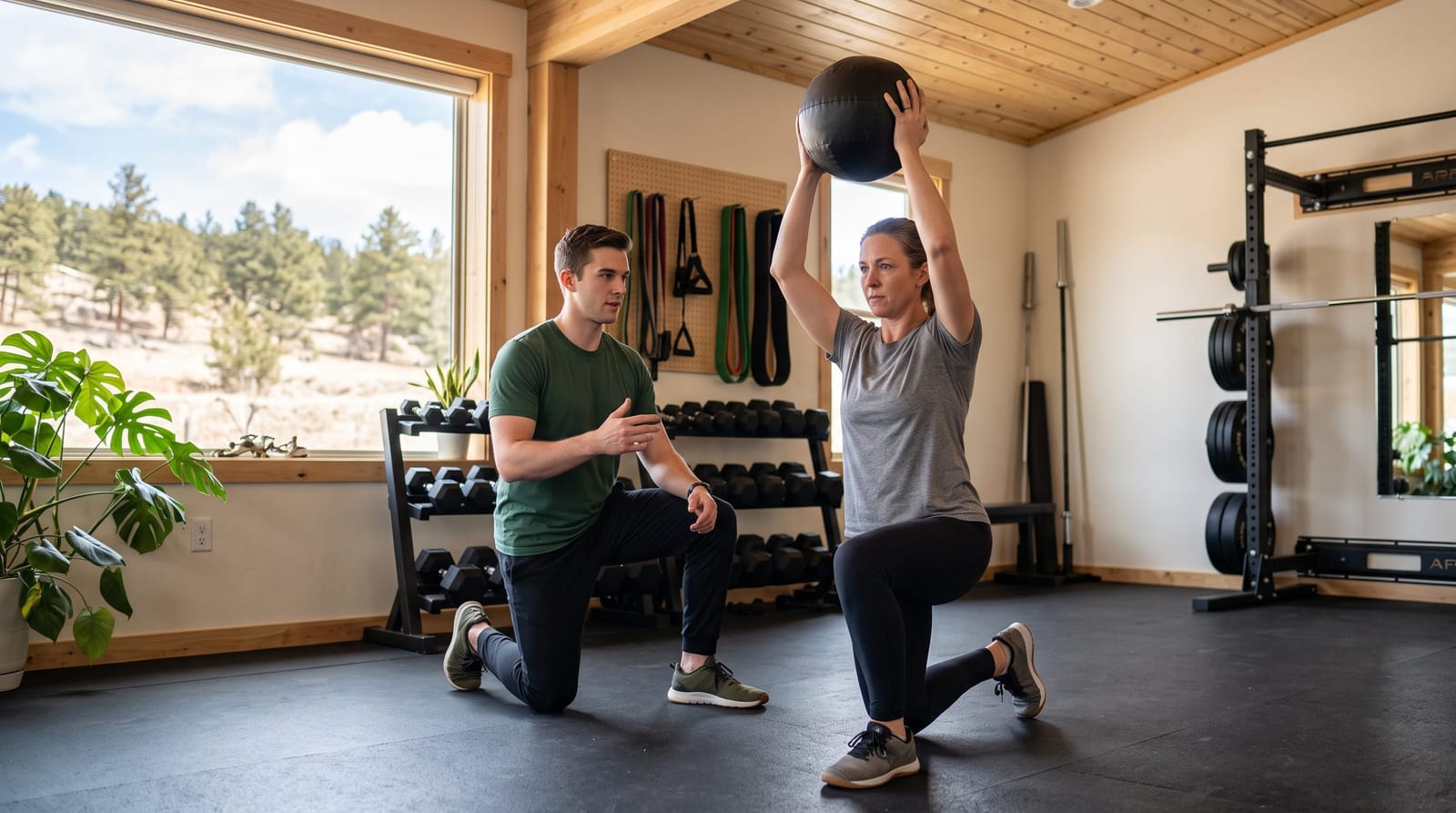
In a one-on-one session, every rep is observed. A coach can provide immediate, specific feedback:
- "Your hips are rising before your chest on the deadlift: reset and drive through your heels."
- "You're holding your breath through the push-up: exhale on the way up."
- "Your first 400 meters of the run is too fast: you're going to hit a wall at mile one."
This level of precision accumulates over weeks of training. Small corrections made consistently compound into significant score improvements. Soldiers don't just get stronger: they move more efficiently, which is often the difference between a passing score and an exemplary one.
Accountability also plays a measurable role. Studies on exercise adherence suggest that individuals who train with a coach show 30-40% greater consistency than those training independently. Consistency is the foundation of any meaningful performance improvement.
Conditioning and the Events That Demand More Than Strength
Many soldiers underestimate the conditioning demands of the ACFT. The Sprint-Drag-Carry and 2-Mile Run require a different kind of preparation than strength-focused events. A private coach addresses both the aerobic base and the event-specific conditioning that unit PT often treats generically.
For example, the Sprint-Drag-Carry involves five distinct tasks performed in sequence, and most soldiers lose time on transitions and grip failure during the sled drag, not just raw speed. A personalized program isolates each component, identifies the time loss, and builds targeted conditioning to close the gap. For a deeper look at how the conditioning events are approached in training, ACFT conditioning sprint drag carry training resources break this down event by event.
The 2-Mile Run is another area where individualized pacing strategy, not just more miles, makes the difference. A coach uses interval training, threshold runs, and mock time trials to build both the aerobic capacity and the pacing intelligence needed to run an efficient two miles under pressure.
Related Details Worth Exploring
If you're a soldier stationed near Fort Carson or the Air Force Academy and considering private coaching, understanding the local landscape of available resources is a useful starting point. Many military personnel in the area have found that working with coaches experienced in military fitness standards creates a more focused and relevant preparation experience. The reasons why local military personnel gravitate toward specialized studios are worth understanding as you evaluate your options, and the post on personal trainer Air Force Academy Fort Carson Colorado covers this in detail.
Conclusion: Making the Investment in Personalized ACFT Preparation
Unit PT will always have a place in military fitness culture, and it should. But when ACFT scores matter for career progression, promotion boards, and professional readiness, relying exclusively on group training means accepting significant gaps in your preparation. Personalized coaching fills those gaps with precision: targeted movement analysis, individualized programming, real-time feedback, and structured progression that group settings simply cannot replicate.
If you're a soldier in Colorado Springs looking for private personal trainer ACFT preparation that's built around your schedule, your specific weaknesses, and your career goals, Total Body Works is ready to help you build a plan that reflects where you are today and where you need to be on test day. Reach out to schedule your initial ACFT assessment and take the first step toward a score that reflects your full potential.