Massage Therapy for Couples: How to Integrate Recovery Into Your Training Program
When couples commit to training together, the focus naturally falls on workouts: the sessions, the effort, the progress. But recovery is just as important as the training itself, and it's an area that many people overlook until their bodies demand attention. If you and your partner are training consistently at Total Body Works, adding structured recovery through massage therapy is one of the smartest investments you can make in your shared fitness journey. For couples in Monument and the greater Colorado Springs area, couples massage therapy in Colorado Springs offers a meaningful, effective way to support your bodies, and your commitment to each other.
Why Recovery Deserves a Place in Your Training Program
Training creates positive stress on the body. Muscles work hard, connective tissue adapts, and the nervous system engages fully throughout each session. What happens between sessions, how well you sleep, how you manage stress, and how intentionally you recover, shapes how well your body responds to that training over time.
Research consistently reinforces this. A study published in the Journal of Athletic Training found that massage therapy significantly reduced delayed onset muscle soreness (DOMS) by approximately 30% compared to passive rest alone. Separately, studies suggest that regular soft tissue work can improve range of motion by measurable degrees, helping people move more freely and comfortably in daily life.
For couples who are balancing demanding careers, family responsibilities, and a consistent training schedule, recovery isn't a luxury: it's a strategic part of the program. Tight muscles, accumulated tension, and general fatigue can accumulate gradually, and without intentional recovery, they begin to limit what you're able to do in your sessions. Massage therapy addresses this directly by supporting circulation, reducing muscular tension, and helping the body transition more effectively from effort to rest.
It's also worth noting that stress, both physical and mental, affects training quality. Adults in high-demand professions often carry chronic tension that isn't fully resolved through exercise alone. Regular massage therapy sessions provide a structured opportunity for the nervous system to shift gears, which many clients find supports better sleep, clearer focus, and improved energy during workouts.
What Couples Massage Therapy in Colorado Springs Actually Looks Like
The Monument area has several quality providers who offer massage services for individuals and couples. Holistique, a self-care studio local to Monument, offers couples therapy alongside other recovery-focused services. Studio 105 Salon and Spa in Monument provides massage as part of their broader wellness offerings. Licensed massage therapist Michelle LeBeau of Elite Performance BodyWork LLC also practices in Monument, bringing a background in performance-oriented bodywork that aligns well with active clients. These are credible local options worth exploring as you build out your recovery routine.
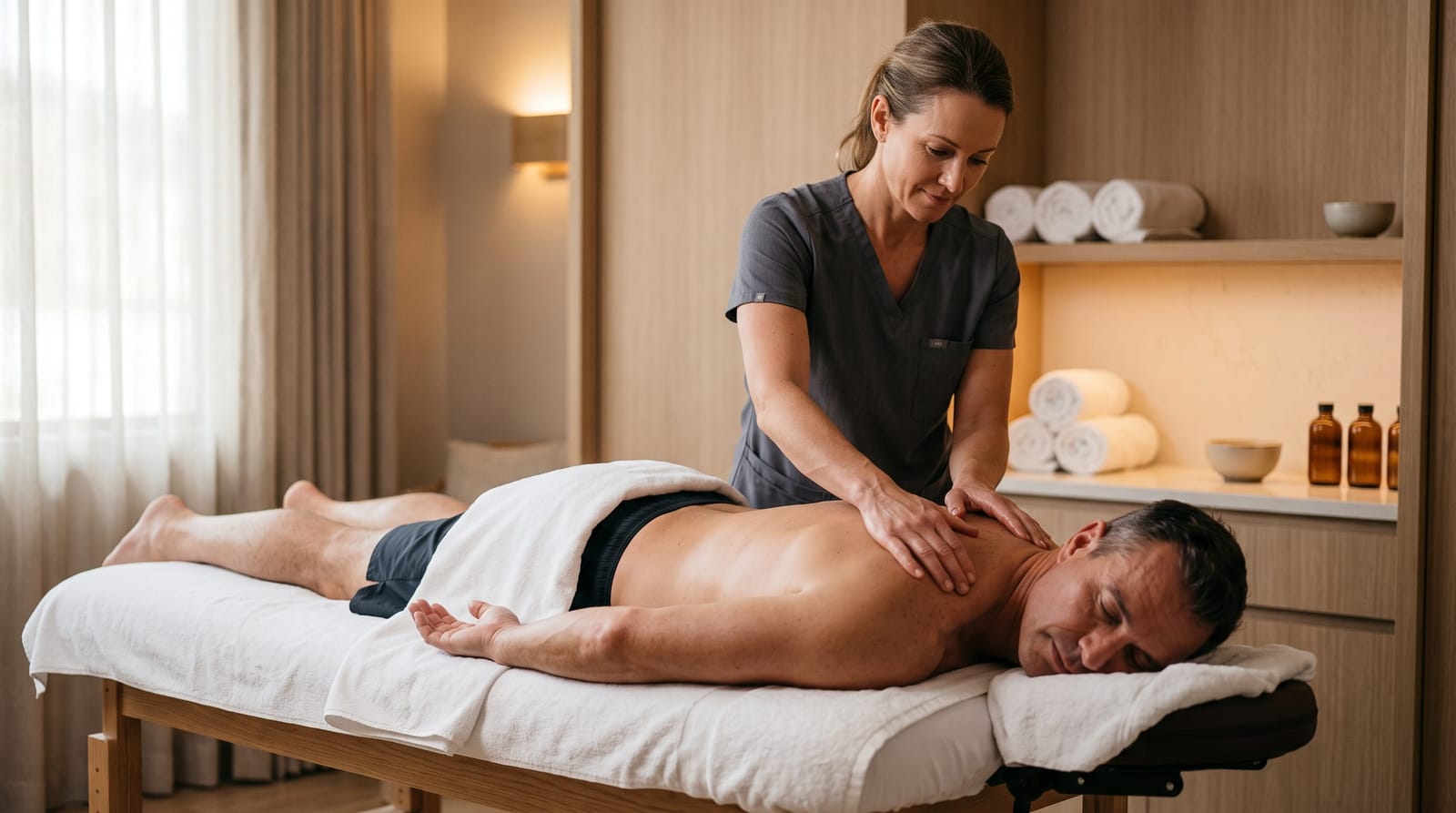
A couples massage session typically involves both partners receiving massage simultaneously in the same room, each with their own therapist. This format is practical for busy couples: it's efficient, it eliminates the scheduling logistics of separate appointments, and it creates a shared experience that reinforces the wellness commitment you're already making together through your training.
From a practical standpoint, most sessions run between 60 and 90 minutes. You and your therapist will discuss areas of tension, activity level, and any particular concerns before the session begins. Swedish massage, deep tissue work, and trigger point therapy are among the most common modalities used for active individuals, each addressing different layers of muscular tension and recovery need.
How to Time Massage Around Your Training Sessions
One of the most common questions couples ask is when to schedule massage relative to their workouts. The answer depends largely on the type of session and your individual response to soft tissue work.
As a general guideline:
- After training (24-48 hours post-session): This is the most popular window for recovery-focused massage. Muscles have completed the immediate repair phase and are ready to respond well to soft tissue work. Many clients find that scheduling massage the day after a training session helps reduce residual soreness and supports a faster return to full effort.
- Rest days: Scheduling massage on a dedicated rest day keeps it clearly separated from training demands and allows full attention to recovery without competing physical effort.
- Before a training block begins: Some couples choose to book a massage at the start of a new training cycle to establish a recovery baseline and ensure they're beginning from a place of physical readiness.
What to avoid: scheduling intense deep tissue work immediately before a training session, as the temporary increase in tissue sensitivity can affect performance and comfort. Light massage or relaxation-focused work is generally fine in the 24 hours before training, but discuss specifics with your massage therapist to find what works best for your bodies.
The Shared Benefits Go Beyond Physical Recovery
There's something meaningful about experiencing recovery together, not just training together. When couples invest in their wellness as a unit, showing up to their training sessions, supporting each other through the harder days, and then prioritizing recovery side by side, it reinforces the shared identity that makes partner-based fitness so sustainable.
Accountability is one of the most reliable predictors of long-term fitness consistency, and couples who build recovery rituals together tend to protect their entire wellness routine more effectively. When rest and recovery become part of the shared commitment, rather than an afterthought, the whole program becomes more resilient. Life gets busy, schedules shift, and motivation fluctuates, but couples who have built a full routine together, including recovery, are better positioned to maintain their momentum through those challenges.
This is particularly relevant for couples who are navigating the health considerations that come with active aging. If you and your partner are in your 50s or 60s and exploring how fitness fits into this chapter of life, you may find valuable perspective in how couples fitness retirement active aging Colorado connects training and long-term physical independence, including the role recovery plays in sustaining that independence over the years.
Making Recovery Part of Your Monthly Routine
Consistency matters here just as it does with training. A single massage session is beneficial, but the cumulative effects of regular sessions, reduced baseline tension, improved tissue quality, better range of motion over time, are where the real value compounds.
A practical starting point for most active couples is one massage session per month, scheduled in alignment with your training calendar. Some couples find that bi-monthly sessions better match their workload and recovery needs. As your training program progresses and your workload increases, you can reassess frequency with your trainer and your massage therapist working in a coordinated way.
Think of it as a two-part system: your personal training sessions build capacity, and your recovery sessions protect and extend that capacity. Both are investments in the same goal.
Frequently Asked Questions
Do we need to go to the same massage therapist, or can we see different providers?
You can absolutely see different therapists, either together in a couples session or separately at different times. What matters most is finding a licensed therapist who understands active clients and can tailor the session to your recovery needs. If you prefer the shared experience of a couples massage, look for providers in Colorado Springs who offer dual-room or same-room couples sessions.
How is massage therapy different from stretching or foam rolling at home?
Foam rolling and stretching are valuable self-care tools that support day-to-day maintenance. Massage therapy, performed by a licensed therapist, addresses deeper layers of tissue and can work with areas of the body that are difficult to reach or treat effectively through self-massage. The two approaches complement each other well rather than replacing one another.
Should we tell our personal trainer that we're getting massage therapy?
Yes, and it's encouraged. When your trainer knows you've recently had a massage session, especially deep tissue work, they can adjust the training plan accordingly if needed. Open communication between your trainer and your recovery practices helps create a more cohesive, well-rounded program.
What if one partner finds massage more helpful than the other?
That's completely normal. Bodies respond differently to soft tissue work, and individual preference plays a role as well. One partner may benefit from more frequent sessions while the other needs less. The couples format doesn't require identical outcomes: it simply creates a convenient and supportive way to prioritize recovery together. Each session can be tailored individually even within a couples appointment.
Recovery Is Part of the Commitment
Training together is a shared investment, in your health, your energy, and your quality of life. Recovery, including massage therapy, is what allows that investment to compound over time rather than stall or accumulate into strain. For couples in Monument and the Colorado Springs area who are serious about their training outcomes, integrating massage therapy as a scheduled, regular part of your routine is a straightforward and meaningful step forward. It supports your body, honors your effort, and strengthens the shared commitment that makes training together so rewarding in the first place.