Couples Personal Training in Colorado Springs: Train Together, Transform Together

What if the most powerful fitness tool available to you wasn't a new piece of equipment, a trending workout program, or the latest recovery gadget, but your partner? For many couples in Colorado Springs and the surrounding communities, the idea of training together sounds appealing in theory but uncertain in practice. Do you need to be at the same fitness level? What if you have completely different goals? Will working out together actually bring you closer, or will it create friction?
These are fair questions, and the answers might surprise you. Research consistently shows that people who exercise with a partner are more consistent, more motivated, and more likely to stick with a program long-term. According to a study published in the Journal of Social Sciences, exercisers who worked out with a partner improved their performance by up to 200% compared to those who trained alone. That's not a small difference: it's a fundamentally different experience.
Couples personal training in Colorado Springs at Total Body Works takes this concept further by combining the accountability of partner-based training with the expertise of customized, one-on-one coaching, for both of you simultaneously. In this guide, you'll learn how couples training actually works, why it's uniquely effective, how programs are tailored when two people have different fitness levels and goals, and what the experience looks like from your very first session. Whether you're brand new to structured fitness or you've been training separately for years, this is your starting point.
Why Training Together Is More Powerful Than Training Alone
The social dimension of exercise is often underestimated. Most fitness content focuses on sets, reps, intensity, and programming: the technical mechanics of getting stronger or more mobile. But one of the strongest predictors of long-term fitness success isn't programming at all. It's consistency. And consistency is deeply tied to motivation, accountability, and enjoyment. Training with your partner directly addresses all three.
A landmark study from the University of Aberdeen found that people who had a supportive exercise companion showed a significant increase in the frequency of their workouts compared to those who went it alone, even when that companion didn't exercise with them. When couples actually train side by side, that effect is amplified. You show up for each other on the days when individual motivation is low. You celebrate the small wins together. You create shared rituals around health that extend beyond the gym.
Beyond accountability, there's something meaningful about pursuing a shared physical goal as a couple. Fitness becomes a shared language: something you build together rather than something each of you does separately in your own corner of the week. For busy professional couples or business owners managing demanding schedules, carving out training time together also creates protected, intentional time in the relationship. It's a commitment to each other that happens to produce real, measurable physical results.
At Total Body Works, couples describe the training experience as one of the most connected and energizing things they do together. It's not just a workout: it's a shared investment in how you both want to feel and function for the long haul.
How Couples Personal Training in Colorado Springs Actually Works
Couples personal training is not the same as two people doing the same workout next to each other. That's a common misconception. Effective couples training is a thoughtfully structured program in which both partners are coached simultaneously, but each person's program is individualized based on their unique starting point, goals, mobility, and fitness history.
At Total Body Works in Colorado Springs, just minutes from Colorado Springs, the process begins with a comprehensive dual assessment. Both partners go through a movement screening that evaluates how each person moves, identifies any areas of tightness or restriction, and establishes a baseline for strength and conditioning. This dual-screening model is essential because it allows the coach to design a program that serves both individuals effectively, rather than forcing one person to follow a plan built for the other.
Structure of a Couples Training Session
A typical couples session is 60 minutes and follows a deliberate structure. It opens with a joint warm-up, often mobility work or movement prep that benefits both partners, before branching into individualized training blocks. During this phase, the coach may program complementary exercises that can be performed in parallel or in sequence, keeping both partners engaged and productive throughout the session without either person sitting idle or waiting.
Many sessions also incorporate partner-assisted exercises, which use the presence of both people to add a unique training dimension unavailable to solo clients. These are introduced gradually and are always selected based on both partners' current capabilities, not as a gimmick, but as a genuine training tool when appropriate.
The Role of the Coach
The couples personal training coach at Total Body Works isn't simply supervising: they're actively coaching both partners simultaneously. This requires a high level of attentiveness and the ability to cue, correct, and encourage two different people whose needs may differ significantly at any given moment. It's a skill set that goes well beyond standard personal training, and it's one of the core strengths of the program at Total Body Works.
Customizing Programs When Two People Have Different Fitness Levels
This is the question most couples ask first, and it's the right one. What happens when one partner is a regular exerciser and the other hasn't been active in years? What if one person wants to build strength while the other's primary goal is improving mobility and energy? Can a single session genuinely serve both people?
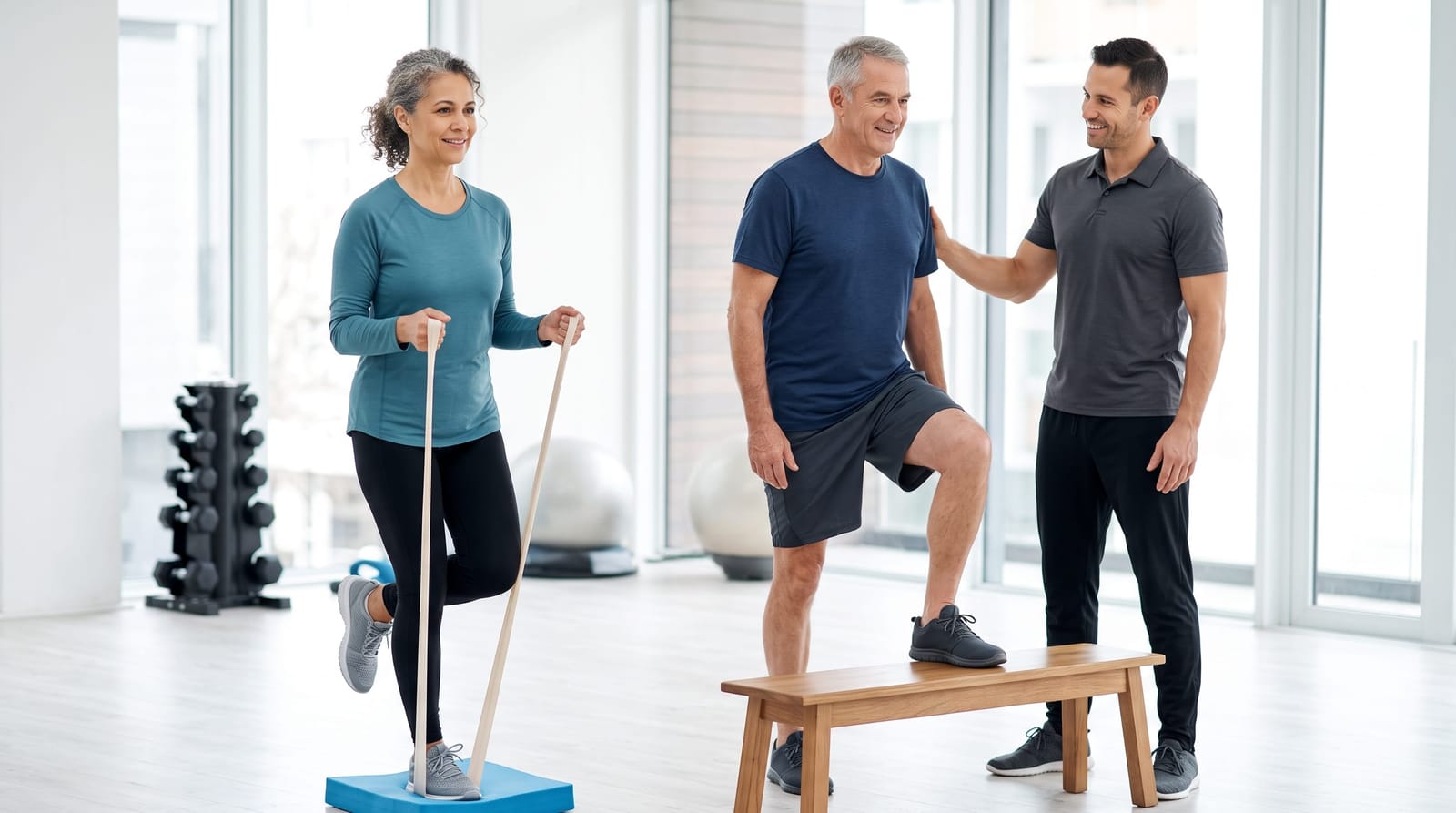
The answer is yes, but only with the right approach. Differences in fitness level are not an obstacle to couples training; they're simply variables that need to be accounted for in program design. The structure of a well-designed couples program allows both partners to work at their own appropriate intensity and resistance level, even within the same session framework.
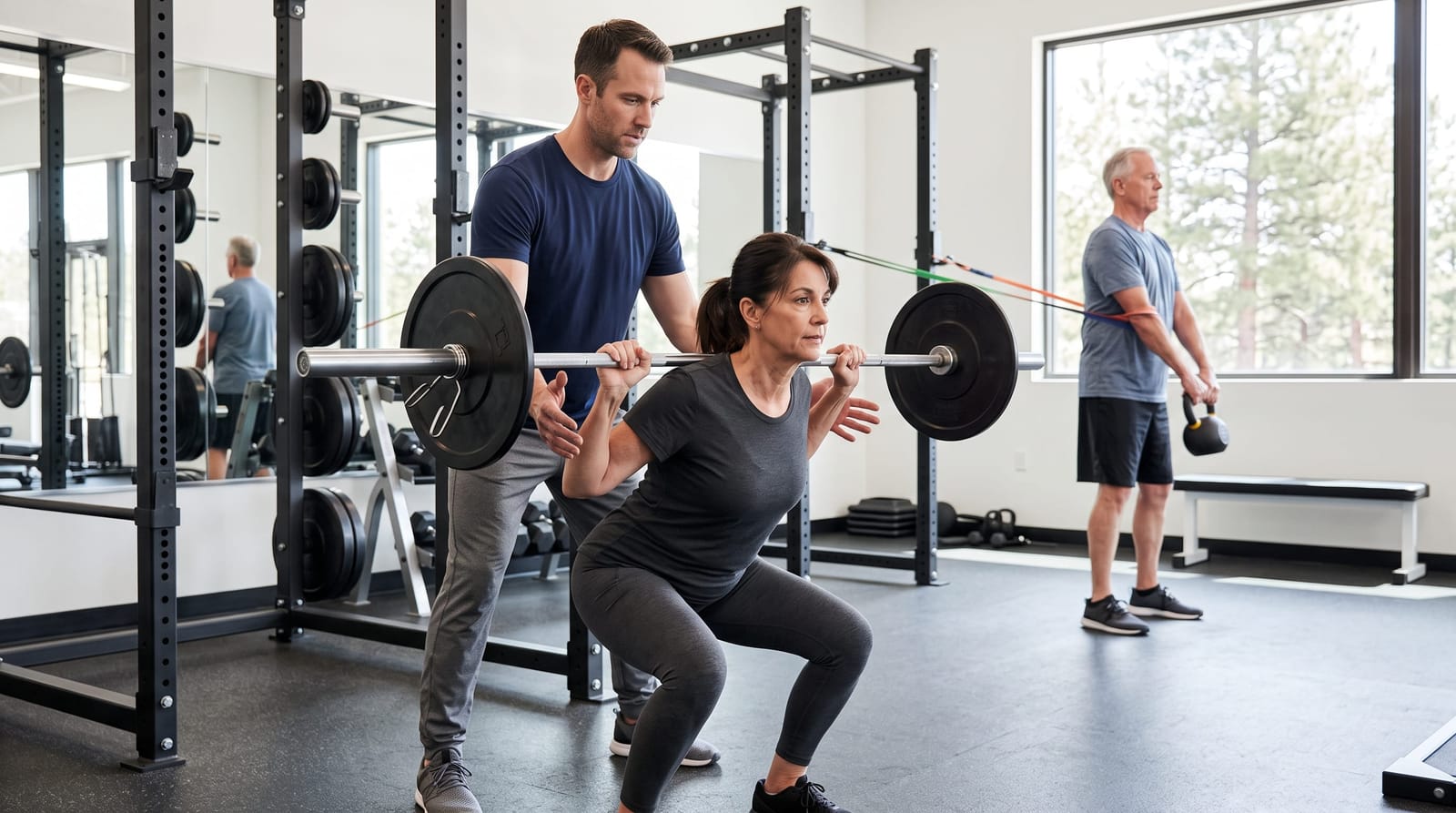
For example, if both partners are performing a squat variation, one might be working with bodyweight to build movement quality and confidence, while the other is adding resistance to increase strength. Both are practicing the same fundamental movement pattern, which keeps the session coherent and allows the coach to give meaningful instruction to both people. The program doesn't need to be identical to be effective: it needs to be appropriate for each individual.
Different Goals, One Shared Program
It's also common for partners to come in with meaningfully different goals. One might be focused on losing body fat and building cardiovascular fitness. The other might be recovering from a period of inactivity and simply wants to feel stronger and more capable in daily life. A skilled couples training coach works through the initial assessment to identify shared priorities, things like consistency, stress reduction, and building a sustainable active lifestyle, while building individual tracks within the program that move each person toward their specific objectives.
According to the American College of Sports Medicine, individualized exercise prescriptions are significantly more effective than generalized programs, particularly for adults with varying fitness histories. Applying that principle within a couples framework is what separates genuine couples personal training from simply sharing a gym membership.
The Relationship Benefits of Shared Fitness Goals
Fitness research has increasingly turned its attention not just to physical outcomes, but to the psychological and relational benefits of exercise. The data in this area is compelling. A 2019 study published in the Journal of Personality and Social Psychology found that couples who participated in exciting and novel activities together reported higher levels of relationship satisfaction than those who did not. Structured fitness training, particularly when coached and progressive, qualifies strongly as a novel, challenging, and shared experience.
There's also the concept of "behavioral synchrony": the phenomenon in which people who move together or coordinate physical actions report feeling greater emotional closeness and trust. This isn't abstract psychology; it's a measurable effect with real implications for couples who want to strengthen their connection while improving their health.
Fitness as a Shared Identity
One of the less-discussed benefits of couples training is what happens to identity. When fitness becomes something you both do and value, not a solitary pursuit that one partner has to squeeze in around the other's schedule, it starts to become part of how you see yourselves as a couple. That shared identity creates momentum. You're no longer two people with separate fitness goals; you're a team working toward shared values around health, vitality, and how you want to live.
For many of the couples at Total Body Works, this shift in identity is one of the most meaningful long-term outcomes of training together. The sessions become something they look forward to, a consistent part of their week that belongs to both of them equally.
Managing Competition and Supporting Each Other
A common concern couples raise is whether training together will create unhealthy competition. This is a real dynamic worth addressing. In a well-coached environment, the program is structured around personal progress rather than comparison. Your benchmarks are your own. Your coach celebrates each person's individual wins and is deliberate about framing progress in a way that builds each partner up rather than positioning them against each other. The competitive edge, when it exists, becomes a source of playful motivation rather than pressure.
Who Is Couples Personal Training Right For?
Couples personal training at Total Body Works is designed to be accessible and effective for a wide range of people, but it's particularly well-suited to a few specific situations.
Busy Professional Couples and Business Owners
Dual-income professional households and business owners consistently cite time as their biggest barrier to fitness. When both partners have demanding schedules, carving out separate training slots can feel logistically impossible. Couples training solves this by consolidating the commitment: one appointment, shared between two people, managed by a coach who handles all the programming and structure. The time investment is maximized because neither person is spending energy planning their own workout; they simply show up and do the work.
Couples Returning to Fitness After a Long Break
For couples who've been inactive for a period, whether due to work demands, family responsibilities, injury, or simply the gradual drift away from an active lifestyle, starting together can significantly lower the psychological barrier to entry. The shared accountability reduces the pressure on either individual, and knowing your partner is in the same position creates a sense of solidarity that makes showing up easier.
Active Couples Who Want a More Structured Approach
Some couples are already physically active, they hike, bike, or go to the gym regularly, but they've plateaued or realized they're missing the structure and expertise needed to make real progress. Couples personal training provides the professional guidance that turns consistent effort into consistent, purposeful progress.
Couples Over 50 Focused on Healthy Aging
For couples in their 50s, 60s, and beyond, training together takes on a particularly meaningful dimension. Staying strong, mobile, and independent as you age is one of the most valuable things you can invest in as a couple. Research published in the British Journal of Sports Medicine indicates that adults over 50 who engage in regular strength training reduce their risk of functional decline by as much as 46%. Pursuing those outcomes together creates shared motivation and mutual support at a stage of life when consistency matters most.
What to Expect from the Total Body Works Couples Training Experience
Total Body Works is a private personal training facility located in Colorado Springs, serving couples and individuals throughout the Colorado Springs area. The environment is deliberately different from a commercial gym: there are no crowded workout floors, no waiting for equipment, and no self-consciousness about being watched. Sessions take place in a private, focused setting that allows both partners to be fully present and coached without distraction.
The Initial Dual Movement Screening
Every couples training program begins with a dual movement screening: a side-by-side assessment of how each partner moves. This isn't a fitness test designed to rank or evaluate; it's a tool that gives the coach a clear picture of where each person is starting from, what movement patterns need to be reinforced or refined, and how to build a program that serves both people effectively from day one. The screening typically takes about 60 to 90 minutes and includes a conversation about each partner's history, goals, and preferences.
The Training Program Structure
After the assessment, your coach builds a structured program with clear phases and progressions. Sessions are 60 minutes, held at a consistent weekly cadence that fits your schedule, and each session builds on the last. Progress is tracked for both partners independently, so each person has a clear picture of how they're developing over time. Every 4 to 6 weeks, the program is reassessed and updated to reflect each partner's progress and any evolving goals.
Integrated Recovery Therapies
Total Body Works also integrates recovery-focused therapies into the overall client experience. These may include options like assisted stretching, which supports mobility and helps the body recover more effectively between sessions. Recovery is treated as a core component of the training program, not an afterthought, and both partners can access these services as part of their overall wellness plan. This integrated approach distinguishes Total Body Works from facilities that treat training and recovery as entirely separate concerns.
Building Consistency: The Long-Term Value of Training Together
Short-term motivation is easy to find. Long-term consistency is the real challenge. According to data from the U.S. Department of Health and Human Services, approximately 80% of Americans who begin a new exercise program abandon it within the first five months. The reasons are familiar: life gets busy, motivation fluctuates, progress stalls, and the habit doesn't stick.
Couples training changes this equation in several important ways. First, the shared commitment creates a social contract. It's one thing to skip a workout when only your own schedule is affected. It's another to cancel on your partner, and on the coach expecting both of you. That added layer of accountability, research consistently shows, is one of the most effective behavior-change tools available.
Second, the professional coaching structure removes the cognitive burden of planning your own workouts. A common reason people fall off their fitness routines is decision fatigue: they don't know what to do when they get to the gym, and eventually the friction of figuring it out becomes larger than the motivation to go. When your coach has built the program, all you have to do is show up.
Third, training together creates a routine that belongs to both of you. It becomes part of how you spend time together, which reinforces the habit at a deeper level than personal motivation alone. Over months and years, that consistency compounds into meaningful improvements in strength, mobility, energy, and overall quality of life: outcomes that benefit not just each individual, but the relationship itself.
Explore the Full Couples Training Topic: Deep Dive Resources
The sections above give you a strong foundation for understanding what couples personal training in Colorado Springs can offer. But there's much more to explore. The following guides take a closer look at specific aspects of couples training, from the research behind why it works to practical guidance on getting started when you and your partner are at different fitness levels.
-
The Science Behind Why Couples Who Train Together Get Better Results
There's compelling research explaining why training with a partner produces better outcomes than going it alone, and it goes beyond simple accountability. This post examines the psychological, behavioral, and physiological reasons that benefits of training with a partner Colorado Springs are so well-documented, including the role of shared goals, effort synchrony, and mutual encouragement in driving long-term progress.
-
Couples Training for Active Aging: Staying Healthy and Active Together After 50
For couples in their 50s, 60s, and beyond, fitness is less about aesthetics and more about preserving the strength, balance, and mobility needed to live actively and independently. This guide explores the unique advantages of a couples fitness program over 50 Colorado Springs, covering the specific benefits of strength training for healthy aging and why doing it together makes the commitment more sustainable.
-
How Couples Personal Training Is Customized for Two Different Fitness Levels
One of the most common questions couples ask is how a single training session can effectively serve two people who are at very different starting points. This post goes deep on program design, offering a transparent look at how couples personal training different fitness levels Colorado Springs works in practice, including how coaches structure sessions to keep both partners challenged, progressing, and supported simultaneously.
-
What to Expect from Your First Couples Training Session at Total Body Works
Uncertainty about what to expect is one of the most common reasons people delay getting started. This post walks you through everything that happens in a first couples training session Colorado Springs, from the initial movement screening to the structure of the session itself, so you and your partner can walk in prepared, relaxed, and ready to get the most out of the experience.
Start Your Shared Fitness Journey at Total Body Works
Fitness is one of the most meaningful investments you can make, not just in your own health, but in your life together as a couple. When both partners are moving, feeling strong, and building healthy habits side by side, the benefits extend well beyond the gym. You build shared discipline, mutual support, and a kind of vitality that carries into every other area of your lives.
Couples personal training in Colorado Springs at Total Body Works is designed to meet you exactly where you are: regardless of your current fitness level, how long it's been since you've trained consistently, or how different your individual goals might be. The program is built around both of you: your unique movement patterns, your schedules, your goals, and your shared commitment to getting stronger and healthier together.
The first step is simply reaching out. Total Body Works offers an initial consultation where both partners can meet the coach, ask questions, and get a clear sense of what the program looks like before making any commitment. There's no pressure, no fitness test to pass, and no expectation that you come in at any particular level. Just two people ready to invest in something that matters.
Contact Total Body Works today to schedule your complimentary couples consultation and take the first step toward training together, and transforming together.