What Is Neuromuscular Training and How Does ARPWave Use It for Performance?

When most athletes think about improving performance, they focus on the obvious variables: strength, speed, endurance, and flexibility. But there's a foundational layer beneath all of those qualities that often goes overlooked: the nervous system. Neuromuscular training targets the communication between your brain, nerves, and muscles to make movement more efficient, powerful, and responsive. For athletes in Colorado Springs looking to gain a genuine edge, understanding neuromuscular training ARPWave performance Colorado Springs programs offer is worth exploring, because it goes well beyond what conventional training alone can deliver.
What Is Neuromuscular Training?
Neuromuscular training is a method of conditioning that focuses on improving the way your nervous system controls muscle function. It's not just about making muscles stronger: it's about making them smarter, faster, and more coordinated in how they respond to movement demands.
Every physical action you take, sprinting, cutting, jumping, lifting, begins as a signal from your brain. That signal travels through your nervous system and activates motor units, which are groupings of nerve fibers and the muscle fibers they control. The speed, timing, and coordination of this process determines how effectively your muscles fire.
When neuromuscular communication is efficient, you move with less wasted energy, better timing, and greater force output. When it's inefficient, due to fatigue, injury history, compensation patterns, or incomplete recovery, athletic performance suffers even when raw strength is present.
Key elements of neuromuscular training include:
- Motor unit recruitment: Training the nervous system to activate more muscle fibers simultaneously for greater force production
- Reactive strength: Developing the ability to absorb force and immediately redirect it: essential for cutting, landing, and explosive movements
- Proprioception and body awareness: Improving the body's ability to sense joint position and movement in real time
- Coordination and timing: Synchronizing muscle activation patterns so movement is fluid and powerful rather than rigid or hesitant
These qualities are trainable, and when they're developed deliberately, the performance gains can be significant across virtually every sport and athletic discipline.
The Role of the Nervous System in Athletic Movement
Most training programs are designed around the muscular system: sets, reps, load, and volume. What often gets less attention is that the muscular system is entirely dependent on the nervous system to function. Your muscles don't decide when to fire. Your nervous system does.
Think about the difference between a seasoned athlete and a beginner performing the same exercise. The beginner may have similar muscle mass, but the athlete moves with more precision, less effort, and better timing. That gap is largely neuromuscular: it reflects years of rehearsing movement patterns that have become deeply ingrained in the nervous system.
Strength training contributes to neuromuscular development over time, but the early gains from any strength program, before significant muscle hypertrophy occurs, are primarily neurological. The nervous system learns to recruit motor units more effectively before the muscles themselves visibly change.
For athletes recovering from injury, this matters even more. Pain, swelling, and tissue damage disrupt normal neuromuscular signaling. Muscles can become inhibited, firing less efficiently as a protective response. Rebuilding neuromuscular function after injury isn't automatic: it requires deliberate retraining of those communication pathways to restore full performance capability.
What Is ARPWave and How Does It Work?
ARPWave, which stands for Accelerated Recovery Performance wave, is a neuromuscular stimulation system that uses a unique bio-electrical current to interact directly with the nervous system. Unlike traditional electrical stimulation devices that primarily target muscle tissue passively, ARPWave is designed to engage the neurological pathways that control muscle activation.
The technology works by delivering a direct current waveform that the body's nervous system can more readily absorb and respond to. When combined with active movement during a session, it creates a neurological training environment: the muscles are simultaneously receiving stimulation and being asked to perform, which reinforces proper motor patterns and accelerates neuromuscular adaptation.
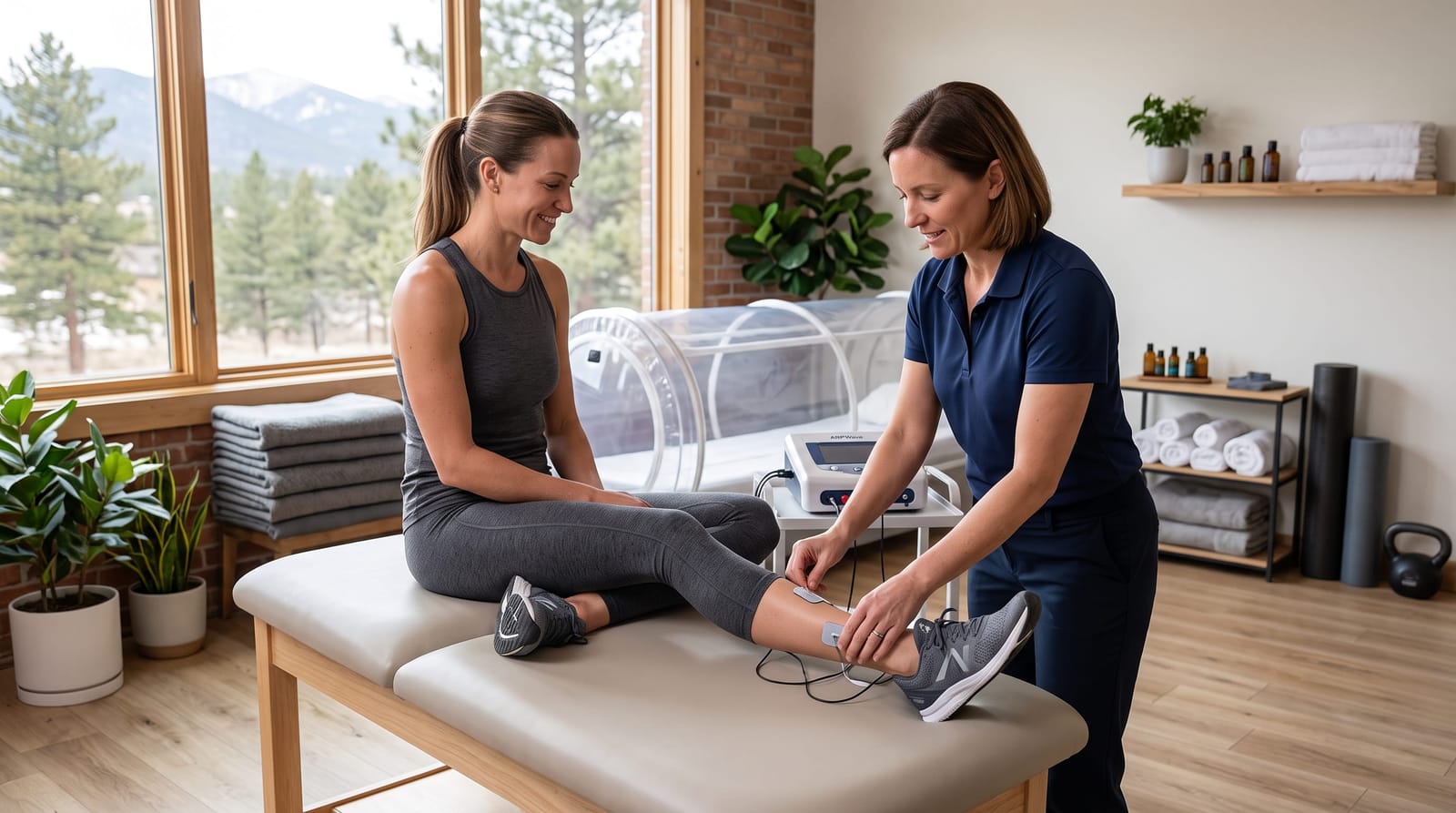
In practical terms, an ARPWave session typically involves an athlete performing specific movements while the device is applied to targeted areas of the body. The combination of electrical input and voluntary movement is what distinguishes it from passive recovery tools. The nervous system is actively engaged throughout the process.
For sport-specific performance training in Colorado Springs, ARPWave is being used as a complement to traditional programming, not a replacement for hard work, but a tool that helps athletes get more out of the work they're already doing by optimizing the neurological foundation beneath it.
How ARPWave Supports Athletic Performance Beyond Conventional Training
Conventional training builds a strong base: it develops strength, endurance, mobility, and power over time. But there are aspects of athletic performance that respond well to more direct nervous system training, and that's where ARPWave can add value.
Here's how neuromuscular ARPWave work supports the performance goals many athletes in Colorado Springs are chasing:
- Faster motor unit recruitment: By training the nervous system directly, athletes may develop the ability to activate more muscle fibers more quickly, which translates to faster acceleration and more explosive power output
- Improved movement efficiency: When neuromuscular patterns are clean and well-coordinated, athletes use less energy to produce the same output: a meaningful advantage in endurance sports and late-game situations
- Better recovery between training sessions: ARPWave can support the body's ability to clear the effects of intense training by improving circulation and reducing neuromuscular tension, allowing athletes to return to quality training sooner
- Addressing compensation patterns: When one area of the body isn't functioning optimally, surrounding muscles compensate. Over time, these patterns create inefficiency and increase injury risk. ARPWave work can help identify and retrain those compensations
- Bridging the gap after injury: Returning to sport after injury requires more than tissue healing: it requires restoring neuromuscular confidence and coordination. ARPWave supports that process alongside a structured strength and conditioning program
For competitive athletes and active adults over 50 who want to stay sharp in their sport of choice, this kind of neurological fine-tuning can be a meaningful differentiator, especially when conventional training has already been optimized.
Who Benefits Most from Neuromuscular ARPWave Training?
ARPWave-based neuromuscular training isn't reserved for elite athletes. In Colorado Springs, it's being used across a wide spectrum of active individuals:
- Competitive and recreational athletes who want to improve speed, power, and movement quality in their sport
- Military personnel and first responders whose physical demands require reliable, efficient movement under fatigue
- Active adults over 50 who want to maintain athletic performance, stay competitive in recreational sports, and support long-term joint health
- Athletes returning from injury who need to rebuild neuromuscular function alongside strength and conditioning work
The common thread is this: anyone whose performance depends on the quality of their movement, not just their raw fitness, can benefit from training the nervous system directly.
Frequently Asked Questions
Is neuromuscular training the same as regular strength training?
Not exactly. Strength training does develop neuromuscular function over time, but neuromuscular training specifically targets the nervous system's ability to control muscle activation, timing, and coordination. ARPWave-based work adds a direct neurological stimulus that conventional weight training doesn't replicate, making the two approaches complementary rather than interchangeable.
How many ARPWave sessions are typically needed to notice a difference in performance?
This varies by individual, training history, and goals. Some athletes notice improved movement quality and reduced muscular tension within a handful of sessions. Longer-term neuromuscular adaptation, particularly for rebuilding patterns after injury or addressing chronic compensation, generally takes more consistent work over several weeks. A qualified trainer can help set realistic expectations based on your specific situation.
Can neuromuscular training with ARPWave replace regular conditioning work?
No, and it's not designed to. ARPWave neuromuscular training works best as a complement to a well-structured strength and conditioning program. It enhances the neurological foundation that your physical training builds upon, but the hard work of developing fitness, strength, and sport-specific skill still requires consistent training effort.
Is ARPWave appropriate for older athletes or people who haven't trained in a while?
Yes. ARPWave is a low-impact approach to neuromuscular training that can be adapted to a wide range of fitness levels and ages. For active adults over 50 who want to stay competitive in their sport or simply move better, it can be a valuable addition to a personalized training plan: particularly when working with a trainer experienced in both performance and healthy aging.
The Bottom Line
Neuromuscular training addresses something that strength work alone can't fully reach: the quality of communication between your nervous system and your muscles. ARPWave brings a targeted, technology-supported approach to that training, helping athletes in Colorado Springs develop more efficient movement, faster recruitment, and better coordination. Whether you're competing at a high level, staying active in recreational sport, or rebuilding after a setback, improving your neuromuscular foundation is one of the most impactful investments you can make in your long-term athletic performance. If you're exploring sport-specific performance training options in Colorado Springs, it's a dimension of training worth understanding.