Sport-Specific Performance Training in Colorado Springs: Build the Athletic Edge You Need to Compete at Your Best

What separates an athlete who performs well in the gym from one who dominates on the field, course, or court? The answer almost always comes back to training specificity. Generic fitness programs build a foundation, but they rarely translate directly into the explosive power, reactive agility, and sport-specific endurance that competitive performance demands. Whether you're a military athlete preparing for a physical fitness test, a competitive golfer chasing a lower handicap, or a masters runner over 50 who refuses to slow down, the same principle applies: your training needs to reflect the actual demands of your sport.
Colorado Springs is home to a uniquely competitive athletic community. With the United States Olympic and Paralympic Training Center located here, the city has long been a hub for high-performance sport science. That environment shapes expectations and raises the bar for what athletes, at every level, can achieve when they train with intention and precision.
This guide breaks down the complete picture of sport-specific performance training: what it is, how it works, what methodologies drive real results, and how advanced recovery tools like ARPWave neuromuscular therapy and Hyperbaric Oxygen Therapy (HBOT) are helping athletes in Colorado Springs train harder and recover smarter. Whether you're new to structured performance training or looking to take your preparation to the next level, you'll find clear, practical information here to guide your next steps.
What Is Sport-Specific Performance Training: and Why Does It Matter?
Sport-specific performance training is a structured approach to athletic development that builds strength, power, speed, agility, and endurance in patterns and proportions that directly reflect the demands of a particular sport. Rather than training general fitness attributes in isolation, performance programming connects every training variable, movement planes, energy systems, force production angles, and sport timing, to what you actually do when you compete.
This matters because the body adapts specifically to the stresses placed on it. Exercise science refers to this as the SAID principle, Specific Adaptation to Imposed Demands. In practical terms, it means that if you want to produce a faster first step on the basketball court, you need to train the neuromuscular patterns that generate that specific movement. If you want more distance off the tee, you need rotational power and hip mobility developed through movements that mirror the golf swing. Generic strength training may improve your overall fitness, but it won't automatically transfer to sport performance without deliberate programming.
According to the National Strength and Conditioning Association (NSCA), sport-specific training programs that incorporate movement analysis and periodization, planned phases of training intensity and volume, produce significantly greater improvements in athletic performance than non-periodized, generalized fitness routines. Research published in the Journal of Strength and Conditioning Research consistently shows that athletes who train with specificity in mind demonstrate measurably better outcomes in speed, power output, and sport-relevant endurance compared to those following general fitness protocols.
For Colorado Springs athletes, the altitude adds another layer of consideration. Training at approximately 6,035 feet above sea level creates a naturally demanding cardiovascular environment. Properly structured sport-specific programs account for this variable, using altitude as a training asset rather than simply an obstacle.
Movement Analysis: The Foundation of Effective Athletic Programming
Before any effective sport-specific program can be designed, a thorough movement analysis needs to be completed. This process identifies how you currently move, where compensations exist, which muscle groups are underperforming, and how those patterns affect your sport performance and injury risk.
Movement analysis typically includes assessments of:
- Functional movement screening to identify mobility restrictions and asymmetries
- Strength testing across multiple planes of motion
- Power and reactive capacity testing, including vertical jump and broad jump metrics
- Sport-specific movement pattern observation
- Postural and alignment evaluation
The data gathered from this assessment process forms the blueprint for your entire program. An athlete who shows a strength imbalance between their left and right hip, for example, may be compensating in ways that limit their speed and increase their risk of strain over time. Identifying and addressing that imbalance early, before it becomes a bigger issue, is one of the most valuable things a performance assessment can do.
Why Assessments Matter More Than People Realize
Many athletes skip the assessment phase and jump straight into training. This is one of the most common mistakes in performance preparation. Without a clear picture of your current movement quality, strength ratios, and energy system capacity, program design becomes guesswork. A thorough movement analysis replaces assumptions with data, allowing coaches to build programs that address your actual limiting factors rather than generic athletic weaknesses.
At Total Body Works in Colorado Springs, this assessment-first approach drives every program. It ensures that the training you do is working on the right things, not just making you tired, but making you meaningfully better at the specific physical demands of your sport.
Building Sport-Specific Strength, Power, Speed, and Agility
Once movement quality has been assessed and a performance baseline established, the real programming work begins. Effective sport-specific training develops four core physical qualities in ways that directly connect to competitive performance.
Strength: The Foundation of Everything Athletic
Every athletic movement, whether it's a tennis serve, a cycling sprint, or a military obstacle course, depends on force production. Strength training in a sport-specific context focuses on building that force production capacity in the movement patterns most relevant to your sport. For a cyclist, that means posterior chain and hip extension strength. For a baseball player, it means rotational core power and shoulder stability. For a military athlete, it means functional total-body strength that holds up under load and fatigue.
Progressive overload, gradually increasing training demands over time, remains the most evidence-backed method for building athletic strength. The NSCA recommends that strength and conditioning programs for competitive athletes use periodized loading strategies that cycle between higher volume, lower intensity phases and lower volume, higher intensity phases throughout a training year.
Power: Converting Strength Into Speed
Power is the ability to express strength quickly. It's the bridge between the weight room and the playing field. Research shows that athletes who train explicitly for power, using methods like plyometrics, Olympic lifting variations, and medicine ball work: demonstrate significantly faster movement speeds and greater reactive capacity than those who focus on strength alone. A study published in the European Journal of Sport Science found that 6 weeks of plyometric training improved sprint performance by an average of 3.3% and jump height by 8.7% in trained athletes: meaningful improvements at the competitive level.
Speed and Agility: The Competitive Difference-Makers
Speed and agility training focuses on improving both linear speed, how fast you move in a straight line, and multidirectional quickness, which is your ability to change direction rapidly and efficiently. Contrary to popular belief, these qualities are highly trainable at nearly any age. The key is structured, progressive training that addresses acceleration mechanics, deceleration control, and reactive decision-making.
For more detail on the methods behind developing these qualities for real athletic performance, explore our guide to power speed agility training Colorado Springs athletes.
Sport-Specific Endurance: Training the Right Energy Systems
Endurance in sport is not one-size-fits-all. A soccer midfielder and a competitive cyclist may both need high aerobic capacity, but the way their bodies use energy during competition looks very different. Effective sport-specific programming identifies which energy systems dominate your sport and trains them accordingly.
Sports scientists generally classify energy system demands into three categories:
- Phosphagen system: Fuels explosive efforts lasting roughly 1-10 seconds (sprints, jumps, throws)
- Glycolytic system: Supports high-intensity efforts lasting approximately 10 seconds to 2 minutes (repeated sprints, wrestling, basketball sequences)
- Oxidative system: Powers sustained efforts lasting more than 2 minutes (distance running, cycling, swimming)
Most sports rely on a mix of these systems. Football, for example, is predominantly phosphagen-dependent, with plays averaging 4-7 seconds, but players also need glycolytic capacity to sustain performance across 60+ plays per game. A soccer match, by contrast, involves an average of approximately 1,200 direction changes and 150-250 intense efforts within a 90-minute aerobic framework.
Training the right energy systems means your conditioning work actually prepares your body for the specific physiological demands you'll face when it counts. Doing long, slow cardio to prepare for a sport built on explosive bursts is not just inefficient: it can actually work against your speed and power adaptations.
Colorado Springs' altitude plays a meaningful role here as well. The reduced oxygen availability at 6,035 feet forces the cardiovascular system to work harder, which, when managed properly, can enhance aerobic adaptations and red blood cell production. This is precisely why elite endurance athletes from around the world travel here to train.
Performance Training for Military Athletes and High-Demand Professionals
Military athletes represent a unique population within the performance training world. The physical demands of service, from military occupational specialty tests to operational readiness standards, require a specific combination of functional strength, load-bearing endurance, speed under fatigue, and mental resilience. Standard fitness programs rarely address these demands with enough precision.
Sport-specific performance training for military athletes focuses on:
- Functional strength that transfers to carrying loads over uneven terrain
- Repeated sprint ability with incomplete recovery
- Upper body pulling and pushing strength at high volumes
- Core stability under dynamic, unpredictable conditions
- Rapid recovery between high-intensity training sessions
The Army Combat Fitness Test (ACFT), which replaced the traditional three-event Army Physical Fitness Test, now includes six events, the deadlift, standing power throw, hand-release push-up, sprint-drag-carry, leg tuck (or plank), and two-mile run, that demand exactly the kind of multi-dimensional athletic capacity that sport-specific performance programs develop. Soldiers who prepare for the ACFT using performance-based programming consistently outperform those who rely on traditional PT alone.
Colorado Springs is home to Fort Carson and Peterson Space Force Base, making performance training for military personnel not just relevant but essential to the local community. Structured, measurable, goal-oriented performance programs give service members a clear path to meeting and exceeding the physical standards required for their roles.
Masters Athletes Over 50: Competitive Performance Is Still Within Reach
One of the most persistent misconceptions in sport performance is that meaningful athletic development stops somewhere around 40. The research tells a very different story. Masters athletes, generally defined as competitive athletes aged 35 and older, with many sport categories starting at age 50, continue to respond to training with measurable improvements in strength, power, speed, and sport-specific fitness.
According to a review published in the British Journal of Sports Medicine, masters athletes who follow structured, periodized training programs maintain significantly higher levels of lean muscle mass, power output, and aerobic capacity compared to age-matched non-athletes. In many cases, the performance gap between a well-trained masters athlete and a sedentary younger person is remarkable, and it's almost entirely explained by consistent, appropriate training rather than genetics alone.
That said, sport-specific performance programming for athletes over 50 does require thoughtful adjustments. Recovery capacity changes with age, which means training density, how much volume is packed into a given period, needs to be managed carefully. Joint health, connective tissue recovery, and hormonal differences all influence how training loads should be structured and progressed. The good news is that these adjustments don't mean training less hard; they mean training more intelligently.
For a complete guide to staying competitive as a masters athlete, read our detailed resource on masters athlete training over 50 Colorado Springs.
ARPWave and Hyperbaric Oxygen Therapy: Accelerating Adaptation and Recovery
One of the ways Total Body Works differentiates its sport-specific performance programming is through the integration of two advanced recovery and performance modalities: ARPWave neuromuscular therapy and Hyperbaric Oxygen Therapy (HBOT). These technologies are not fringe additions: they're evidence-supported tools used by professional sports teams and elite training programs worldwide.
ARPWave Neuromuscular Therapy
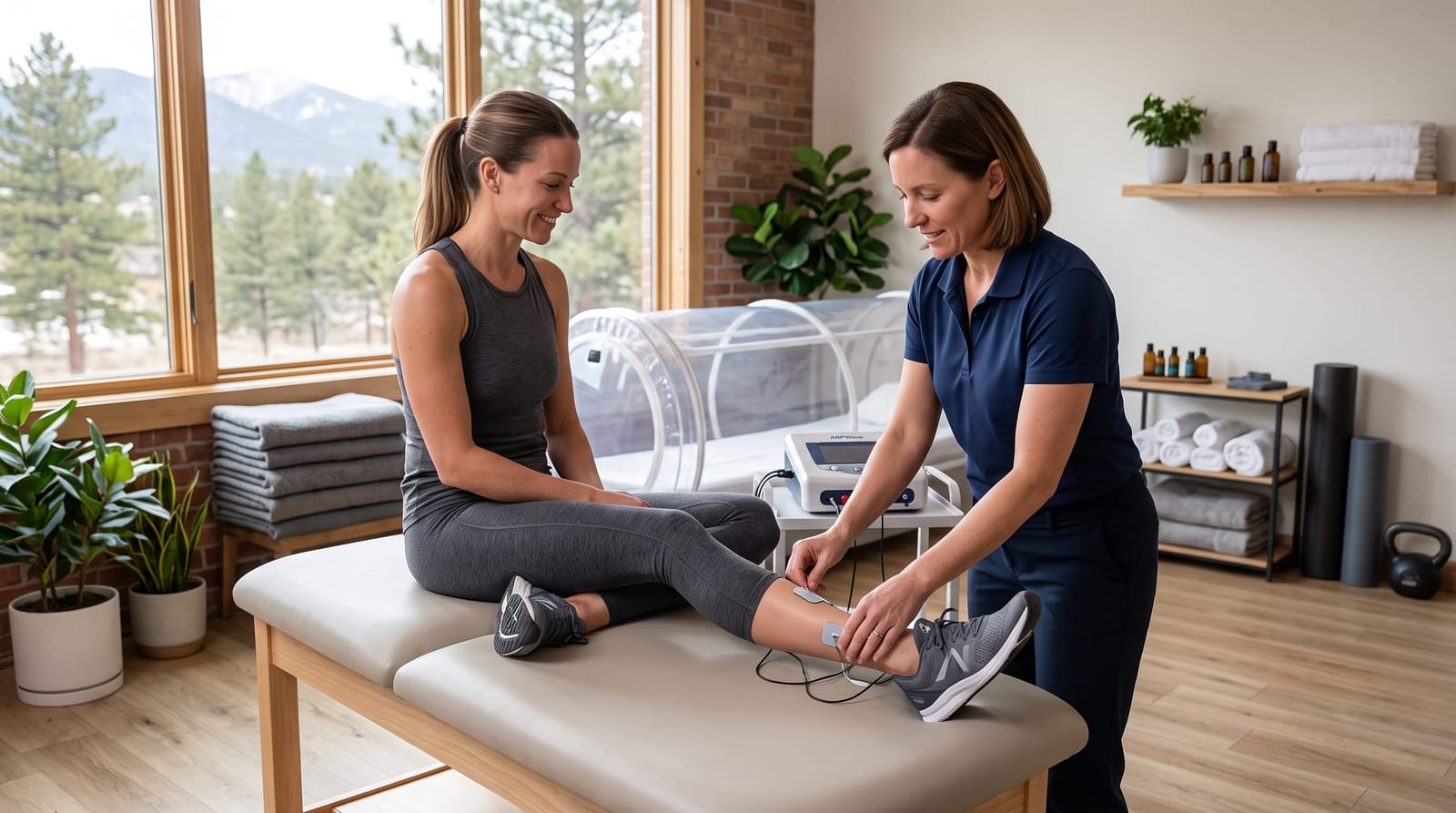
ARPWave uses a proprietary bio-electrical current to identify and address the neurological source of compensation patterns and movement dysfunction. Unlike traditional therapies that focus primarily on the site of pain or restriction, ARPWave targets the neuromuscular system, the communication network between your brain and your muscles, to restore full muscle recruitment and movement quality more efficiently.
In a performance training context, ARPWave is used to accelerate the nervous system's adaptation to new movement patterns, reduce the neuromuscular fatigue that accumulates during intense training, and support faster return to full-capacity training between sessions. Athletes who incorporate ARPWave into their training and recovery cycles often report feeling ready to train again sooner and performing at higher levels with more consistency.
Hyperbaric Oxygen Therapy (HBOT)
HBOT involves breathing concentrated oxygen inside a pressurized chamber, which allows the bloodstream and tissues to carry significantly higher levels of oxygen than they would under normal atmospheric conditions. This elevated oxygen availability supports cellular energy production, reduces post-training inflammation, and promotes faster tissue recovery, all of which matter enormously when you're training at the intensity required to improve sport performance.
Professional sports organizations including several NFL teams, NBA franchises, and Olympic training programs have incorporated HBOT into their recovery protocols because of its documented ability to reduce recovery time between high-intensity training sessions. At altitude, where ambient oxygen levels are already reduced compared to sea level, the oxygen-delivery benefits of HBOT can be especially meaningful for Colorado Springs athletes.
To understand how these tools work together within a performance training system, explore the full breakdown of athlete recovery ARPWave HBOT performance Colorado.
Performance Training vs. General Personal Training: Understanding the Difference
Many athletes begin their training journey with a general personal training program and see solid early results. But at some point, the goal shifts from building overall fitness to preparing for specific competitive demands, and that's where the distinction between general personal training and sport-specific performance training becomes important.
General personal training is designed to improve overall health markers: cardiovascular fitness, basic strength, body composition, flexibility, and consistency with exercise. It's an excellent starting point and remains valuable for many people throughout their lives. Performance training, by contrast, is built around athletic output. It uses competitive goals, movement analysis, periodization, energy system training, and advanced recovery tools to systematically raise the ceiling of what your body can do in a sport context.
The programming is different. The assessment process is different. The intensity management, volume structures, and recovery protocols are different. And the outcomes, when the program is well-designed, are specifically athletic rather than generally healthy. Both matter; they just serve different purposes at different points in an athlete's development.
If you're trying to decide which approach is right for your current goals, our detailed comparison of performance training vs personal training Colorado Springs walks through the key distinctions in depth.
Golf Performance Training: A Sport-Specific Success Story
Golf offers one of the clearest illustrations of how sport-specific performance training produces measurable improvements that general fitness training simply cannot replicate. The golf swing is an extraordinarily complex movement that demands rotational power, hip mobility, scapular stability, lower body drive, and precise neuromuscular sequencing, all produced in approximately 1.2 seconds from backswing to follow-through.
Research published in the Journal of Strength and Conditioning Research found that golfers who completed an 8-week sport-specific strength and mobility program increased their clubhead speed by an average of 5-7 mph: a change that, depending on the player's existing profile, can translate to 15-25 yards of additional distance. For competitive golfers, that kind of measurable performance improvement is the direct result of training the right physical qualities in the right movement patterns.
Beyond distance, strength and mobility training designed around the demands of golf improves swing consistency, reduces the common physical limitations that affect performance in the later holes of a round, and helps players sustain competitive performance as they age. Colorado's active outdoor culture and numerous high-quality courses make golf performance training especially relevant here.
For a complete guide to developing golf-specific strength, mobility, and power, read our full resource on golf performance training Colorado Springs.
Deep Dive Topics in Sport-Specific Performance Training
This pillar page provides a comprehensive overview of sport-specific performance training in Colorado Springs. For athletes who want to go deeper on specific topics within this cluster, the following resources offer detailed, sport-specific guidance:
-
ARPWave and HBOT for Athletic Recovery and Performance
Explore how neuromuscular electrical stimulation and hyperbaric oxygen therapy work together to accelerate recovery, reduce compensation patterns, and help athletes adapt to training faster. This resource is essential reading for anyone training at high intensity who wants to stay healthy and consistent over a long season. athlete recovery ARPWave HBOT performance Colorado -
Golf Performance Training in Colorado Springs
A sport-specific breakdown of how strength training, rotational power development, and mobility work can add distance, improve consistency, and extend a golfer's competitive career. Includes programming considerations for golfers at every ability level. golf performance training Colorado Springs -
Masters Athletes Over 50: Staying Competitive with Sport-Specific Training
A detailed guide to how performance training methodology adapts for athletes over 50: covering recovery management, strength preservation, joint health, and the specific programming adjustments that allow masters athletes to continue competing at high levels. masters athlete training over 50 Colorado Springs -
How Performance Training Differs from General Personal Training
A clear, practical comparison of the two training approaches: what they have in common, how they diverge in methodology and goals, and how to determine which is the right fit for your current objectives. performance training vs personal training Colorado Springs -
Power, Speed, and Agility Training for Colorado Athletes
A methodology-focused breakdown of how coaches develop explosive power, acceleration, and multidirectional agility in ways that genuinely transfer from the training environment to competitive performance, including specific methods and programming principles. power speed agility training Colorado Springs athletes
Conclusion: Your Competitive Edge Starts with the Right Program
Sport-specific performance training is not about training harder: it's about training in a way that is deliberately designed to make you better at the specific demands of your sport. Whether you're competing in a military fitness event, a masters track meet, a local golf tournament, or a recreational soccer league, the physical qualities you need to perform at your best can be developed, refined, and maintained through intelligent, structured programming.
Colorado Springs offers a uniquely supportive environment for this kind of development, from its altitude-driven cardiovascular demands to its culture of athletic excellence rooted in the Olympic training community here. Total Body Works combines evidence-based performance programming with advanced recovery technologies like ARPWave and HBOT to help athletes at every level build the edge they need to compete with confidence.
The most important step is the first one: getting a clear picture of where you are, what's limiting your performance, and what a well-designed program could help you achieve. If you're ready to train with purpose and compete at your best, contact Total Body Works in Colorado Springs to schedule your performance assessment and take the first step toward the athletic edge you've been working toward.