Skiing and Snowboarding Fitness Prep: How to Train for Colorado's Slopes
Colorado's mountain terrain demands a lot from your body. Whether you're carving groomers at Breckenridge, navigating moguls at Telluride, or exploring backcountry powder outside Vail, skiing and snowboarding require a specific blend of strength, stability, power, and endurance that everyday fitness routines don't always develop. For Colorado Springs and Monument residents who hit the slopes regularly, targeted ski fitness training can mean the difference between lasting all day on the mountain and calling it quits after two runs. This guide breaks down what your body actually needs, and how smart, structured preparation makes every ski day better.
Why General Fitness Isn't Enough for Skiing and Snowboarding
It's a common assumption: if you work out regularly, you're ready for the slopes. But skiing and snowboarding are sport-specific activities that challenge your body in very particular ways. The sustained quad burn of holding a low stance, the rapid lateral movements required for edge control, the core bracing that protects you through rough terrain: these patterns aren't replicated by a standard gym routine or even most cardio programs.
The physical demands of skiing and snowboarding include:
- Eccentric quad strength: controlling your descent while your muscles lengthen under load
- Hip stability: maintaining alignment and balance through dynamic, unpredictable terrain
- Lateral power: generating quick, explosive movement from side to side
- Core endurance: sustaining a braced, responsive midsection across long runs and multiple hours
- Ankle and knee proprioception: sensing and responding to changes in surface and pressure
Without training these qualities specifically, even fit individuals often find themselves fatigued, sore, or feeling less in control than they'd like by midday on the mountain. That's not a fitness problem in general: it's a sport-specific preparation gap.
The Four Pillars of Ski and Snowboard Fitness
1. Quad Strength and Endurance
Your quadriceps are the primary engine of skiing and snowboarding. Every time you absorb a bump, hold a turn, or control your speed, your quads are working, often in that difficult lengthening phase where the muscle is resisting force rather than producing it. Training this quality means incorporating exercises like wall sits, Bulgarian split squats, step-downs, and loaded goblet squats with a slow, controlled lowering phase. The goal isn't just building bigger quads: it's building quads that can sustain effort run after run without giving out.
2. Hip Stability and Glute Activation
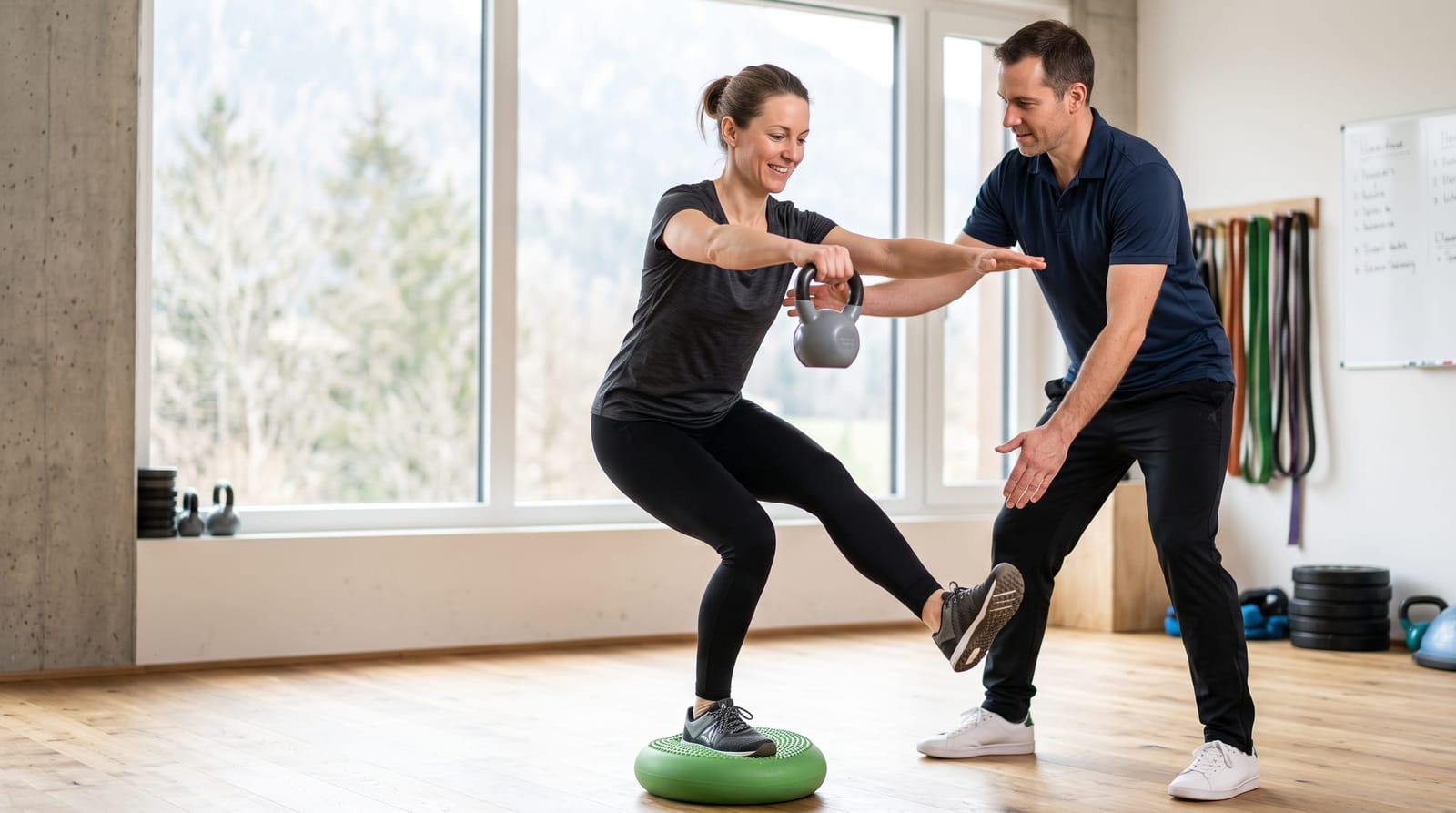
Your hips are the foundation of every turn. Weak or underactive glutes and hip stabilizers force your knees to compensate, which creates both performance limitations and increased wear on the joint. Single-leg movements like lateral band walks, single-leg Romanian deadlifts, and clamshell variations train the hip abductors and external rotators that keep your stance solid and your edges controlled. When the hips are doing their job well, skiing and snowboarding feel more effortless and responsive.
3. Lateral Power and Agility
Skiing and snowboarding are fundamentally lateral sports. The ability to generate and absorb force from side to side, quickly and repeatedly, is what gives you the power to link turns with confidence. Lateral bounds, skater jumps, and lateral box step-ups develop this quality in a way that directly transfers to the mountain. These aren't just athletic drills for elite competitors; recreational skiers and snowboarders benefit enormously from training in the lateral plane, especially if most of their regular fitness routine is front-to-back (treadmills, cycling, etc.).
4. Core Endurance (Not Just Core Strength)
A strong core isn't enough on its own: you need a core that can sustain its function across hours of activity. Skiing requires you to maintain a stable, engaged midsection while your legs move independently beneath you. Exercises like dead bugs, Pallof press holds, suitcase carries, and plank variations with movement train the core to resist rotation and maintain posture under fatigue. This translates directly to better body position, more consistent edge control, and less lower back fatigue at the end of a long ski day.
Movement Analysis: Identifying Your Ski-Specific Weaknesses
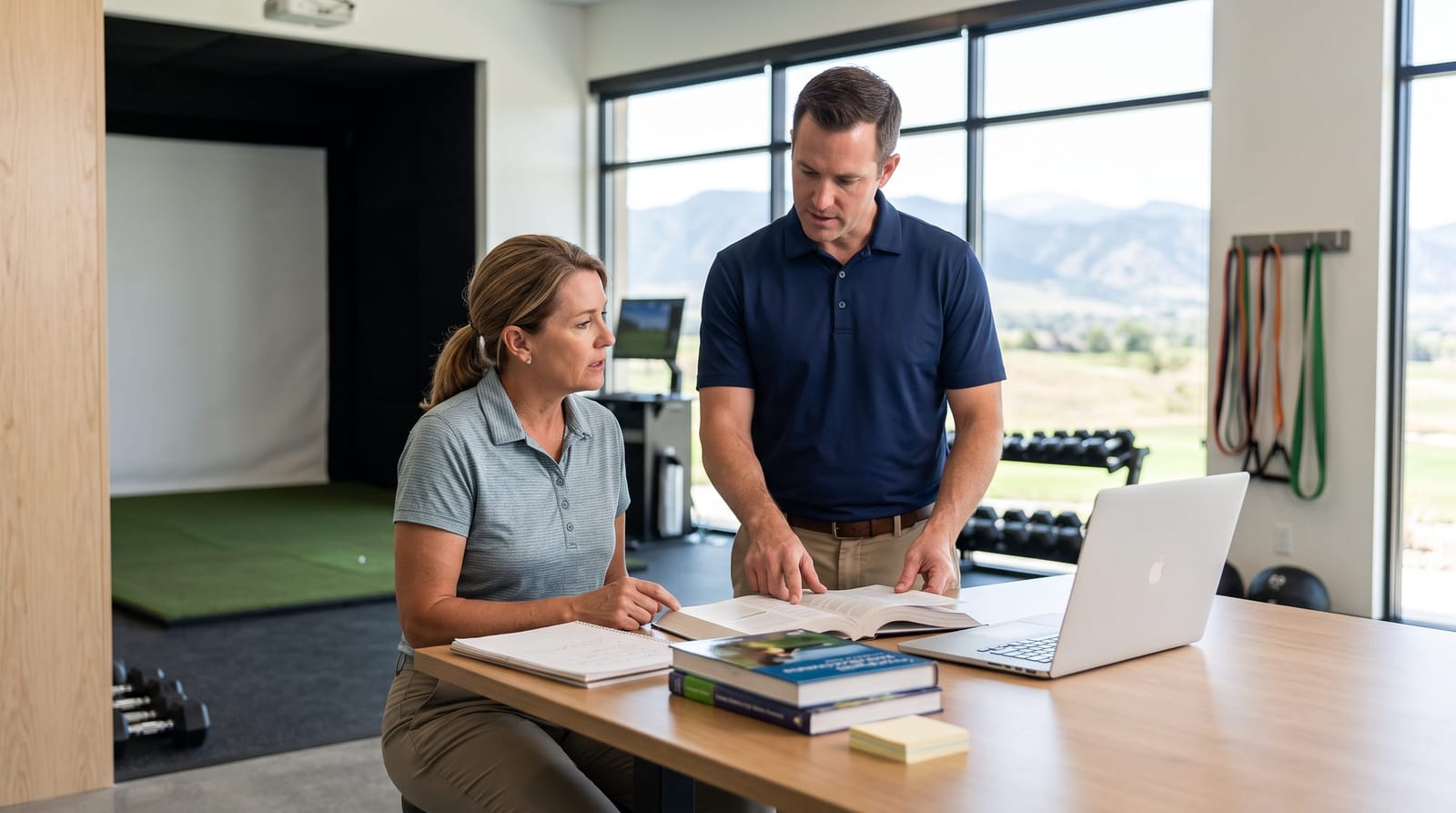
One of the most valuable things a qualified personal trainer can do before ski season is assess how you actually move, not just how much you can lift. Movement analysis looks at how your body functions during sport-relevant patterns: single-leg stability, squat mechanics, lateral step control, and hip hinge quality.
This kind of assessment often reveals imbalances that aren't obvious in everyday life. A right-to-left strength difference in the hips, limited ankle mobility that compromises squat depth, or a tendency to let the knees cave inward during lateral movement: these patterns matter a great deal on the slopes, where terrain is uneven and conditions are constantly changing.
At Total Body Works in Colorado Springs and Monument, movement analysis is built into the training process. Rather than applying a generic ski fitness template, the approach is to identify what each individual's body specifically needs, then build a program that addresses those gaps directly. The result is preparation that's more efficient and more relevant to how you actually ski or snowboard.
This same principle applies across different sports. Just as movement analysis helps skiers improve body mechanics, it plays a role in programs like golf strength training distance Colorado Springs, where movement quality directly determines performance outcomes.
When to Start Training: and What a Program Looks Like
Ideally, ski fitness preparation begins 8 to 12 weeks before the season starts. This gives your body time to build the specific strength and movement patterns needed before you put them to work at altitude on demanding terrain. A well-structured program typically includes two to three strength training sessions per week, with progression built in week by week.
For Colorado Springs and Monument residents, ski season often begins with early-season trips in November and December, which means late summer and fall is the ideal window to ramp up preparation. In-season, the focus shifts to maintaining the fitness you've built while keeping your body fresh enough to perform well and recover between ski days. A general framework for in-season maintenance includes two training sessions per week, keeping intensity moderate and prioritizing recovery alongside continued movement quality work.
Older or recreational athletes shouldn't feel this level of preparation is only for competitive skiers. Adults over 50 who want to continue enjoying Colorado's terrain for years to come have every reason to invest in targeted fitness. Building the strength and stability to ski confidently through your 60s and 70s starts with consistent, smart training now.
Frequently Asked Questions
How far in advance should I start ski fitness training?
Starting 8 to 12 weeks before your first ski day of the season gives your body meaningful time to develop the specific strength and movement patterns the sport demands. If you're starting with limited time, even 4 to 6 weeks of focused training can make a noticeable difference in how you feel on the mountain.
Can I do ski fitness training at home, or do I need a gym?
Many ski-specific exercises, bodyweight squats, lateral bounds, hip stability drills, core holds, can be performed at home with minimal equipment. That said, a structured gym environment with a qualified trainer provides accountability, proper technique guidance, and progressive loading that generally produces better results than training alone.
Is ski fitness training appropriate for older adults or recreational skiers?
Absolutely. Sport-specific fitness preparation is valuable at every level of skiing and snowboarding, including recreational and older athletes. Training for quad endurance, hip stability, and core control supports enjoyment of the sport, longevity on the slopes, and overall functional fitness, all of which matter regardless of age or ability level. Always consult with your personal trainer and, where appropriate, your healthcare provider to ensure your program is suited to your individual needs.
What's the difference between ski fitness training and general strength training?
General strength training builds overall physical capacity, while ski fitness training prioritizes the specific movement patterns, muscle groups, and energy systems that skiing and snowboarding demand most. A ski-specific program emphasizes lateral movement, eccentric quad loading, single-leg stability, and sustained core function: elements that a standard strength program may not include in sufficient volume or specificity.
Train Smart, Ski Strong
Colorado's slopes don't wait for you to get in shape: they meet you exactly where your fitness level is. For Colorado Springs and Monument skiers and snowboarders who want to show up ready, targeted preparation is one of the most practical investments you can make in your time on the mountain. By building quad strength, hip stability, lateral power, and core endurance through a structured program, and by working with a trainer who understands sport-specific movement, you set yourself up not just for better ski days, but for a longer, more enjoyable relationship with one of Colorado's greatest outdoor activities. That's the kind of fitness preparation that goes well beyond the slopes.