How Recreational Athletes Over 50 Can Still Compete at a High Level
If you are a recreational athlete over 50 wondering whether your best competitive days are behind you, the evidence says otherwise. Across endurance sports, team competitions, martial arts, and masters athletics, older athletes across Colorado are proving that performance does not have to decline sharply with age. It simply requires a smarter approach. This guide covers the mindset, training adjustments, and recovery strategies that help every recreational athlete over 50 compete in Colorado at a genuinely high level. At Total Body Works in Colorado Springs, this philosophy drives every sport-specific performance program we design for masters-level competitors.
Why Recreational Athletes Over 50 Are Competing Harder Than Ever in Colorado
Colorado has one of the most active masters athletic communities in the United States. From age-group triathlons along the Front Range to masters cycling events in the Rockies, the opportunities for a recreational athlete over 50 to compete in Colorado are genuinely abundant. The state's culture of outdoor fitness, combined with world-class training facilities and a competitive spirit that ignores age limits, makes Colorado one of the best environments in the country for masters-level athletes.
According to the IDEA Health and Fitness Association, more than 100 million individuals in the United States are over the age of 50. That population is increasingly competitive, better informed about training science, and less willing to accept the idea that peak performance ends at 40. The recreational athlete over 50 competing in Colorado today trains with intention, recovers with discipline, and leverages experience as a measurable edge over less seasoned competitors.
At Total Body Works, we see this every day. Our clients, professionals, business owners, and high-performing individuals in their 50s, 60s, and beyond, are not training to simply maintain. They are training to compete, improve, and win in their age divisions. That standard shapes every program we build for masters-level athletes across Colorado Springs and the Front Range.
The recreational athlete over 50 who commits to structured training in Colorado is joining a growing movement. USA Triathlon reports that athletes 50 and older now make up more than 30 percent of their competitive membership. That statistic reflects a cultural shift that is impossible to ignore.
The Science Behind Masters Athletic Performance for the Recreational Athlete Over 50 in Colorado
Age-related changes in the body are real, but they are often overstated. Research consistently shows that many performance-limiting factors associated with aging are more a product of inactivity than biology. The recreational athlete over 50 who trains consistently in Colorado is working with a physiological advantage that sedentary peers simply do not have.
What does change after 50? Muscle fiber recruitment slows slightly, recovery windows lengthen, and connective tissue takes more time to adapt. VO2 max, the body's ability to use oxygen during exercise, declines at roughly 1 percent per year after age 25 in sedentary individuals. That decline is significantly reduced in those who train consistently. Studies published in the Journal of Applied Physiology suggest that masters athletes who maintain structured training can preserve up to 70 to 80 percent of their peak aerobic capacity well into their 60s and 70s.
Hormonal changes also play a role. Testosterone and human growth hormone both decline with age, affecting muscle protein synthesis and recovery speed. Research from the American College of Sports Medicine confirms that resistance training directly stimulates anabolic hormone response. This partially compensates for age-related declines. This is one reason strength training is non-negotiable for the recreational athlete over 50 competing in Colorado at a serious level.
The takeaway is not that aging has no effect. The takeaway is that intelligent, consistent training can dramatically offset those effects. A recreational athlete over 50 competing in Colorado can reach performance levels that surprise both themselves and their competitors when the right program is in place.
Shifting the Competitive Mindset: What Masters Athletes in Colorado Do Differently
One of the most powerful tools available to the masters athlete is not a training modality: it is perspective. Athletes who thrive past 50 share mental shifts that separate them from those who fade from competition. For the recreational athlete over 50 competing in Colorado, mindset is often the deciding factor between continued growth and premature decline.
Compete Against the Process, Not the Clock
Chasing personal records from your 30s sets up a losing game. The most successful masters athletes redefine winning as executing a smarter race, lifting with better mechanics, or recovering faster than they did six months ago. Measuring progress through quality, consistency, and longevity produces more sustainable motivation and better long-term competitive results. This shift alone transforms how a recreational athlete over 50 approaches training and competition in Colorado.
Embrace Training Age Over Biological Age
Training age, how long you have been training consistently and intelligently, matters enormously. A 55-year-old who has trained purposefully for 20 years carries adaptations built into their neuromuscular system, movement patterns, and recovery habits. A 35-year-old beginner simply does not have those adaptations. For the recreational athlete over 50 training in Colorado, that depth of experience is a genuine competitive asset that younger competitors cannot replicate. Use it.
Stay Connected to Your Sport Community
Isolation is one of the fastest routes to athletic decline. Masters athletes who stay embedded in training groups, local competitions, and coaching relationships report higher motivation, better consistency, and greater enjoyment. In Colorado Springs and across the Front Range, active sports communities exist across cycling, running, swimming, tennis, volleyball, and pickleball. Showing up consistently to those communities keeps competitive fire alive and accountability high. The recreational athlete over 50 competing in Colorado thrives in community, not in isolation.
Smart Program Design for the Recreational Athlete Over 50 Training in Colorado
Training after 50 does not mean doing less. It means doing the right things with the right structure. The recreational athlete over 50 competing in Colorado needs a program that respects physiological realities while still pushing performance forward. These are the program design principles that keep masters athletes competitive at the highest levels their age divisions offer.
- Prioritize strength training: Resistance training 2 to 3 times per week helps counteract age-related muscle loss, known as sarcopenia. This condition affects approximately 3 to 8 percent of muscle mass per decade after age 30 and accelerates significantly after 60. Maintaining or building lean muscle directly supports power, stability, and injury resilience, all critical for the recreational athlete over 50 competing in Colorado's demanding athletic environment.
- Reduce junk volume, increase quality: High-quality, intentional training sessions matter more than long, fatiguing ones. A well-structured 45-minute session with a proper warm-up, focused work, and cool-down often outperforms a 90-minute session done haphazardly. Masters athletes recover better from fewer, higher-quality sessions than from high-volume, low-intention training blocks.
- Periodize your training year: Cycling through phases of building, peaking, and recovering prevents overuse patterns and allows the body to adapt without accumulating unnecessary wear. Most recreational athletes over 50 competing in Colorado benefit from slightly longer adaptation phases than younger competitors: typically 4 to 6 week blocks rather than 3-week progressions.
- Integrate mobility and flexibility work daily: Even 10 to 15 minutes of targeted mobility work each day pays significant dividends in joint health, movement quality, and sports performance. At Total Body Works, we build flexibility and joint stability work into every session for masters-level clients because the return on investment is measurable and immediate.
- Train sport-specifically: Generic fitness is a foundation, but competitive performance requires movements and energy demands that mirror your actual sport. A masters cyclist needs different programming than a masters tennis player. Both benefit from training that speaks directly to the physical demands of their discipline and competitive season.
- Monitor heart rate variability (HRV): HRV tracking gives masters athletes an objective window into readiness and recovery status. Several studies indicate that HRV-guided training produces better performance outcomes than calendar-based programming, particularly in athletes over 50 whose recovery needs fluctuate more than younger competitors.
- Warm up longer and more deliberately: The recreational athlete over 50 competing in Colorado needs 10 to 20 minutes of progressive warm-up before hard efforts. Connective tissue takes longer to reach optimal temperature and pliability after 50. Skipping this step is one of the most common causes of preventable injury in masters athletes.
For athletes concerned about injury risk during this process, learning to prevent sports injuries with strength training in Colorado Springs is an essential part of building a sustainable competitive training plan.
Recovery Strategies That Make or Break Recreational Athlete Over 50 Performance in Colorado
Recovery is not optional for athletes over 50: it is where adaptation actually happens. The body's ability to repair and rebuild between sessions takes longer after 50. Recovery deserves the same intentional planning as the training itself. For the recreational athlete over 50 competing in Colorado, particularly at altitude, recovery management is often the single biggest differentiator between athletes who improve and those who plateau or get injured.
Sleep Is Your Highest-Leverage Recovery Tool
Sleep quality declines naturally with age, yet it remains the single most powerful recovery mechanism available. Adults over 50 should aim for 7 to 9 hours of quality sleep per night. Research from the National Sleep Foundation shows that even modest improvements in sleep produce measurable gains in performance and recovery markers within two weeks. Consistent bedtimes, reduced screen exposure before bed, cooler room temperatures, and reduced caffeine after noon all contribute meaningfully. The recreational athlete over 50 competing in Colorado who treats sleep as a training tool gains a significant edge over those who treat it as optional.
Active Recovery Beats Complete Rest
Light movement on off-days, walking, easy cycling, swimming, or yoga, promotes circulation, reduces muscle stiffness, and supports tissue repair more effectively than sedentary rest. Many recreational athletes over 50 competing in Colorado find that active recovery days leave them feeling noticeably better than full rest days. Keep intensity genuinely low, below 60 percent of maximum heart rate, so that the nervous system continues recovering while blood flow supports tissue repair throughout the body.
Altitude Considerations for Colorado-Based Masters Athletes
Training at altitude presents unique recovery challenges that recreational athletes over 50 competing in Colorado must account for. Colorado Springs sits at approximately 6,035 feet above sea level. At altitude, red blood cell production increases over time, offering a performance advantage. But the initial adaptation period demands more aggressive recovery protocols. Hydration needs increase significantly at altitude, and sleep quality often dips during the first week of exposure. Masters athletes new to training at altitude should expect a 2 to 4 week adaptation window before performance returns to baseline. Total Body Works coaches routinely factor altitude adaptation into training plans for Colorado Springs clients to protect both performance and long-term health.
Nutrition Timing and Protein Intake for Masters Athletes
Research suggests that masters athletes require higher protein intake relative to body weight than younger athletes to support muscle protein synthesis. A commonly cited range in sports nutrition literature is 1.6 to 2.0 grams of protein per kilogram of body weight daily for active individuals over 50. Distributing that intake across 3 to 4 meals rather than concentrating it in one or two sittings optimizes muscle protein synthesis rates throughout the day. Consult a registered dietitian for guidance specific to your health history and performance goals. Prioritizing protein intake within 30 to 60 minutes post-training supports recovery and muscle maintenance, directly sustaining the competitive performance that every recreational athlete over 50 training in Colorado is working to build.
Injury Prevention for the Recreational Athlete Over 50 Competing in Colorado
Staying injury-free is the single most important factor in long-term athletic performance after 50. A recreational athlete over 50 competing in Colorado cannot improve when sidelined. Injury prevention is not passive: it requires deliberate programming choices made every single week.
The most common injuries in masters athletes include rotator cuff issues, patellar tendinopathy, Achilles tendon problems, and lower back strain. Most of these injuries share a common origin: accumulated load without adequate recovery, compounded by movement quality deficits that were tolerable in younger years but become problematic after 50.
Three injury prevention priorities stand out for the recreational athlete over 50 training in Colorado:
- Movement quality screening: Regular assessment of movement patterns, squat mechanics, hip hinge form, shoulder mobility, single-leg stability, identifies compensation patterns before they become injuries. At Total Body Works, every new client completes a movement quality assessment that informs program design from day one.
- Load management: Increasing training load by no more than 10 percent per week is a well-established guideline for injury prevention. Masters athletes often need to be even more conservative, particularly when adding new modalities or returning from a break in training.
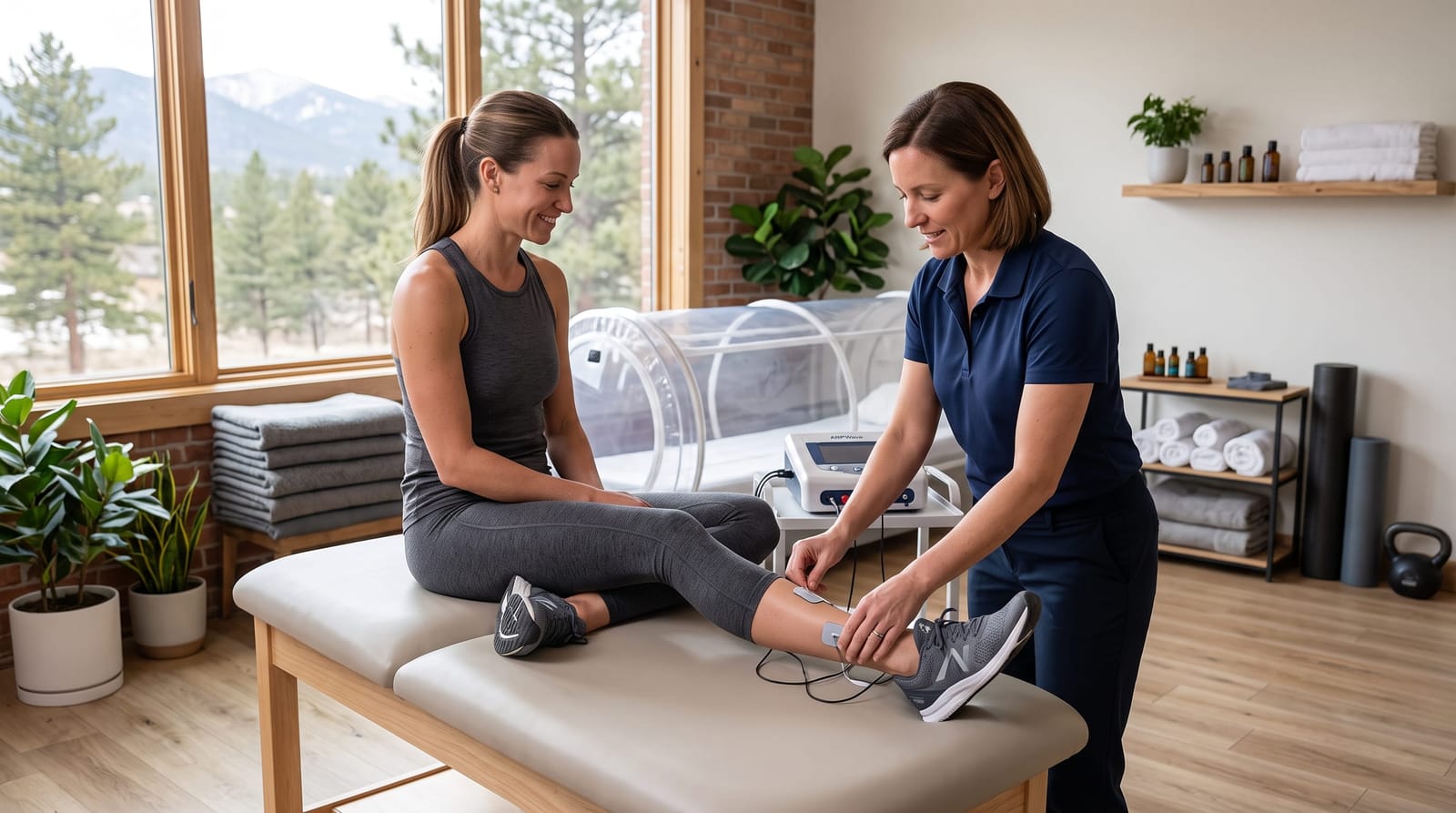
- Soft tissue maintenance: Regular foam rolling, massage, and targeted stretching keep connective tissue pliable and blood flow adequate to tendons and ligaments. These structures respond more slowly to training stress after 50 and benefit significantly from proactive maintenance rather than reactive treatment.
The recreational athlete over 50 competing in Colorado who builds injury prevention into the training plan, not as an afterthought but as a core component, competes more consistently and improves more reliably over multi-year time horizons.
Working With a Coach Who Understands the Recreational Athlete Over 50 in Colorado
One of the most significant advantages available to the recreational athlete over 50 competing in Colorado is access to qualified coaches who understand the specific physiology, recovery needs, and program structure requirements of masters-level athletes. Generic programming designed for 25-year-olds does not account for recovery timelines, hormonal changes, or accumulated training histories. Applying youth-focused programming to masters athletes is one of the most common causes of injury and burnout in this population.
A coach experienced in sport-specific performance training for the recreational athlete over 50 can assess where you are now, identify movement quality issues before they become injuries, and build a periodized plan that respects both your competitive goals and your body's recovery needs. In Colorado Springs especially, with its concentration of military personnel, endurance athletes, and high-performance training culture, finding coaches who work with masters athletes in competitive contexts is entirely realistic.
At Total Body Works, our coaching team works exclusively with performance-focused adults who take their athletic goals seriously. Our clients are recreational athletes over 50 competing in Colorado who need programming built around their specific sport demands, injury history, recovery capacity, and competition calendar. That level of individualization separates athletes who keep improving from those who plateau and eventually disengage from competition altogether.
The best coaches for the recreational athlete over 50 competing in Colorado combine exercise science knowledge with genuine respect for what masters athletes are capable of achieving. They view age as context, not limitation, and design programming accordingly.
Colorado Masters Competition Opportunities: Where Recreational Athletes Over 50 Compete
One of the greatest advantages of being a recreational athlete over 50 competing in Colorado is the volume and variety of organized masters competition available throughout the year. Knowing where to compete is part of building a purposeful training calendar. Colorado offers options across nearly every sport discipline imaginable.
- Running: Colorado hosts dozens of age-group running events annually, including the Pikes Peak Ascent and Marathon, which feature competitive masters divisions that attract serious athletes from across the country. The Bolder Boulder 10K also draws thousands of masters competitors each Memorial Day.
- Cycling: USA Cycling masters road, criterium, and cyclocross events are held regularly across Colorado. The Colorado Masters Cycling community is one of the most active in the Mountain West region, with weekly group rides and formal race calendars.
- Triathlon: USA Triathlon sanctions multiple masters-friendly triathlons across Colorado each season. Age-group divisions begin at 50 to 54 and continue in five-year increments through 70-plus categories.
- Swimming: Colorado Masters Swimming offers year-round competition for pool and open water swimmers over 18, with particularly strong participation in the 50-and-over age groups across events at all distances.
- Pickleball and Tennis: USTA Colorado and USA Pickleball both sanction regular leagues and tournaments with masters divisions, making racket sports one of the fastest-growing competitive outlets for recreational athletes over 50 in Colorado.
- Weightlifting and Powerlifting: USA Weightlifting and USAPL both maintain masters divisions beginning at age 35, with robust participation from Colorado-based lifters competing at regional and national levels throughout the year.
- Skiing and Snowshoeing: Colorado's mountain environment makes alpine and nordic skiing natural competitive outlets. Masters ski racing and snowshoe racing events are held throughout the winter season at venues across the state, giving the recreational athlete over 50 in Colorado a true year-round competitive calendar.
Building a competition calendar around these opportunities gives the recreational athlete over 50 competing in Colorado a structured goal framework that directly improves training adherence and long-term athletic longevity. At Total Body Works, we help clients identify the events most aligned with their goals and build periodized training plans that peak performance at the right moments in the competition calendar.
What Real Results Look Like: Masters Athletes at Total Body Works in Colorado Springs
The recreational athlete over 50 competing in Colorado does not have to take our word for it. The results speak clearly. Masters athletes who commit to structured, individualized training programs consistently outperform peers who rely on generic approaches or unstructured training.
Consider what structured programming produces for a recreational athlete over 50 competing in Colorado over a 12-month period. Movement quality improves within the first 4 to 6 weeks. Strength gains are measurable within 8 to 12 weeks for most clients. Endurance benchmarks improve within a single competitive season. Injury frequency drops significantly when load management and mobility work are built into the program from the start. These are not exceptional results: they are what happens when programming matches physiology and goals align with structure.
At Total Body Works, we have seen clients in their 50s and 60s achieve personal bests in their sports after joining structured programs. We have seen masters athletes return to competition after years away and discover they are more capable than they imagined. The recreational athlete over 50 competing in Colorado who invests in the right program is not fighting against time: they are working with science, experience, and a team that understands what masters-level performance actually requires.
Our programs are built for professionals and high achievers who demand results that match their investment. Total Body Works does not offer cookie-cutter fitness. We offer individualized sport-specific performance training for the serious recreational athlete over 50 in Colorado who is ready to compete at their highest possible level.
Frequently Asked Questions From Recreational Athletes Over 50 Training in Colorado
Is it realistic to start competitive training as a recreational athlete after 50 if I have been inactive?
Absolutely. Research consistently shows that the body responds to training stimulus at any age. Starting from a lower fitness base simply means early gains are often dramatic, as the body adapts quickly to new demands. Beginning with foundational strength and mobility work, then progressively adding sport-specific training, is a well-supported approach. The recreational athlete over 50 in Colorado who begins structured training today is making one of the highest-return investments available. Always consult your healthcare provider before starting a new training program.
How many days per week should a masters athlete train in Colorado?
Most recreational athletes over 50 thrive with 3 to 5 training days per week, depending on intensity, sport demands, and individual recovery capacity. The structure matters as much as the frequency. Alternating high-intensity and lower-intensity days, with intentional recovery built in, produces better long-term results than simply training as often as possible. The coaches at Total Body Works assess each client's recovery capacity individually rather than applying a one-size-fits-all frequency recommendation to every masters athlete we work with.
What types of sports are most accessible for competitive athletes over 50 in Colorado?
Colorado offers robust masters competition in running, cycling, triathlon, swimming, tennis, pickleball, weightlifting, volleyball, and skiing, among others. Most of these sports have organized masters divisions with age groupings that allow the recreational athlete over 50 to compete in Colorado against peers with similar physiological profiles. This age-group structure makes genuine head-to-head competition both accessible and meaningful regardless of where you are in your athletic journey.
Should masters athletes use the same recovery tools as younger athletes?
The tools are largely the same, sleep, nutrition, active recovery, soft tissue work, and stress management, but the emphasis and timing shift significantly. Masters athletes generally benefit from longer recovery windows between hard sessions and more consistent attention to mobility and tissue quality. What changes is the priority given to recovery relative to training volume. The recreational athlete over 50 competing in Colorado who treats recovery as training, not as downtime, gains a significant competitive edge over peers who consistently neglect it.
How does altitude in Colorado affect training for masters athletes?
Altitude affects masters athletes more noticeably than younger athletes during the initial adaptation period. Recovery takes longer, hydration needs increase, and sleep quality may temporarily decline. However, long-term altitude adaptation provides genuine aerobic performance benefits that translate directly to competition. The recreational athlete over 50 competing in Colorado who trains at altitude consistently, with proper hydration, adjusted training loads, and patient adaptation, can develop a meaningful aerobic edge over competitors who train at sea level.
Total Body Works: Sport-Specific Performance Training for Masters Athletes in Colorado Springs
At Total Body Works, we have built our entire training philosophy around a simple truth: the recreational athlete over 50 competing in Colorado deserves programming that matches their ambition. Our clients are professionals, executives, business owners, and self-employed high-achievers who approach their athletic goals with the same seriousness they bring to their careers. They are not looking for a casual fitness class: they are looking for measurable results.
Our sport-specific performance programs for masters athletes integrate strength training, mobility development, movement quality assessment, and periodized programming designed around each client's actual competition calendar and individual recovery profile. We do not apply youth-focused templates to masters athletes. We build from the ground up: assessing what each client needs, identifying what is holding their performance back, and constructing a plan that moves them forward systematically and safely.
Colorado Springs is one of the best training environments in the country for the serious recreational athlete over 50. The community is competitive, the facilities are excellent, and the culture supports athletic ambition at every age. Total Body Works is proud to be part of that environment, and proud to help masters-level athletes compete at levels that exceed what most people thought possible after 50. If you are ready to work with coaches who understand exactly what the recreational athlete over 50 competing in Colorado needs, we are ready to build that program with you.
Conclusion: The Recreational Athlete Over 50 in Colorado Has Every Reason to Compete
Competing as a recreational athlete over 50 in Colorado is not about defying age: it is about working intelligently within it. With the right training structure, recovery habits, competitive mindset, and coaching support, performance remains not just possible but genuinely exciting well past 50. The evidence is clear, the community is thriving, and the competition calendar is full. Here are the core takeaways every recreational athlete over 50 competing in Colorado should carry forward:
- Age-related performance decline is real but largely manageable with consistent, structured training.
- Strength training, mobility work, and sport-specific programming are non-negotiable at the masters level.
- Recovery, especially sleep and nutrition, deserves the same priority as training sessions.
- Altitude training in Colorado offers long-term aerobic advantages when approached with patience.
- Colorado offers year-round masters competition across nearly every sport discipline imaginable.
- Individualized coaching built for masters athletes produces results that generic programming cannot match.
The recreational athletes over 50 competing in Colorado who thrive at masters level are not doing the most work: they are doing the smartest work. That principle sits at the heart of every sport-specific performance program at Total Body Works, and it is exactly the foundation that keeps older athletes competing, improving, and winning for the long haul. If you are ready to compete, really compete, your best athletic chapter may still be ahead of you. Contact Total Body Works in Colorado Springs today and find out what a program built specifically for the recreational athlete over 50 in Colorado can do for your performance.